
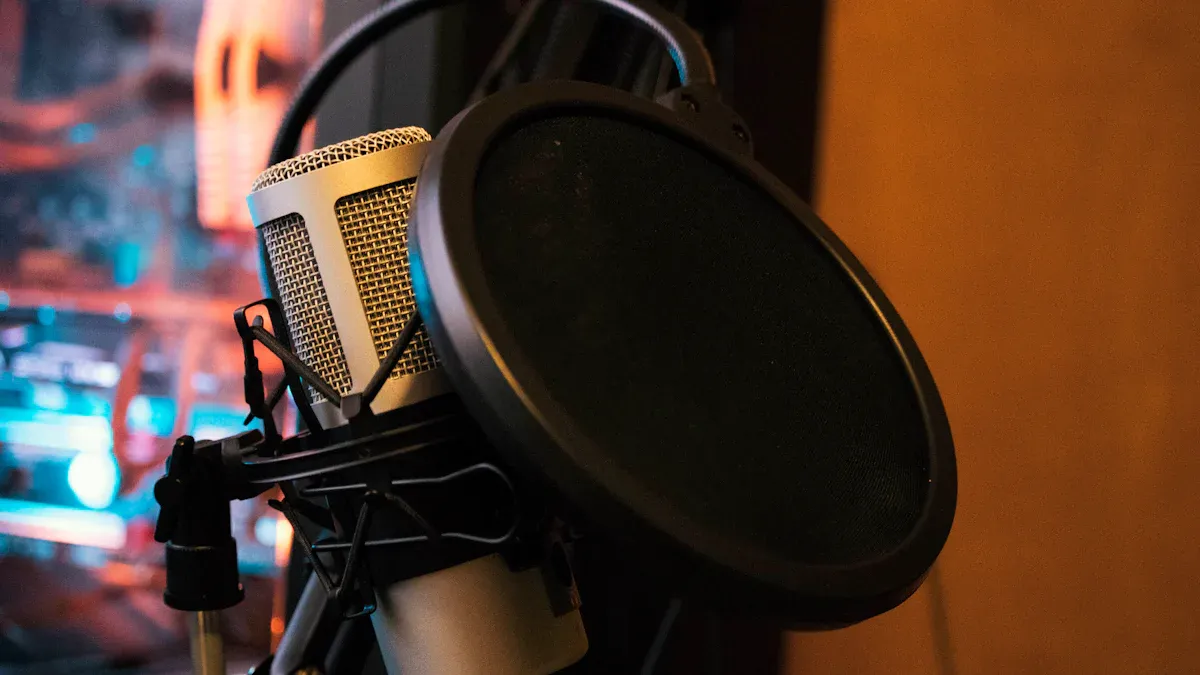
Professionals seek the most practical and efficient microphone stands and tools in 2026. The global Microphone Stand market continues to expand, reflecting the industry’s demand for reliable equipment. Advanced ergonomics, modularity, and smart features significantly enhance workflow and audio quality. A sturdy microphone stand must provide stability and support for microphones. Optimal performance and ease of use in professional audio require careful consideration of these aspects.
Key Takeaways
- Good microphone stands are important for clear sound. They help you work better and faster.
- Modern stands have new features. These include smart controls and strong parts. They make recording easier.
- Choose the right stand for your needs. Think about how you will use it. This helps you get the best sound.
The Evolving Landscape of Professional Audio and Microphone Stands in 2026
Key Technological Advancements for Microphone Stands and Tools
Innovations in materials science lead to lighter, more durable, and adaptable designs for professional audio equipment. Manufacturers integrate advanced materials for lightweight and durable stands. These advancements also include smart features, such as IoT-enabled adjustments, catering to evolving user preferences. Ergonomic enhancements significantly improve the user experience. Modern microphone stands often feature integrated USB-C connectivity, anti-vibration suspension, and built-in cable management. Touch-sensitive controls, LED level indicators, and Bluetooth pairing for real-time monitoring also enhance functionality. Some models even offer motorized or gas-spring-assisted height adjustment, along with companion apps for customization.
Shifting Production Demands and Microphone Stand Solutions
Remote production demands significantly influence microphone stand design. The growing demand for remote control microphone stands directly links to the rise of content creation, remote work, and high-production home studios. Professionals require smooth motorized height adjustment and reliable wireless remote operation. These stands allow users to fine-tune mic placement without physical movement, which is especially beneficial when wearing headphones. This enhances recording consistency and reduces fatigue during long sessions. Durable construction, often steel or aluminum, ensures stability. Programmable height presets and stable base designs prevent tipping, supporting both desktop and floor-standing configurations.
The Imperative for Practicality and Efficiency in Modern Workflows
These technological shifts underscore the imperative for practicality and efficiency in modern audio workflows. Professionals require tools that streamline operations and improve audio quality. Modern microphone stands must offer stability, adaptability, and user-friendly features to meet these evolving needs. The integration of smart features and robust design ensures equipment supports demanding production environments. This focus on practicality ultimately empowers creators to achieve superior results with greater ease.
Core Principles of Practicality in Professional Microphone Stands
Ergonomics and Ease of Adjustment for Microphone Stands
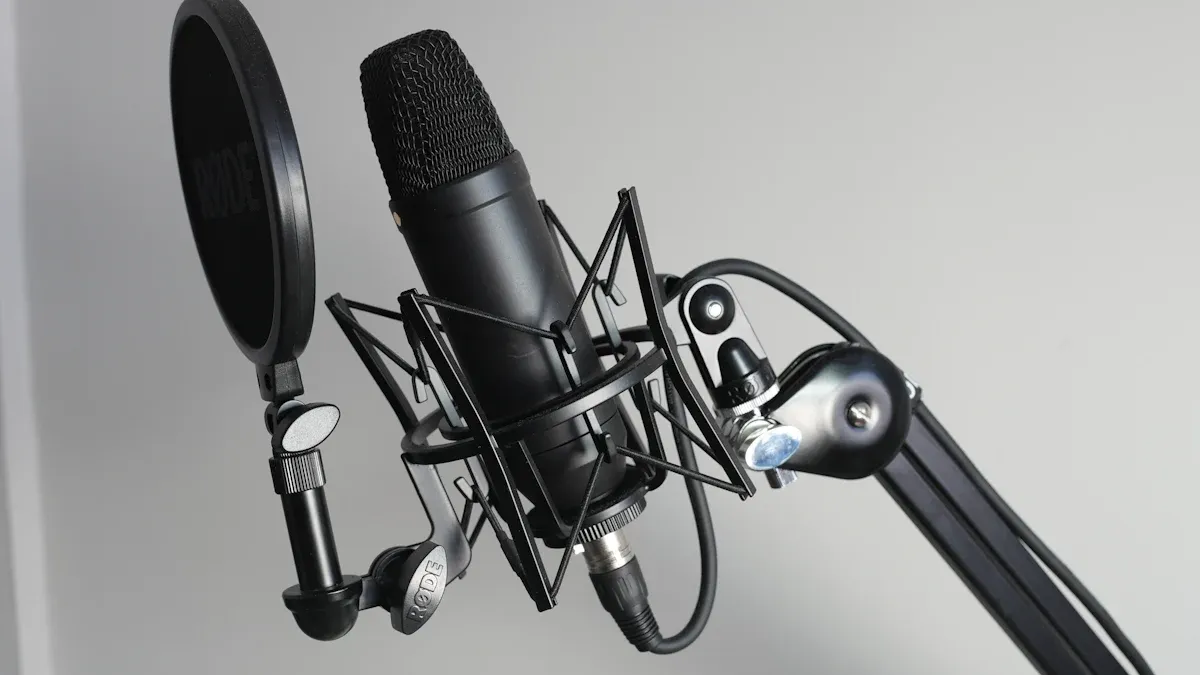
Professional audio engineers prioritize ergonomic design in their equipment. Easy adjustment mechanisms allow for quick and precise microphone positioning. Features like one-handed clutch systems or smooth hydraulic lifts save valuable time during setup. These designs reduce physical strain, especially during long recording sessions or live events. An intuitive interface ensures users can focus on sound quality, not equipment manipulation.
Stability and Vibration Dampening in Microphone Stands
Stability forms the bedrock of clear audio capture. A sturdy Microphone Stand minimizes unwanted movement. Effective vibration dampening is equally crucial. High-quality stands often incorporate shock mounts. These mechanical fasteners use elastic suspensions to isolate microphones from vibrations. Thermoplastic construction in shock mounts, for example, provides superior sound isolation. Heavy-duty elastic bands absorb vibrations more effectively than standard bands. Some premium shock mounts even feature felt lining for extra dampening. All-metal construction in these mounts offers a secure hold. Professionals also avoid placing microphones on surfaces prone to vibrations from typing or movement.
Portability and Durability of Professional Microphone Stands
Modern production environments demand gear that withstands frequent transport and rigorous use. Portability means lightweight construction without compromising strength. Manufacturers use advanced alloys and composites to achieve this balance. Durability ensures equipment longevity, protecting investments. Robust construction resists wear and tear, making stands reliable for studio, stage, or field recording.
Modularity and Adaptability for Future-Proof Microphone Stands
Modularity allows professionals to customize their setups. Interchangeable components and universal mounting options provide flexibility. This adaptability ensures a stand can evolve with changing needs and new equipment. A modular design future-proofs the investment, allowing for easy upgrades or reconfigurations. This principle supports a wide range of applications, from vocal booths to complex orchestral recordings.
Essential Microphone Tools for Enhanced Efficiency
Advanced Shock Mounts and Pop Filters
Professionals understand the critical role advanced shock mounts play in achieving pristine audio quality. These specialized systems isolate microphones from physical vibrations and mechanical noise. They suspend the microphone within a frame using elastic materials like rubber bands or flexible cords. This design effectively absorbs shocks, desk thumps, floor vibrations, and other ambient disturbances. Such isolation significantly reduces low-frequency noise originating from desks, floors, and handling, thereby enhancing overall recording clarity and professionalism. Shock mounts offer a cost-effective solution compared to extensive acoustic treatments, and they feature easy installation and removal.
The microphone shock mount market continues to grow, driven by the adoption of digital audio recording and streaming technologies. This shift necessitates advanced shock mounts compatible with modern, sensitive condenser microphones. Innovations include IoT-enabled shock mounts with smart monitoring capabilities. These provide real-time data on equipment and environmental conditions. The rise of remote work also spurs demand for portable and reliable audio solutions. This leads to research and development in shock mounts with improved damping materials, ergonomic features, and broader compatibility with various microphone sizes and shapes. These advancements modernize audio infrastructure while upholding high standards of sound quality. Pop filters, another essential tool, prevent plosive sounds (like "p" and "b") from overloading the microphone, further ensuring clean vocal recordings.
Cable Management Solutions for Microphone Setups
Effective cable management is crucial for maintaining a professional and hazard-free workspace, especially in multi-microphone setups. Disorganized cables create trip hazards and hinder equipment access. Professionals employ various solutions to keep cables tidy and functional.
| Solution Type | Description | Pros | Cons |
|---|---|---|---|
| Built-in Channel/Tray | Integrated into microphone arms or desks. | Highly effective, sleek, permanent. | Limited to specific products. |
| Grommets/Passthroughs | Holes in desk surfaces with covers for cable routing. | Minimalist, centralizes cable exit. | Requires specific desks or modifications. |
| Under-Desk Baskets | Trays or cages mounted beneath the desk. | Conceals power strips and bulky cables. | Installation can be complex, potentially visible. |
| Cable Sleeves/Ties | Fabric or plastic wraps for bundling cables. | Inexpensive, versatile, user-friendly. | Bundles cables but doesn’t secure them to the desk. |
Beyond these specific tools, professionals adopt best practices. They separate power and audio cables, running power cables down one side of the desk and audio/data cables down the other. This prevents electromagnetic interference, which can cause buzzing or humming. They bundle cables using zip ties or Velcro wraps, keeping them organized and reducing snags. Utilizing custom-length cables eliminates excess wire coils. Professionals avoid simply shoving cables behind the desk. Instead, they route cables professionally, securing them along desk edges to create a clean, functional, and safe workspace.
Specialized Mounts and Adapters for Microphones
Integrating diverse microphone types with standard stands often requires specialized mounts and adapters. These tools ensure compatibility and precise positioning.
- Standard Threaded Adapters (5/8" to 3/8"): These convert threads, allowing microphones with 3/8" threads to attach to standard 5/8" stand tops. They are inexpensive, compact, and widely compatible, offering no adjustment capability.
- Swivel Mounts: These provide horizontal and vertical tilt adjustments for precise microphone aiming. They offer fine-tuning control over the mic angle but may loosen over time.
- Shock Mounts: Designed to isolate microphones from mechanical vibrations using elastic suspension systems, these are essential for reducing handling and environmental noise. They are bulkier and higher cost.
- Clamp-On Desk Fittings: Used with gooseneck or articulated boom arms, these attach directly to surfaces with C-clamps or edge grips. They save space and are ideal for compact workspaces but require a stable surface and may damage delicate furniture.
- Universal Joint & Ball Mounts: These offer multi-axis articulation for flexible positioning, useful in interview or streaming settings. They provide highly flexible positioning but can be less stable with heavier microphones.
Specific products exemplify these functionalities. The Rode DS2 Desk Stand is a compact desktop studio arm with a heavy base. It positions microphones, cameras, smartphones, and lights. It features two pivot points for ultra-flexible positioning, cable management guides, and includes a 3/8" to 1/4" adapter for various screw threads. It supports devices up to 1.98 lbs. The Rode PSA1+ Professional Studio Arm is a premium boom arm for podcasters, streamers, and broadcasters. It has an innovative parallelogram spring design for smooth movement and precise mic placement. It features fully damped internal springs for silent operation and integrated cable management. It includes a 3/8" to 5/8" adapter, desk mount clamp, and threaded desk mount, compatible with microphones weighing between 3.31 oz. and 2.64 lbs. The Rode SM6 Studio Microphone Shock Mount is a studio-grade suspension shock mount for RODE large-diaphragm studio condenser microphones. It isolates microphones from external physical factors causing rumble and vibrations and allows flexible mounting. It includes a removable pop shield with two axes of adjustment and a telescopic arm.
Smart Accessories for Microphone Systems
The integration of smart technology extends beyond just the stands themselves, enhancing microphone systems with intelligent accessories. These smart accessories streamline workflows and provide greater control. IoT-enabled shock mounts, for instance, offer real-time data on equipment and environmental conditions. This allows professionals to monitor vibration levels or temperature, ensuring optimal recording environments.
Other smart accessories include remote-controlled preamps or audio interfaces. These allow engineers to adjust gain levels or apply processing from a distance, minimizing physical interaction with the setup. Wireless control apps for microphone systems provide intuitive interfaces for managing multiple microphones simultaneously. These apps can adjust polar patterns, activate high-pass filters, or monitor battery life. Such smart features contribute significantly to efficiency, especially in complex live sound or multi-track recording scenarios. They empower professionals with precise control and real-time feedback, leading to superior audio production.
Top Recommendations for Professional Microphone Stands in 2026
Studio Boom Arms for Precision Microphone Placement
Studio boom arms remain indispensable for professionals demanding precise microphone positioning. These arms offer unparalleled flexibility and stability, crucial for capturing optimal audio in recording studios, broadcast booths, and podcast setups. They allow users to place microphones exactly where needed, often with silent, fluid movement.
| Boom arm | Best for | Price | Connection |
|---|---|---|---|
| Blue Compass | Blue Yeti, Logitech Sona, HyperX QuadCast, Elgato Wave:3 | $129.99 | 3/8″ or 5/8″ threading |
| AT2020-BDL3 Bundle | AT2020 cardioid condenser and similar side-address XLR mics | $429 | XLR |
| RØDE PSA1+ | PodMic, Broadcaster, Shure SM7B, RØDE Procaster, Blue Yeti | $139 | 3/8″ or 5/8″ mounts |
| Elgato Wave Mic Arm LP | Elgato Wave, Shure MV7, AT2020 | $99.99 | 1/4″, 3/8″, 5/8″ mounts |
| Gator Articulating Desktop Boom Arm | Shure SM7B, SM7DB, MV7, MV7+, MV7X | $119.99 | Standard XLR mounts |
| FIFINE T669 Bundle | Plug-and-play for PC/PS4/PS5 | $49.99 | USB 2.0 |
| NEEWER NW-35 | Lightweight USB mics like Blue Snowball, Samson Meteor, ATR2100x | $24.99 | 5/8″ mount (3/8″ adapter included) |
| Samson MK10 Boom Stand | Shure SM58, AT2020, Rode NT1-A | $34.99 | 5/8″ thread (3/8″ adapter included) |
Several models stand out for their exceptional performance. The Blue Compass offers a sleek, solid, and smooth design, enabling precise microphone swiveling and positioning. Its robust construction prevents wobbling during recording, making it a reliable mounting option. The AT2020-BDL3 Bundle includes the AT8700 boom scissor arm, which firmly holds the microphone and positions it smoothly, contributing to precise placement within a full desk setup. RØDE’s PSA1+ boom arm holds the microphone exactly where users need it. It features spring-loaded and fully damped movement for quiet operation and stable positioning, offering flexible 360-degree control. The Elgato Wave Mic Arm LP is low-profile, solid, and precise. It allows for smooth 360-degree rotation and features a padded clamp to securely hold the microphone, ensuring stability and control for precise placement.
Portable Tripod Microphone Stands for On-Location Work
On-location recording demands portable tripod microphone stands that balance lightweight design with unwavering stability. These stands are essential for field journalists, mobile podcasters, and live event sound engineers. They offer quick setup and breakdown, adapting to various environments.
Key features to consider for reliable on-location recording include:
- Lightweight Design: Materials like aluminum or carbon fiber ensure the stand is easy to use and transport while maintaining strength.
- Foldable: Collapsible designs with twist-locks or quick-release mechanisms allow for easy storage and transport.
- Adjustability: Features like variable boom arms and telescopic shafts provide height adjustments for various settings and microphone positions.
- Stability: Despite being lightweight, portable stands need stability, often achieved with tripod bases and rubberized feet to prevent tilting on uneven terrain.
- Compatibility: The stand should work with various microphones, often through adjustable holders and universal mic clips.
When selecting a portable stand, professionals also evaluate material and build quality. Steel offers durability but adds weight, while aluminum balances strength and portability. Users should avoid plastic joints in high-stress areas. Height and adjustability are also important; look for at least 12 to 24 inches of vertical adjustment. Some models feature telescoping columns or rotating heads. Ensure the stand’s load capacity can support the microphone’s weight, especially for larger condensers (over 500g). Standard threads are 5/8" (most common) and 3/8"; adapters should be included or readily available. A wider base diameter increases stability; aim for 6–10 inches for desktop models and over 12 inches for field models. Built-in elastic suspension, or shock mount integration, reduces vibrations and handling noise, which is crucial for sensitive microphones. Finally, check the collapsed dimensions for travel, as many models fold below 15 inches.
Desktop Microphone Stands for Compact Setups
Compact setups, common in home studios, streaming stations, and small office environments, benefit greatly from specialized desktop microphone stands. These stands prioritize stability and space-saving design, ensuring clear audio without cluttering the workspace.
- Hosa MST-224 Desktop Microphone Stand:
- Space-saving: It features a low-profile, foldable tripod base, making it portable and adaptable to limited setup space.
- Stability: It comes equipped with rubber feet to provide grip on surfaces, preventing sliding and ensuring the microphone stays in place. Manufacturers make it with die-cast steel for durability.
- Shure SH-DESKTOP2 Compact Low-Profile Desktop Mic Stand:
- Space-saving: It features an ultra-slim footprint with a rectangular steel base and slim boom arm. Designers created it to take up minimal desk space, even in tight quarters.
- Stability: It includes a non-slip rubber base that absorbs vibrations and prevents sliding. An adjustable twist clutch securely locks the height, preventing drooping or slipping.
These stands offer robust support for various microphones, from USB podcasting mics to professional condenser models. Their compact footprints and stable bases make them ideal for environments where desk space is at a premium.
Specialty Microphone Stands for Unique Configurations
Certain audio production scenarios require highly specialized microphone stands designed for unique configurations. These stands address specific challenges, providing optimal placement and stability for instruments, ensembles, or complex recording setups.
For drum kits, specialized microphone stands are essential. These include tall overhead stands for cymbal and overhead drum miking, short kick drum stands for bass drum capture, and multi-stand bundles for comprehensive drum kit miking. These stands often feature robust construction and precise adjustment mechanisms to withstand the dynamic environment of a drum performance.
Microphone stands are also very useful for configurations such as choirs or orchestras. Tall, slender stands with extended booms allow engineers to position microphones above or within sections of an ensemble without obstructing sightlines. These stands often feature heavy bases for stability and quiet adjustment mechanisms to avoid disturbing performances. Other specialty stands include those designed for instrument amplification, such as guitar amplifier stands with integrated mic clips, or stands for specific vocal performance needs, like those with integrated sheet music holders. These specialized solutions ensure every sound source receives optimal microphone placement, contributing to superior audio quality in complex recording or live sound environments.
Integrating Practicality and Efficiency into Your Workflow with Microphone Stands
Assessing Your Specific Needs for Microphone Stands
Professionals must carefully evaluate their specific requirements for microphone stands. The right choice enhances workflow and audio quality. They consider stability first. A stand must securely hold the microphone without collapsing. Adjustability is also crucial. Stands allowing changes in height and angle accommodate various recording positions. Portability becomes important for frequent relocation. Professionals choose stands easy to assemble and disassemble for such needs. Different stand types serve different purposes. Boom stands offer adaptability and precise positioning. They suit musicians and podcasters needing flexibility. Tripod stands provide stability for fixed setups. They excel at recording vocals. Desktop stands are compact and convenient. They work well for streamers and podcasters in confined spaces.
Budgeting for Quality Professional Microphone Stands
Budgeting for quality microphone stands requires careful consideration. Professionals understand the value of a good investment. Stands in the $20–$50 range suit beginners or occasional users. These often use lighter materials and may offer less stability. Mid-range stands, priced $50–$100, provide the best value for most users. They feature durable construction, reliable boom mechanisms, and good weight capacity. Brands like K&M, On-Stage, and Rode offer strong contenders in this category. Premium stands, costing $100+, offer professional-grade features. These include advanced ergonomics, anti-sag technology, and extended warranties. Commercial studios typically use them.
For a small studio, professionals consider the long-term investment in new K&M mic stands. Cheaper used stands from marketplaces like Craigslist can reduce total costs by approximately $500. However, inexpensive, sagging mic stands cause significant issues during daily recording. Professionals strongly advise against compromising on expensive, professional-quality counterweighted stands. This prevents damage from tipping, especially when using high-end microphones.
Maintenance and Care for Your Microphone Stands and Tools
Proper maintenance extends the lifespan of microphone stands and tools. Professionals regularly inspect all components. They check screws, clamps, and joints for tightness. Lubricating moving parts, such as boom arm mechanisms, ensures smooth operation. Cleaning surfaces removes dust and grime. This prevents corrosion and maintains appearance. Storing stands properly also protects them. Professionals collapse and store stands in cases or bags when not in use. This prevents damage during transport or storage. Regular care ensures equipment remains reliable and performs optimally.
Practical and efficient stands optimize audio production workflows by reducing setup time and enabling quick adjustments. Ergonomics, modularity, and smart features are crucial for professional setups. Professionals achieve superior audio quality through built-in shock absorption and heavy bases. They streamline creative processes with superior cable management and easy adjustment features.
FAQ
Why are ergonomic microphone stands important?
Ergonomic stands allow quick, precise adjustments. They reduce physical strain during long sessions. This helps professionals focus on sound quality.
How do shock mounts improve audio quality?
Shock mounts isolate microphones from vibrations. They absorb shocks from desks and floors. This significantly reduces low-frequency noise. It enhances recording clarity.
What makes a microphone stand "future-proof"?
Modularity and adaptability make a stand future-proof. Interchangeable components and universal mounts allow customization. The stand can evolve with new equipment.


