
One-stop OEM/ODM audio cable solutions are essential for perfect custom sound. They streamline the entire process from design to manufacturing, ensuring precise specifications and consistent quality. These solutions deliver optimal performance tailored to your specific audio requirements, providing a superior listening experience. OEM Audio Cables are vital for this, and JINGYI Manufacturing excels in fostering strong Audio Brand Partnerships to achieve these goals.
Key Takeaways
- One-stop OEM/ODM solutions simplify making custom audio cables. They handle everything from design to delivery.
- These solutions help you get the exact sound you want. They ensure high quality and save you money.
- Choosing the right partner is important. Look for experience, customization options, and good quality standards.
Understanding OEM and ODM for Audio Cables
When you seek custom audio solutions, you often encounter terms like OEM and ODM. Understanding these concepts helps you choose the right path for your product development.
What is OEM (Original Equipment Manufacturer)?
An Original Equipment Manufacturer (OEM) creates products or components for another company to use in their final offerings. For OEM Audio Cables, this means a company manufactures these cables, often custom-designed, for integration into your audio equipment. These cables become essential parts of your finished product. OEMs provide specialized expertise, advanced technology, and cost-effective manufacturing solutions. This allows you to focus on your core business activities while ensuring high-quality components.
What is ODM (Original Design Manufacturer)?
An Original Design Manufacturer (ODM) takes a different approach. An ODM designs and manufactures a product, which you then retail under your own brand name. This concept applies to various audio products, including audio cables. ODMs offer complete, tailored solutions, handling both the design and production. You benefit from their established designs and manufacturing processes.
The "One-Stop" Advantage for Custom Audio Cables
Choosing a "one-stop" provider for your custom audio cables offers significant benefits over managing multiple vendors. A single vendor improves efficiency and reduces the likelihood of errors or miscommunications. You experience rapid turnaround times and often achieve cost savings because a unified process minimizes mistakes. This approach fulfills all your form, fit, and function needs in one place. You get everything required from one manufacturer, simplifying your supply chain and ensuring a consistent, reliable product.
Core Benefits of One-Stop OEM/ODM Audio Cable Solutions
Choosing a one-stop OEM/ODM partner for your audio cables offers many advantages. These benefits help you create superior audio products. You gain efficiency, quality, and market speed.
Tailored Performance for Custom Sound
You can achieve the exact sound characteristics you want. A one-stop solution allows for precise customization of your audio cables. You specify every detail. This ensures your cables meet unique performance needs.
- Conductor Material: You choose materials like copper, silver-plated copper, or pure silver. These choices affect conductivity and high-frequency response. Silver has low resistivity, reducing power loss.
- Resistance (R): The material, size, and length of the conductor determine resistance. This impacts energy loss as heat.
- Inductance (L): This property affects how a cable handles alternating current, especially at high frequencies. Low-inductance designs, like twisted-pair configurations, are better for high-end audio.
- Capacitance (C): This influences high-frequency signal loss. Low capacitance (under 100 pF/ft) is vital for clear treble in instrument cables.
- Geometry: The physical arrangement of wires affects electrical properties. Twisted-pair designs, for example, reduce inductance.
- Shielding: You can customize shielding with braided, foil, or dual-layer options. This protects against radio frequency interference (RFI) and electromagnetic interference (EMI).
- Vibration Damping: Techniques like dampening layers (cotton, silk) and non-resonant outer jackets reduce unwanted microphonic effects.
- Directionality: Some cables are designed for specific signal flow. This optimizes conductivity.
- Cryogenic Treatment: Deep-freezing metals can realign their molecular structure. This reduces resistance and improves performance.
- Jacket Durability: Materials like PVC, Neutrik’s Flexix, or braided jackets offer better abrasion resistance. They also prevent kinks.
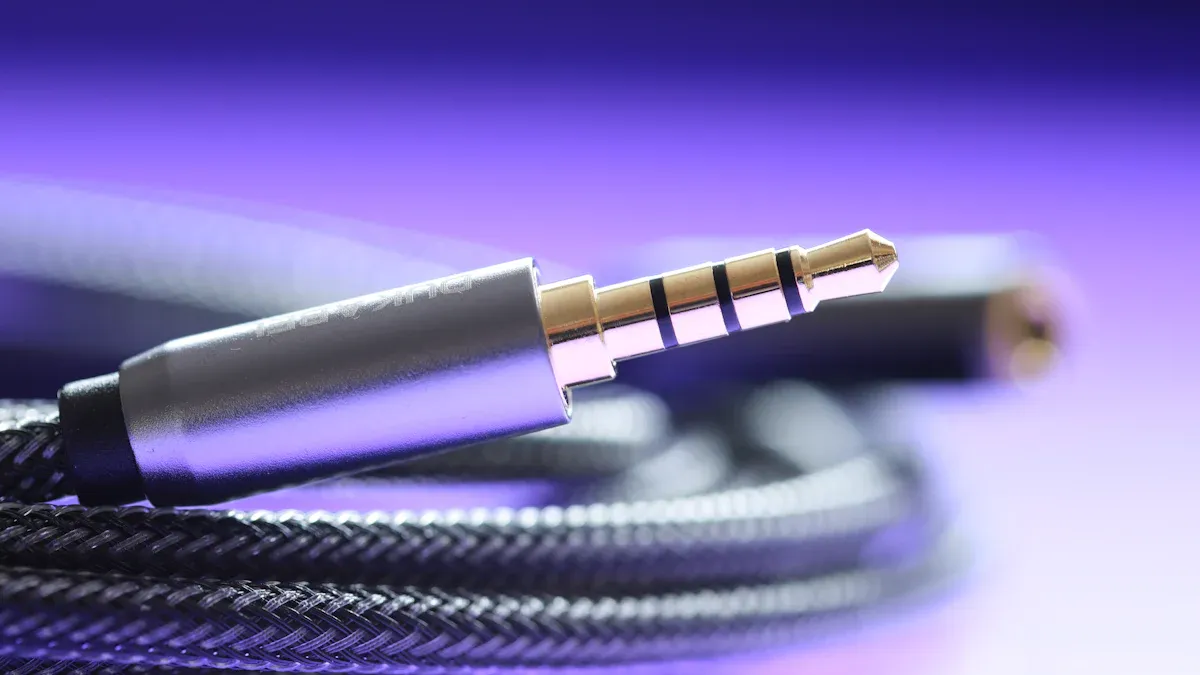
- Connector Quality: Brands like Neutrik, Switchcraft, and Rean provide strong, corrosion-resistant connectors. Gold plating prevents oxidation.
- Impedance: Maintaining correct impedance is critical for digital cables. For example, 75Ω for SPDIF or 110Ω for AES/EBU prevents signal issues.
Enhanced Quality Control and Consistency
You get consistent quality across all your products. A single partner manages the entire process. This includes design, manufacturing, and testing. They maintain strict quality standards. This reduces variations between batches. You receive reliable OEM Audio Cables every time. This consistency builds trust in your brand.
Cost Efficiency and Scalability
You can save money and grow your business easily. Consolidating your cable production with one provider reduces overhead costs. You benefit from economies of scale. This means lower unit costs as your order volume increases. The partner can also scale production up or down. This matches your changing business needs. You avoid large capital investments in manufacturing equipment.
Faster Time-to-Market
You can launch new products more quickly. A one-stop solution streamlines communication and processes. There are fewer handoffs between different vendors. This reduces delays. Your product development cycle becomes shorter. You get your innovative audio solutions to customers faster.
Innovation and Expertise Access
You gain access to specialized knowledge and cutting-edge technology. Your partner brings years of experience in audio cable design and manufacturing. They stay updated on industry trends and innovations. This expertise helps you develop advanced products. You can leverage their research and development capabilities. This ensures your audio cables are always at the forefront of technology.
The One-Stop OEM/ODM Process for Audio Cables
Navigating the journey from concept to a finished audio cable product involves several critical steps. A one-stop OEM/ODM partner guides you through each phase. This ensures a smooth and efficient development process.
Initial Consultation and Requirements Gathering
You begin your journey with a crucial initial consultation. Here, you share your vision and specific needs. This phase involves gathering all essential information. You discuss the project scope, including product requirements like the type of cable, its specifications, and your estimated order volumes. To protect your innovative ideas, you often sign a Non-Disclosure Agreement (NDA). This safeguards your intellectual property. You also define your target audience and the desired product features. You specify preferred design styles. You communicate your expected order volume. You might provide reference samples or concept sketches. This detailed discussion ensures everyone understands your goals.
Design, Engineering, and Prototyping
Next, the process moves to design, engineering, and prototyping. Cable engineering follows the initial design phase. It involves thorough research, extensive testing, and careful component comparison. Engineers conduct a detailed cost analysis. They create precise technical production drawings. This stage focuses on optimizing splicing and cable stripping. They secure necessary components from suppliers at target costs. They set up the assembly line for mass production. Engineers also consider cost variations and assembly process steps for production scheduling. They optimize tooling. They evaluate the pros and cons of different assembly methods, such as soldering versus crimping. They base these decisions on factors like data loss, connectivity, and mechanical integrity. Custom cable engineers select proper materials. They create a precise bill of materials. They ensure component availability for production. Ultimately, they produce technical drawings and assembly instructions. This phase includes several key stages:
- Technical Consultation & Requirements Analysis: You submit specifications like CAD drawings, schematics, BOMs, and connector datasheets for review. This leads to a feasibility assessment and clarification of technical questions.
- Quotation & Design for Manufacturing (DFM) Review: You then receive a detailed quotation. This includes materials, labor, tooling, and shipping. A DFM analysis identifies potential manufacturing issues. It suggests optimizations.
- Global Component Sourcing & Procurement: The team sources connectors, terminals, wire, and accessories from a worldwide network. This ensures authentic components with full traceability and compliance documentation.
- Prototype Assembly & First Article Inspection: Finally, they assemble a prototype wire harness using production-grade equipment. They perform 100% electrical testing and dimensional verification.
- Quality Testing & Documentation: They conduct comprehensive electrical, mechanical, and environmental testing according to your requirements or industry standards.
Rigorous Testing and Validation
After prototyping, rigorous testing and validation ensure your cables meet the highest standards. You put prototypes through a series of comprehensive tests. These tests verify performance, durability, and safety. Electrical tests confirm signal integrity and conductivity. Mechanical tests assess strength and flexibility. Environmental tests check resistance to temperature, humidity, and other conditions. This thorough validation process guarantees your OEM Audio Cables will perform reliably in real-world applications. You receive detailed reports on all test results. This gives you confidence in the product’s quality.
Manufacturing and Quality-Assured Production
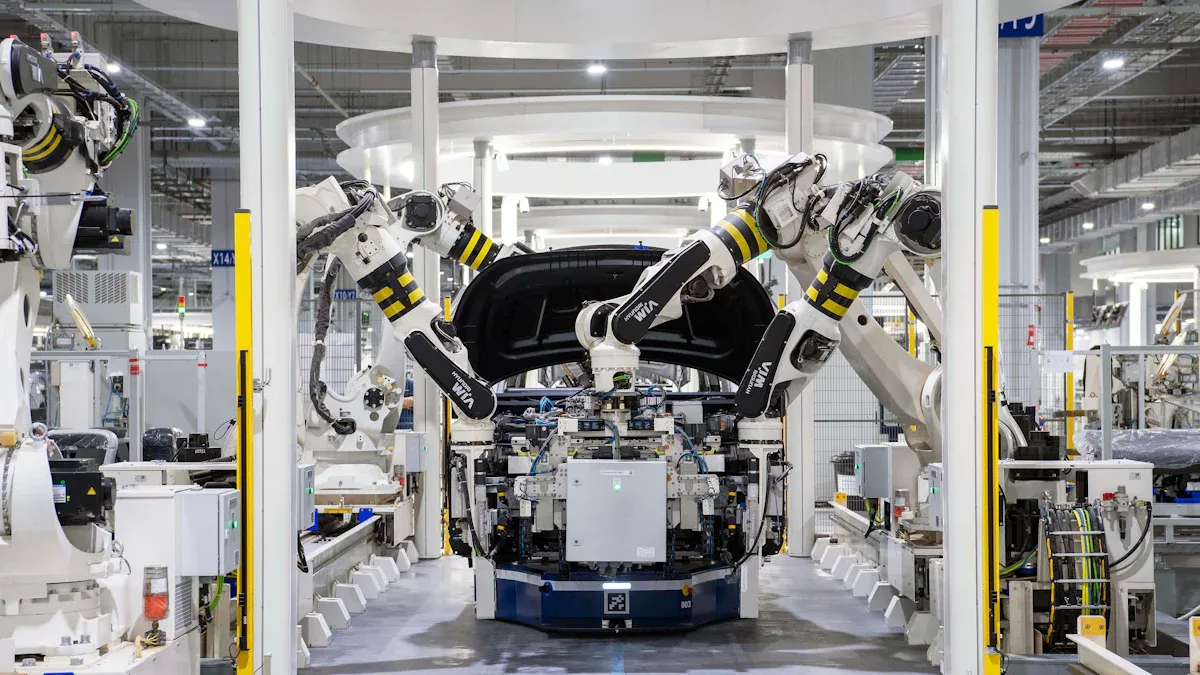
With successful validation, manufacturing begins. Your partner uses advanced production lines. These lines often feature automation to ensure efficiency and precision. Each step of the manufacturing process includes strict quality checks. This guarantees consistency across every OEM Audio Cables produced. Skilled technicians oversee the automated processes. They perform manual inspections where necessary. This dual approach maintains high standards. You benefit from a streamlined production flow. This minimizes defects and maximizes output.
Packaging and Global Logistics
The final stage involves packaging and getting your products to market. Your partner offers customized packaging solutions. These solutions are tailored to your brand needs. They create exclusive packaging designs. These designs aim to create high-impact solutions with distinctive looks for strong market recognition. They provide initial sample packaging services. This helps you achieve quick market entry and establish a competitive edge. They ensure timely delivery of products to your desired location. Your partner offers scalable production. This ensures competitive lead times. They provide logistics support. They offer attractive, informative packaging. You have the option for private-labeled or custom packaging. This comes with low minimums and quick lead times. They also provide inventory backing from their warehouses. This ensures a smooth supply chain.
Choosing the Right Partner for Your OEM Audio Cables
Selecting the correct partner for your custom audio cables is a critical decision. A good partner ensures your product’s success. You need a manufacturer that aligns with your vision and quality standards.
Expertise and Industry Experience
You should look for a partner with deep industry knowledge. A strong partner has over 20 years of experience developing and manufacturing audio connectors and OEM Audio Cables. They show a long-term commitment to quality. This experience often includes a self-owned audio video connector factory. They also have a complete supply chain from concept to packaging. Such a partner often participates in industry shows like NAMM SHOW or ISE. This shows their dedication to staying current.
Customization Capabilities
Your partner must offer extensive customization. They should provide custom engineering and design to meet your exact specifications. This includes tailored cable assemblies for specialized uses. You can expect options for custom cable length, jacket color, and flexibility. They should also offer specific connector combinations and performance tuning for different environments. Branding and private label packaging are also key customization options.
Quality Standards and Certifications
Ensure your partner meets high quality standards. They should hold management certifications like ISO 9001:2015 and ISO 14001. Product certifications such as CE, CCC, and RoHS are also essential. These certifications confirm compliance with safety, health, and environmental regulations. REACH certification is important for chemical substance control.
Communication and Dedicated Support
A reliable partner offers clear communication and strong support. They provide a dedicated service and support team. You should have access to direct communication channels for all your inquiries. Some partners even offer Customer Innovation Centers. Here, technical experts collaborate with you on solutions.
Value Proposition and Cost-Effectiveness
Evaluate a partner beyond just the price. Look for technological leadership and investment in advanced materials. Vertical integration, where they control many production stages, enhances efficiency. They should offer collaborative engineering. This means they work closely with you on design. Value-added services like design-for-manufacture consulting also show their commitment.
You find one-stop OEM/ODM solutions transformative. They help you achieve perfect, custom sound. Choosing the right partner is crucial. You leverage these benefits and elevate your audio products. Explore these solutions. Meet your specific audio needs. Unlock your full audio potential.
FAQ
What is the main difference between OEM and ODM? 🧐
An OEM manufactures products based on your designs. An ODM designs and manufactures products, which you then brand as your own.
Why should you choose a "one-stop" solution for audio cables? 🚀
A one-stop solution streamlines the entire process. It reduces errors and speeds up delivery. You get everything from one reliable partner.
How do custom audio cables improve sound quality? 🎶
Custom cables allow precise tailoring of materials and design. This optimizes electrical properties. You achieve specific sound characteristics and reduce interference.


