
The fundamental difference between balanced and unbalanced audio cables lies in their ability to suppress electromagnetic interference (EMI) and radio frequency interference (RFI). While unbalanced cables use two conductors (signal and ground) and are susceptible to noise over long distances, balanced cables utilize three conductors (hot, cold, and ground) to cancel out induced noise through phase inversion. Statistical data from industry reports indicates that balanced connections can improve signal-to-noise ratios by up to 20 dB in high-interference environments, making them the standard for professional audio integration and long-distance signal transmission.
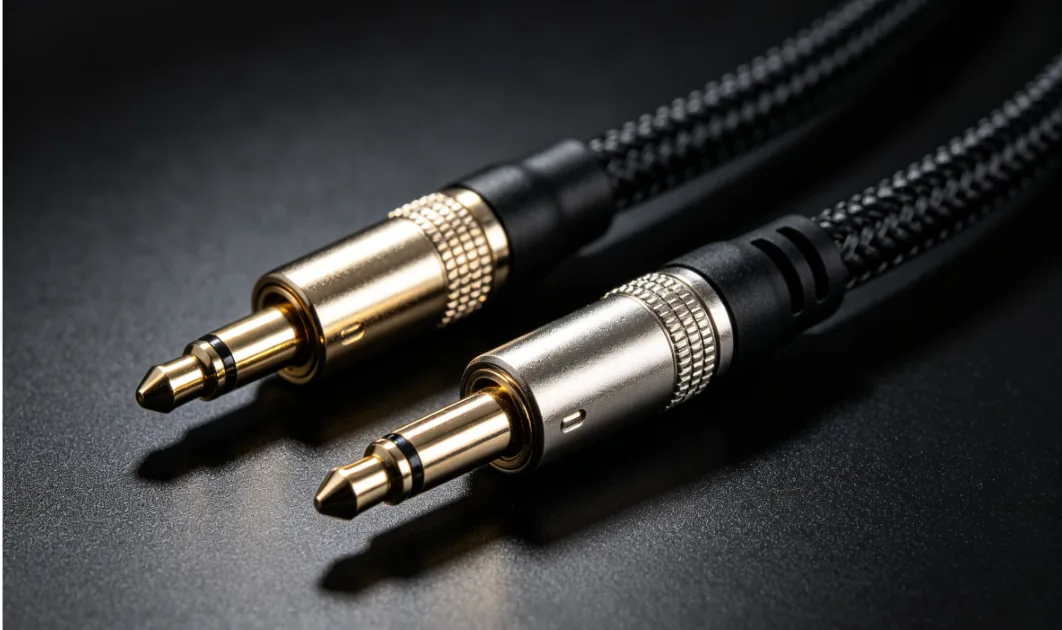
Technical Mechanisms of Signal Transmission
Unbalanced audio transmission, typically found in TS (Tip-Sleeve) cables, utilizes a single center conductor to carry the audio signal while the outer shield acts as the return path and ground. Because the shield is part of the signal circuit, any noise captured by the shield is directly injected into the audio stream. This configuration is standard for high-impedance instruments where cable runs remain under 15-20 feet. In contrast, balanced systems employ differential signaling to neutralize external noise before it reaches the amplification stage.
Balanced cables, such as XLR microphone cables, carry two versions of the same signal: one in normal polarity (hot) and one inverted 180 degrees (cold). When these signals reach the receiving device, a differential amplifier flips the inverted signal back to its original state. Any noise picked up along the cable path occurs equally on both wires. When the “cold” signal is flipped at the destination, the noise on that wire becomes inverted relative to the noise on the “hot” wire, resulting in Common Mode Rejection (CMR) , where the noise cancels itself out while the audio signal is preserved and reinforced.
Comparative Performance Metrics: Balanced vs Unbalanced
The selection between these cable types depends on specific technical requirements including distance, signal level, and environmental interference levels. The following table summarizes the primary physical and electrical differences between these two standards.
Table 1: Technical Comparison of Audio Cable Standards
| Feature | Unbalanced (TS/RCA) | Balanced (XLR/TRS) |
|---|---|---|
|
Conductors |
2 (Signal, Ground/Shield) |
3 (Hot, Cold, Ground) |
|
Signal Level |
Consumer (-10 dBV) |
Professional (+4 dBu) |
|
Noise Rejection |
Passive shielding only |
Active Common Mode Rejection |
|
Max Reliable Length |
~15-20 feet (5-6 meters) |
Up to 100+ feet (30+ meters) |
|
Common Connectors |
RCA, 1/4″ TS, 3.5mm TS |
XLR, 1/4″ TRS, DB25 |
Impact of Cable Length on Signal Integrity
Cable length is a critical factor in determining whether to use a TRS balanced interconnect or a standard unbalanced patch cable. According to technical white papers from the Audio Engineering Society (AES) , unbalanced cables act as antennas for RFI as their length increases. Beyond 20 feet, the cumulative capacitance of the cable can also lead to high-frequency roll-off, where the clarity of the audio signal is noticeably diminished.
Balanced cables mitigate these distance-related issues through their low-impedance design and differential signaling. In professional touring environments or large recording studios, balanced lines often exceed 100 feet without measurable signal degradation. Modern data centers and broadcast facilities rely on these high-fidelity standards to ensure that audio signals remain pristine despite the proximity of power transformers, wireless transmitters, and high-density computing equipment.
Connector Types and Industry Standards
Identifying the correct hardware is essential for maintaining a balanced signal chain. A professional XLR connector is the most recognizable balanced interface, featuring three pins for ground, positive, and negative signals. However, the physical appearance of a 1/4 inch jack can be deceptive. A Tip-Sleeve (TS) jack is always unbalanced, while a Tip-Ring-Sleeve (TRS) jack can carry a balanced mono signal or an unbalanced stereo signal.
Understanding the internal wiring is vital for system troubleshooting. In a balanced TRS configuration, the Tip carries the “hot” signal, the Ring carries the “cold” signal, and the Sleeve provides the ground. If a balanced cable is plugged into an unbalanced jack, the system typically defaults to unbalanced operation, losing the noise-cancellation benefits. This compatibility issue highlights the importance of matching the shielded audio cable specifications to the input/output (I/O) stages of the hardware involved.
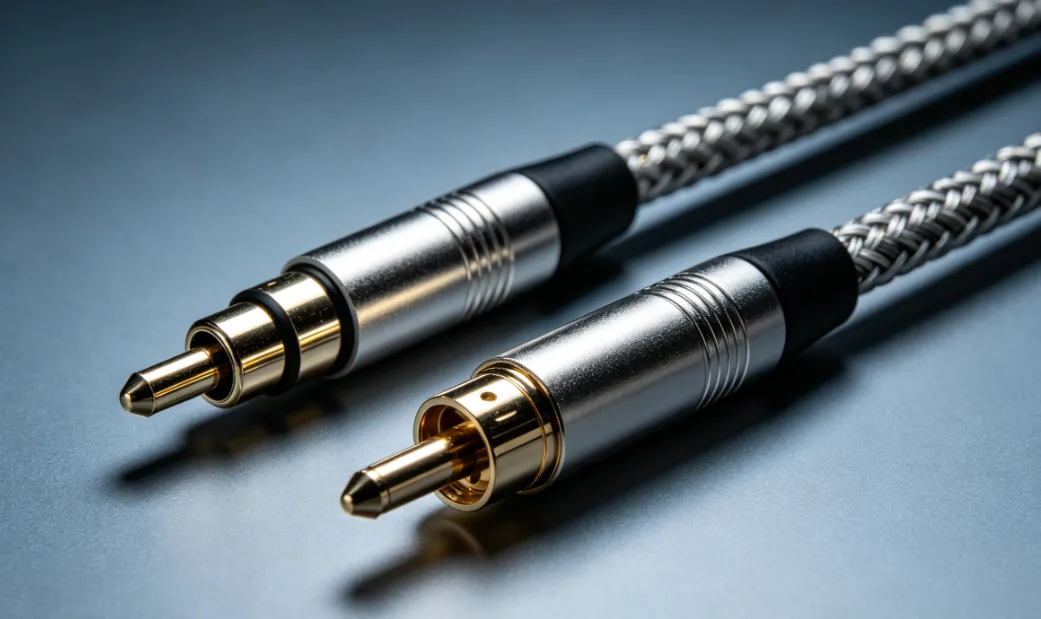
Table 2: Common Connector Applications
| Connector Type | Typical Wiring | Primary Use Case |
|---|---|---|
|
XLR Female/Male |
Balanced |
Microphones, Powered Speakers |
|
1/4″ TRS |
Balanced (Mono) |
Studio Monitors, Audio Interfaces |
|
1/4″ TS |
Unbalanced |
Electric Guitars, Patch Cables |
|
RCA (Phono) |
Unbalanced |
DJ Gear, Consumer Hi-Fi |
|
3.5mm TRS |
Unbalanced (Stereo) |
Laptops, Smartphones, Headphones |
Environmental Interference and Shielding Effectiveness
External electromagnetic fields generated by lighting dimmers, power cables, and Wi-Fi routers pose a constant threat to audio clarity. Research published in technical reports by the EBU suggests that the effectiveness of a cable’s shield is secondary to the circuit topology (balanced vs. unbalanced) in high-interference zones. While a high-quality oxygen-free copper cable provides better conductivity and durability, it cannot match the noise rejection provided by a balanced circuit.
In environments with high “floor noise,” such as industrial spaces or stages with LED video walls, unbalanced cables often suffer from “60-cycle hum.” This hum is the result of ground loops and electromagnetic induction from the 60Hz power grid. Utilizing a DI box (Direct Injection) allows users to convert an unbalanced signal from an instrument into a balanced signal, enabling long cable runs to a mixing console while isolating the ground to eliminate hum.
Conclusion: Selecting the Right Interface
The choice between balanced and unbalanced audio cables is determined by the specific application and environment. For home setups with short distances between a media player and an amplifier, unbalanced RCA or TS cables are sufficient and cost-effective. However, for any application involving microphones, long cable runs, or professional recording hardware, balanced XLR or TRS connections are required to ensure signal purity and professional-grade performance.
Key conclusions regarding cable selection include:
1.Balanced cables are essential for lengths exceeding 20 feet to prevent noise.
2.Unbalanced cables are standard for high-impedance instruments like electric guitars.
3.Common Mode Rejection is the primary technology behind balanced audio’s noise immunity.
4.Correct connector identification (TRS vs. TS) is necessary to maintain a balanced signal path.
FAQ: Common Audio Cable Questions
What happens if I use a balanced TRS cable for my guitar?
Most electric guitars have unbalanced mono outputs. Using a balanced TRS cable will not provide noise cancellation because the guitar’s output jack lacks the “cold” signal conductor. The cable will simply function as an unbalanced cable, and in some cases, it may not even seat properly in the jack.
Can I convert an unbalanced signal to a balanced one?
Yes, a Direct Injection (DI) box is the standard tool for this conversion. It takes an unbalanced, high-impedance signal (like a guitar) and converts it to a balanced, low-impedance signal (like a microphone). This allows the signal to travel long distances through an XLR cable without picking up noise.
Is a stereo 3.5mm headphone cable considered balanced?
No, a standard 3.5mm TRS headphone cable is unbalanced. Although it has three conductors (Tip, Ring, Sleeve), they are used for Left signal, Right signal, and a common Ground. For a signal to be balanced, it must carry a single mono channel using two conductors for the signal and one for ground.
Do balanced cables improve the actual sound quality or just reduce noise?
Technically, balanced cables primarily reduce the noise floor. However, by eliminating electromagnetic interference and hum, the perceived clarity and dynamic range of the audio are significantly improved. In long runs, balanced cables also prevent high-frequency loss caused by the capacitance issues often found in unbalanced designs.
Are XLR cables always better than 1/4 inch cables?
Not necessarily. An XLR cable is always balanced, but a 1/4 inch cable can be either balanced (TRS) or unbalanced (TS). The “better” cable is the one that matches your equipment’s ports. If your device has balanced TRS outputs, a TRS cable will perform identically to an XLR cable.


