
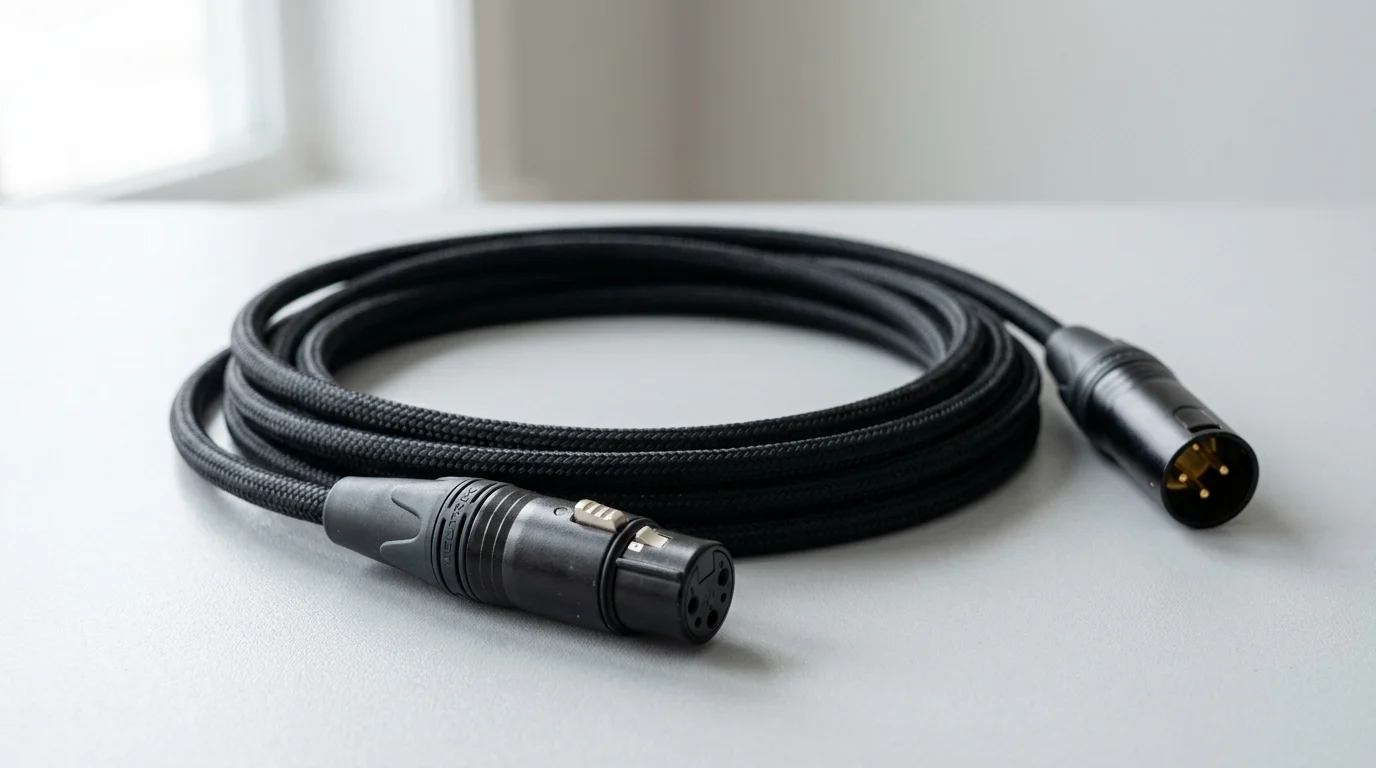
Why microphone cable selection affects B2B product performance
For distributors, system integrators, and live event production companies, procuring the right microphone cable extends far beyond basic audio transmission. It requires a strategic alignment of electrical performance, mechanical durability, and supply chain reliability. In the B2B sector, connectivity components are high-volume, mission-critical assets where failure directly impacts operational continuity and client satisfaction.
How wholesale buyers define professional microphone cable
Procurement teams differentiate professional-grade cables through strict technical tolerances rather than marketing claims. A high-quality microphone cable typically features a capacitance of less than 90 pF/m between conductors and utilizes 99.99% Oxygen-Free Copper (OFC). These specifications ensure a flat frequency response over cable runs exceeding 50 meters—a critical requirement for live venues, stadiums, and recording studios. Furthermore, professional standards dictate a robust outer jacket, usually composed of highly elastic PVC or polyurethane, capable of withstanding extreme temperature fluctuations without cracking.
Commercial risks of poor microphone cable selection
Substandard cable selection introduces severe commercial liabilities for wholesalers and integrators. Cables with poor jacket elasticity, inferior solder joints, or inadequate shielding often suffer from microphonic noise or structural failure within the first 1,000 flex cycles. For a distributor, an RMA (Return Merchandise Authorization) rate exceeding 1.5% on connectivity products rapidly erodes profit margins due to replacement logistics and labor costs. More importantly, recurring failures in professional environments damage brand credibility, making rigorous technical vetting essential prior to bulk purchasing.
Conductor and shielding features to verify first
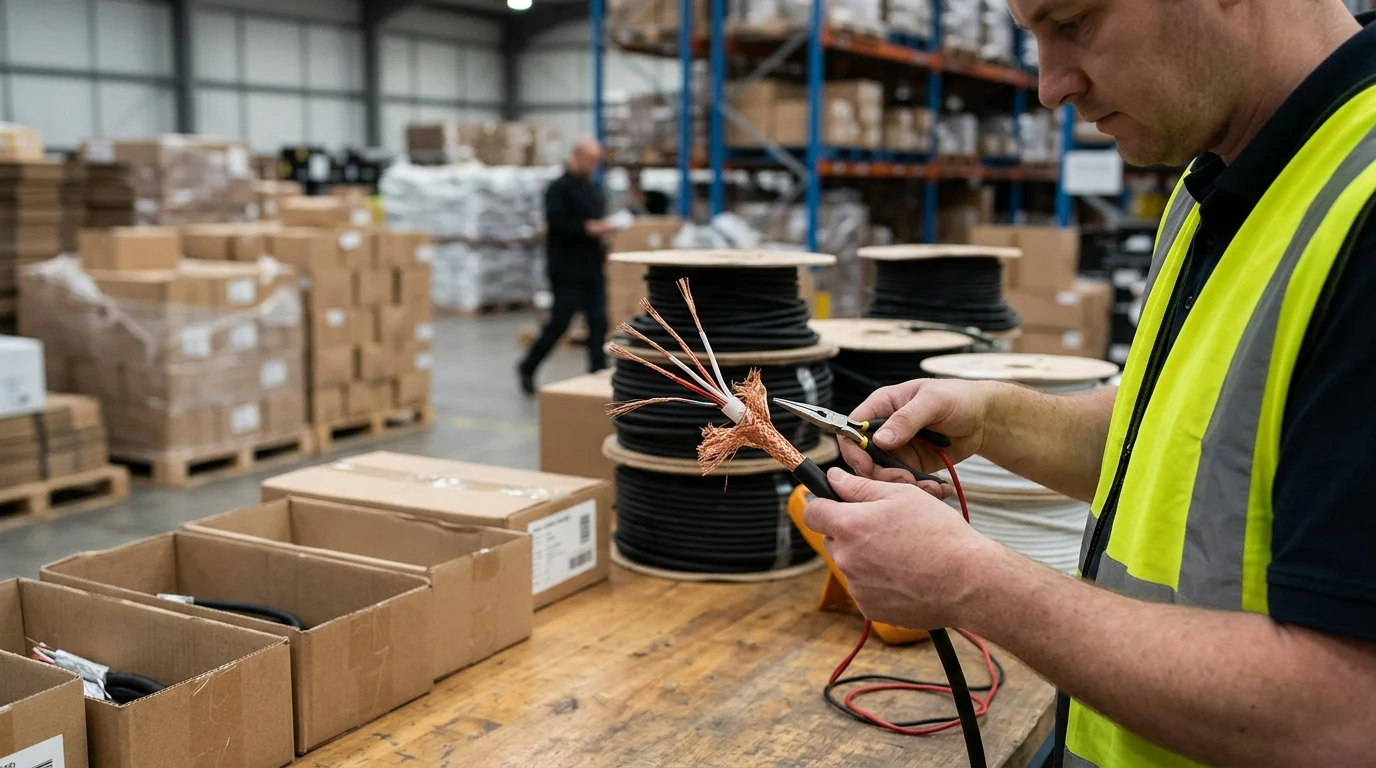
The core of any microphone cable lies in its internal architecture. Buyers must carefully evaluate the raw materials used for signal transmission and electromagnetic interference (EMI) rejection to ensure the product meets professional audio standards.
How OFC copper purity, gauge, and stranding affect performance
The industry standard for professional audio relies on 99.99% Oxygen-Free Copper (OFC) to prevent oxidation and maintain optimal conductivity over years of deployment. Wire gauge and stranding dictate both current capacity and physical flexibility. A premium microphone cable typically employs 20 to 24 AWG conductors. To achieve high flexibility and fatigue resistance, manufacturers utilize fine stranding configurations, such as 28 individual strands of 0.10mm copper per core. This high-strand-count architecture maximizes flex life without compromising signal integrity during heavy touring use.
Which shielding structures reduce noise best
Electromagnetic and radio frequency interference (EMI/RFI) degrade audio quality, making the shielding structure a paramount concern for buyers. High-density braided copper shielding offers up to 98% coverage, providing superior noise rejection and exceptional mechanical strength for stage use where cables are frequently trampled. Alternatively, spiral (serve) shielding provides up to 90% coverage and offers greater flexibility and easier termination, making it highly suitable for studio applications and patch bays where extreme physical abuse is less likely.
Cable comparison criteria for procurement teams
Procurement teams must weigh these internal architectures against cost, durability, and intended application requirements to optimize their catalog offerings.
| Shielding Type | Typical Coverage | Flexibility | Manufacturing Cost | Best Application |
|---|---|---|---|---|
| Braided Copper | 95% – 98% | Moderate | High | Live Stage, Heavy Touring |
| Spiral (Serve) Copper | 85% – 90% | High | Medium | Studio, Patch Cables |
| Aluminum Foil + Drain | 100% | Low | Low | Permanent Installations |
Connector, durability, and assembly features that matter
Mechanical termination is the most common point of failure in audio connectivity. Evaluating the connectors, strain relief designs, and the overall assembly process is essential for ensuring long-term field reliability and minimizing warranty claims.
How XLR materials, plating, and strain relief affect reliability
The construction of XLR connectors determines the operational lifespan of the assembled cable. Buyers should specify precision-machined zinc alloy shells for maximum structural integrity. Contact plating is equally critical; 3-micron gold plating provides superior corrosion resistance for low-voltage signals, while silver plating offers excellent conductivity but requires more maintenance over time. Furthermore, a robust chuck-type strain relief system is necessary to absorb cable tension, secure the jacket tightly, and protect internal solder joints from mechanical stress.
Mechanical tests buyers should request
Distributors should request comprehensive mechanical testing data from manufacturers before committing to volume orders. Key metrics include flex testing, where the cable must withstand at least 10,000 bend cycles at a 90-degree angle with a weighted load without internal breakage. Additionally, tensile strength pull tests should verify that the connector-cable junction can endure a minimum of 30 kg of linear force before structural deformation or signal loss occurs.
How OEM and ODM buyers assess private label options
For OEM and ODM buyers, private labeling offers significant margin expansion and brand differentiation. Manufacturers equipped with automated die-casting and custom tooling capabilities can produce bespoke connector housings, laser-engraved logos, and custom-branded shrink tubing. Typical Minimum Order Quantities (MOQs) for custom connector molding start at 1,000 to 2,000 pieces. Buyers should also leverage customization options like color-coded boots or rings, which add minimal production cost (often under $0.05 per unit) but provide immense value for end-users managing complex audio routing.
Compliance, factory, and supply chain factors to review
A reliable product specification is only as strong as the factory producing it. B2B buyers must conduct rigorous due diligence on compliance frameworks, production capacity, and overall manufacturing sophistication.
Certifications and documents importers should request
Navigating international trade requires strict adherence to environmental and safety regulations. Importers must request verifiable documentation for RoHS (Restriction of Hazardous Substances) and REACH compliance to ensure cables and connector plastics are free from restricted heavy metals and phthalates. Additionally, partnering with ISO9001-certified facilities guarantees that the supplier maintains standardized quality management systems, ensuring consistency across all production batches.
How MOQ, lead time, and sample policy affect sourcing
Supply chain terms directly impact inventory management, warehousing costs, and cash flow. Standard MOQs for high-quality premade microphone cables generally range from 500 to 1,000 units per length, while bulk un-terminated cable often requires a 3,000-meter minimum run. Lead times are typically 25 to 35 days, though this can extend to 45 days during peak global manufacturing seasons. Buyers should always negotiate a clear sample policy, securing pre-production samples to verify electrical tolerances and mechanical feel before finalizing mass production deposits.
Why factory scale, automation, and export experience matter
The scale and technological sophistication of the manufacturing facility are strong indicators of product consistency. A factory utilizing robotic soldering and automated wire stripping significantly reduces the human error inherent in manual assembly, driving batch defect rates well below 0.5%. Furthermore, established suppliers with extensive export experience—often operating facilities exceeding 15,000 square meters with over 120 specialized staff—are better equipped to handle complex international logistics, strict QA protocols, and custom retail packaging requirements for over 50 global markets.
How to build a supplier evaluation framework
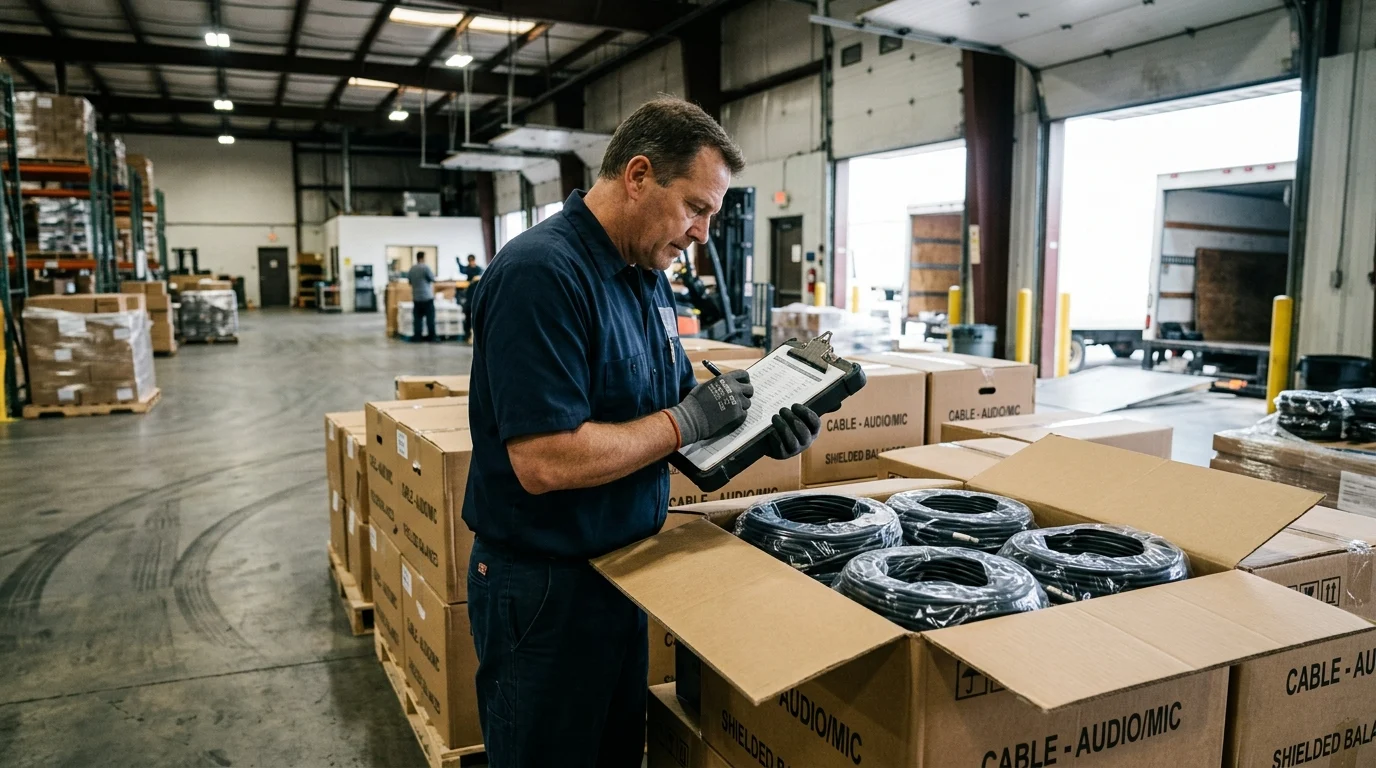
Establishing a standardized evaluation process ensures that procurement teams consistently secure high-value audio connectivity solutions while actively mitigating supply chain disruptions and quality fade.
Step-by-step supplier evaluation for distributors
Distributors should implement a multi-staged supplier auditing process. This begins with a desktop audit of the supplier’s certifications, equipment lists, and export history. Next, buyers must conduct a technical evaluation of engineering samples using cable testers, multimeters, and oscilloscopes to verify capacitance and shielding effectiveness. Once technical viability is confirmed, buyers should initiate a pilot run of 200 to 500 units to assess the supplier’s adherence to lead times, packaging quality, and communication protocols before scaling to full container load (FCL) shipments.
Key microphone cable features to include in a buyer checklist
To streamline procurement, buyers should utilize a standardized checklist that cross-references critical performance metrics against supplier capabilities. This ensures apples-to-apples comparisons when evaluating multiple vendor quotes.
| Feature Category | Target Specification | Verification Method |
|---|---|---|
| Conductor Material | 99.99% OFC, 20-24 AWG | Material Data Sheet, Visual Inspection |
| Shielding Coverage | >95% Braided or >90% Spiral | Cross-section Analysis |
| Connector Contacts | 3-Micron Gold or Silver Plated | Factory Specification, Usage Testing |
| Mechanical Durability | >10,000 Flex Cycles, 30kg Pull | Lab Test Reports (QA Documentation) |
| Compliance & Quality | RoHS, REACH, ISO9001 | Third-party Certificates, Factory Audit |
Key Takeaways
- Wholesale sourcing and supply-chain implications for microphone cable
- Specifications, compliance, and commercial terms buyers should validate
- Actionable recommendations for distributors and procurement teams
Frequently Asked Questions
What conductor material is best for a professional microphone cable?
Choose 99.99% OFC copper. It resists oxidation, maintains conductivity over time, and supports stable audio performance on long runs in studios, venues, and touring systems.
Which shielding type should I choose for stage or studio use?
Use braided copper shielding for live stage and touring because it offers stronger noise rejection and durability. Choose spiral shielding for studio or patch use when flexibility and easier termination matter more.
What cable specs are practical to check before bulk buying?
Check capacitance below 90 pF/m, 20–24 AWG conductors, high strand count, and shielding coverage. These specs help reduce noise, preserve frequency response, and improve flex life.
Which XLR connector features help reduce cable failure?
Look for precision-machined zinc alloy shells, reliable gold- or silver-plated contacts, and a chuck-type strain relief. These features protect solder joints and improve long-term connection stability.
Can JINGYI support OEM or private-label microphone cable projects?
Yes. JINGYI provides OEM/ODM custom cable production, private label services, and premade microphone cable solutions for distributors, integrators, studios, festivals, and other pro-audio buyers.


