
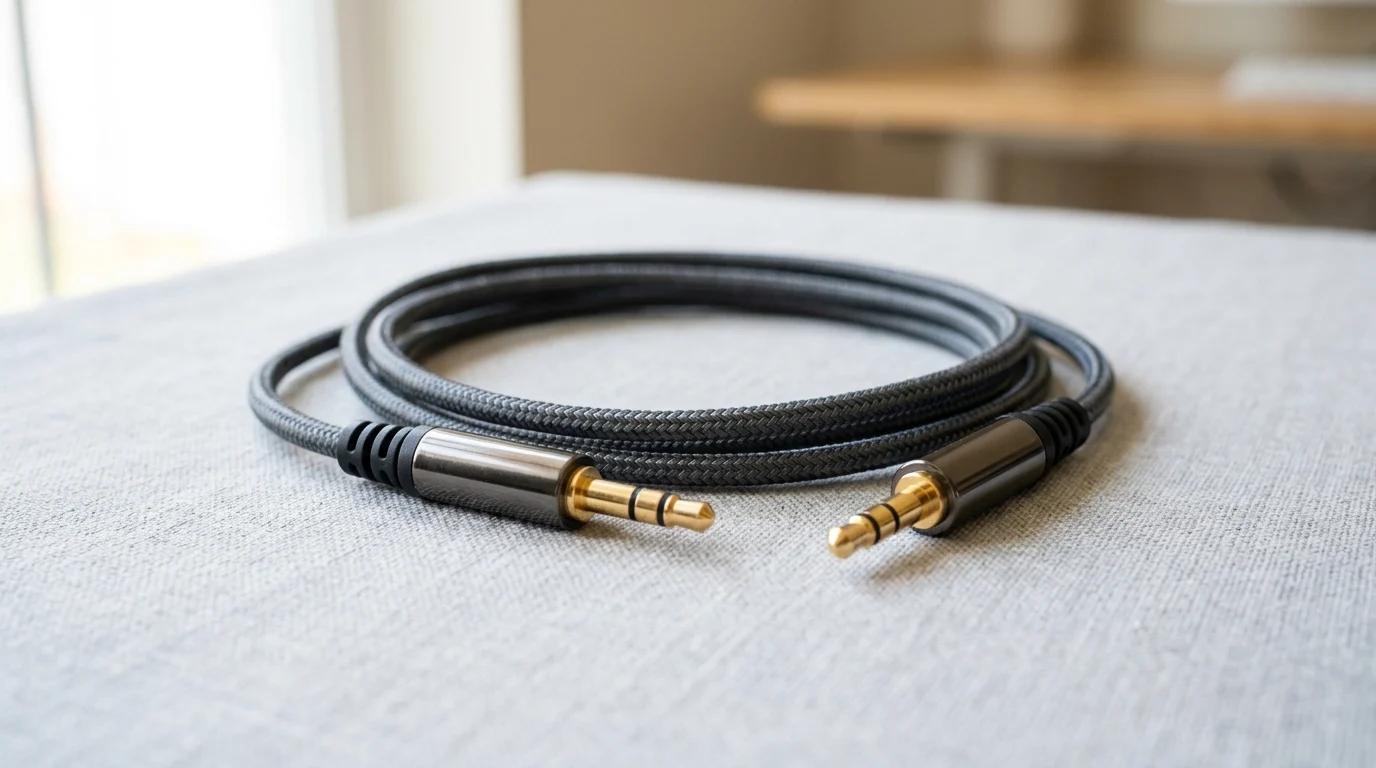
Why OEM audio cable manufacturing matters for brand growth
The global professional audio market demands uncompromising signal integrity, durability, and aesthetic consistency. For B2B wholesale buyers, distributors, and consumer electronics brands, relying on generic off-the-shelf connectivity solutions severely limits market positioning. Engaging in OEM audio cable manufacturing allows businesses to assert total control over product specifications, acoustic performance, and brand identity, transforming a commoditized accessory into a high-margin proprietary asset.
How OEM programs strengthen product differentiation
OEM programs empower brands to move beyond standard PVC jackets and basic copper wiring. By dictating exact geometries, shielding densities, and connector tooling, companies can engineer cables that solve specific acoustic challenges. For instance, an OEM partnership allows a brand to specify 99.99% Oxygen-Free Copper (OFC) conductors and 95% braided copper shielding, which dramatically reduces electromagnetic interference (EMI) in high-noise environments. Furthermore, custom tooling for connector housings enables the integration of unique tactile grips and laser-engraved logos, creating a distinct visual language that competitors cannot legally replicate.
Which buyer segments benefit most from OEM audio cables
Several distinct buyer segments realize immediate ROI from custom audio cable manufacturing. Professional audio distributors and system integrators outfitting live music venues, recording studios, and cinemas require specialized snake cables, Speakon connectors, and DMX lines built to exact lengths and durability standards. Consumer audiophile brands benefit by specifying premium materials like silver-plated conductors or custom braided PET sleeves to justify premium retail pricing. Across these segments, moving from a white-label purchasing model to a direct OEM strategy can escalate gross margins from a baseline of 20-30% to upwards of 50-70%, as middleman markups are eliminated.
What specifications buyers should define first
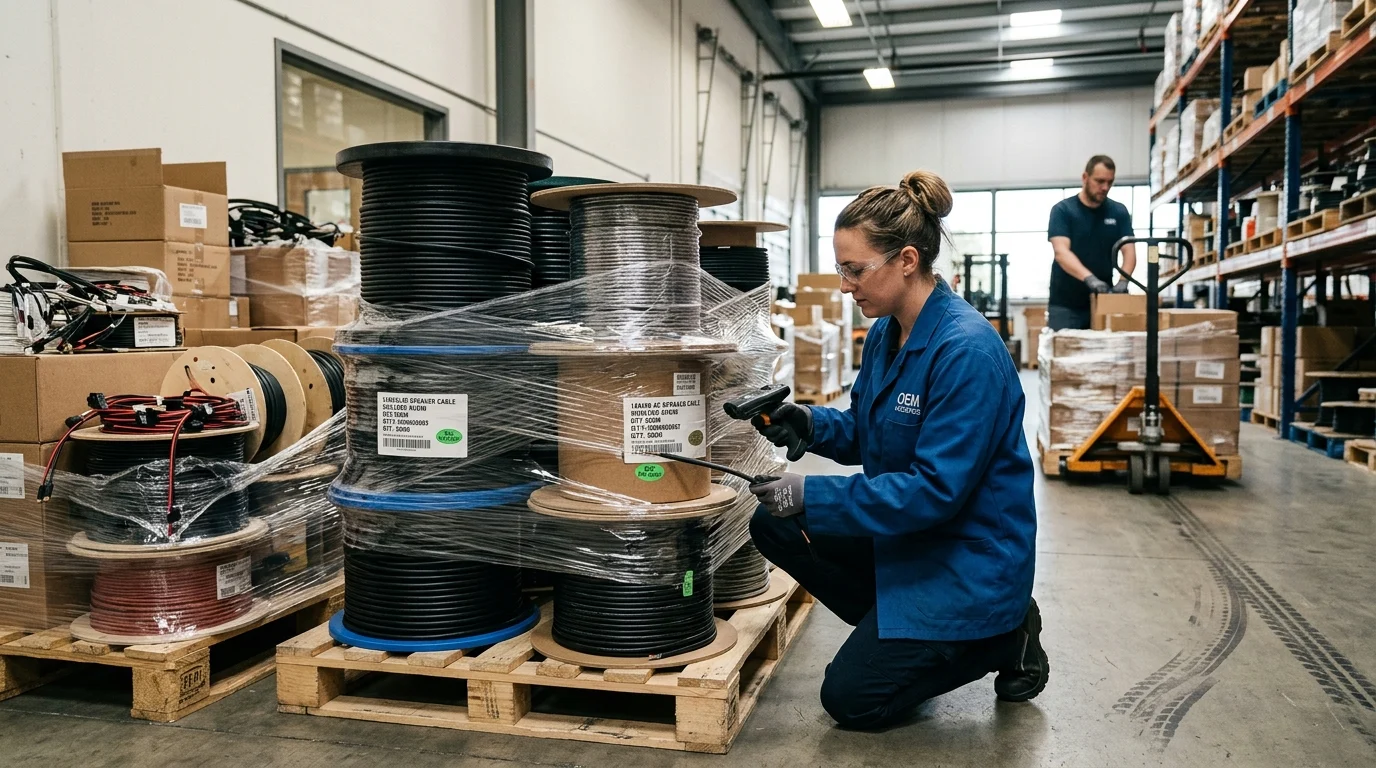
Transitioning into OEM production requires procurement teams to translate acoustic and mechanical requirements into precise manufacturing data. Failing to define technical specifications during the Request for Quotation (RFQ) phase often leads to misaligned expectations, cost overruns, and suboptimal audio fidelity.
Which technical specifications determine performance
The core of any audio cable lies in its internal architecture. Buyers must define the American Wire Gauge (AWG) size—typically ranging from 20 AWG to 24 AWG for standard instrument and microphone lines—to balance flexibility with signal attenuation. Capacitance is another critical metric; premium studio cables should target a capacitance of less than 30 pF/ft to prevent high-frequency roll-off over long runs.
| Conductor Material | Purity Level | Primary Application | Relative Cost Premium |
|---|---|---|---|
| Copper-Clad Aluminum (CCA) | N/A | Budget consumer audio | Baseline |
| Oxygen-Free Copper (OFC) | 99.99% | Professional stage and studio | +40% to 60% |
| Silver-Plated OFC | 99.99% | High-end audiophile interconnects | +150% to 200% |
How to compare cable options across key use cases
Specifications must align strictly with the intended operational environment. Cables destined for live stage applications demand thick, road-ready TPE or heavy-duty PVC jackets capable of withstanding heavy foot traffic, alongside precision-machined XLR or PowerCon connectors that resist physical impact. Conversely, cables engineered for permanent studio installations prioritize ultra-low-noise shielding architectures, such as dual-layer conductive PE and spiral copper shields, over extreme mechanical ruggedness. Defining the use case ensures the factory allocates the correct extrusion profiles and connector tolerances.
What packaging and private label requirements to confirm
Beyond the cable itself, buyers must formalize private label and packaging requirements early in the negotiation process. Custom connector molds typically incur tooling fees ranging from $500 to $2,500 depending on complexity, requiring amortization over the projected order volume. Packaging choices—ranging from eco-friendly kraft paper boxes for sustainability-focused brands to high-visibility PET blister packs for retail distribution—directly impact both the unit cost and volumetric shipping weight. Buyers should specify barcode formats, shrink-wrap requirements, and cable tie branding (e.g., custom hook-and-loop straps) in the initial Bill of Materials (BOM).
How to evaluate an OEM audio cable manufacturer
The pro-audio connectivity supply chain is highly fragmented, featuring thousands of trading companies masquerading as direct manufacturers. To secure reliable, high-fidelity production, procurement professionals must rigorously evaluate the actual factory floor capabilities, capacity, and quality management systems of potential OEM partners.
Which factory capabilities matter most
A premier audio cable manufacturer demonstrates vertical integration and automated precision. Key indicators include automated wire extrusion lines, robotic soldering stations, and in-house automated die-casting for connector housings. A facility encompassing 15,000 square meters with a dedicated workforce of over 120 personnel generally indicates the necessary scale to handle simultaneous global orders. Furthermore, in-house tooling capabilities allow the manufacturer to rapidly prototype custom connector designs, significantly reducing the time-to-market for proprietary connectivity solutions.
How to assess MOQ, sampling, lead time, and customization
Production parameters must align with the buyer’s inventory strategy. Minimum Order Quantities (MOQ) for custom OEM audio cables typically range from 1,000 to 3,000 meters of raw cable, or 500 to 1,000 finished assemblies per SKU. Procurement teams should negotiate sampling protocols, expecting a 7- to 14-day turnaround for fully functional prototypes (golden samples) before committing to mass production. Standard mass production lead times span 25 to 40 days, but buyers must assess whether the supplier has the agility to expedite orders during peak seasonal demand or component shortages.
What supplier comparison criteria to use
Establishing standardized criteria prevents subjective supplier selection. Procurement teams should score candidates on a matrix of technical, operational, and commercial metrics.
| Evaluation Criteria | Tier 1 OEM Partner | Tier 2 Supplier / Trader |
|---|---|---|
| Manufacturing Scope | In-house extrusion, die-casting, and assembly | Outsourced raw cable, manual assembly only |
| Defect Rate Guarantee | < 0.2% with documented RCA | Variable, often > 1.5% |
| Customization Speed | 7-10 days for custom tooling | 20-30 days, reliant on third parties |
| Compliance Support | Full RoHS, REACH, CE documentation | Limited or outdated test reports |
What compliance, quality control, and logistics checks reduce risk
Quality assurance in the pro-audio sector extends far beyond a simple continuity check. For B2B importers, rigorous compliance verification and robust logistics planning are vital to mitigating legal liabilities, preventing costly product recalls, and ensuring inventory arrives intact at global distribution centers.
Which compliance and quality checkpoints to verify
Importers must verify that the OEM manufacturer adheres to international environmental and safety directives, primarily RoHS and REACH, to ensure the absence of hazardous substances in cable jackets and soldering materials. On the quality control front, the factory must implement multi-stage testing. This includes high-voltage insulation resistance testing, precise continuity checks, and impedance verification. Mechanical durability is equally critical; buyers should demand documented bend test results (e.g., enduring 10,000+ flex cycles at a 90-degree angle) and pull force testing (e.g., sustaining 50N of tension) to guarantee the cable can survive the rigors of professional touring and stage use.
How to plan packaging durability and carton optimization
The structural integrity of export packaging directly influences landed costs and product presentation. Procurement teams should stipulate master carton dimensions and weight restrictions, generally capping individual boxes at 15 to 20 kilograms to comply with international courier and warehouse handling safety standards. Cartons should utilize double-wall corrugated cardboard (e.g., K=K specification) to prevent crushing during palletization and maritime transit. Additionally, buyers should request ISTA 1A drop testing certification for the packaged goods, ensuring the retail boxes and internal connectors remain undamaged regardless of turbulence or rough handling at the port.
How to choose the right OEM audio cable strategy
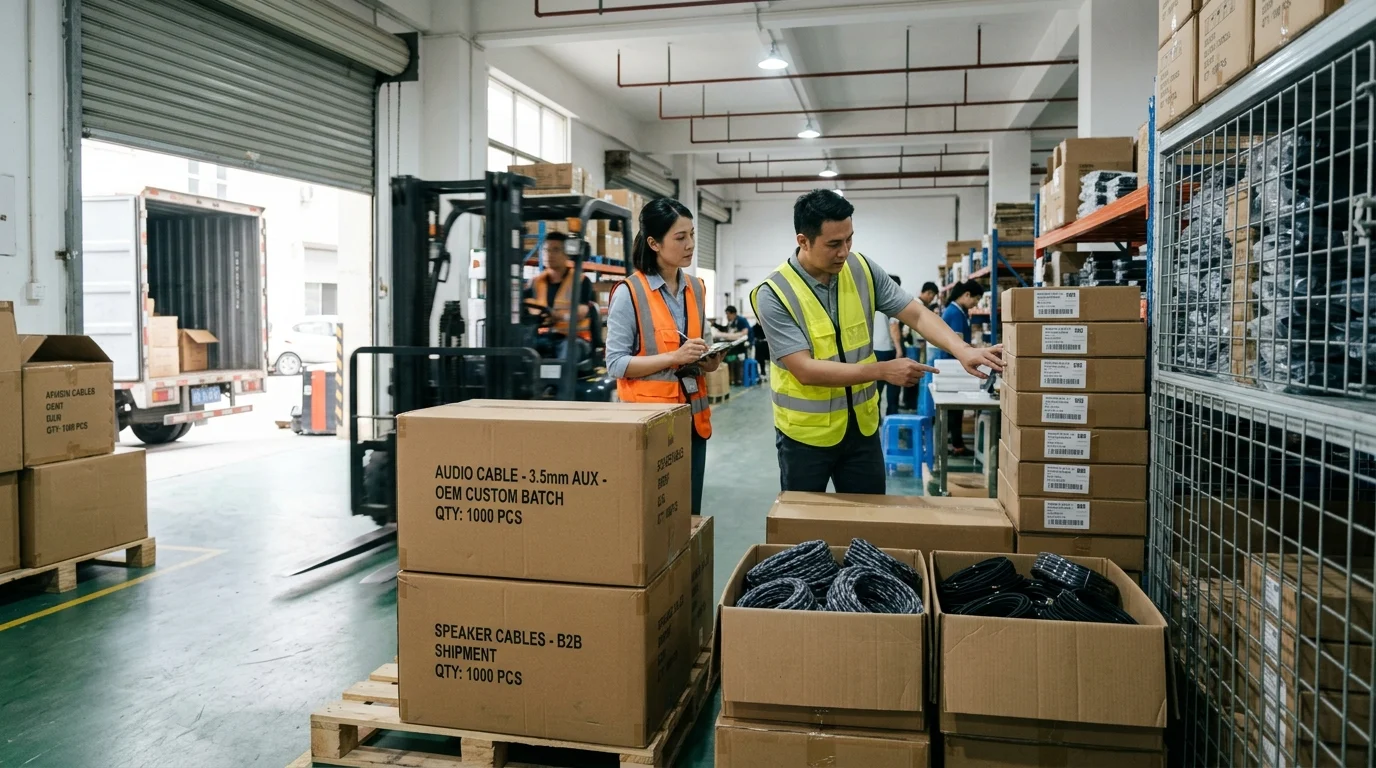
Finalizing an OEM audio cable strategy requires moving beyond transactional purchasing to establish a resilient, scalable supply chain partnership. The right approach minimizes friction during product development and secures long-term competitive advantages through continuous innovation and cost optimization.
What decision process helps teams move from RFQ to launch
A structured decision-making pipeline is essential for transitioning smoothly from the initial RFQ to commercial launch. The process begins with a comprehensive technical review of CAD drawings and material specifications. Once the BOM is finalized, the team must authorize a golden sample, subjecting it to rigorous acoustic and mechanical field testing. Upon approval, executing a small-batch pilot run—typically 300 to 500 units—allows both the buyer and the factory to identify any assembly bottlenecks or packaging flaws before scaling to full mass production. This phased approach drastically reduces the financial risk associated with large-scale manufacturing defects.
Which sourcing model supports long-term growth
For long-term growth, brands should adopt a consolidated sourcing model, partnering with a one-stop OEM/ODM manufacturer capable of producing an entire ecosystem of connectivity solutions. A supplier founded with decades of expertise—capable of delivering everything from 3.5mm consumer aux cables to professional RCA, XLR, Ethernet, and multi-channel snake cables—enables buyers to streamline vendor management. This consolidation leverages aggregate volume to negotiate favorable pricing, secures priority production scheduling, and ensures absolute consistency in acoustic signature and brand aesthetics across the entire product catalog.
Key Takeaways
- Wholesale sourcing and supply-chain implications for OEM audio cable
- Specifications, compliance, and commercial terms buyers should validate
- Actionable recommendations for distributors and procurement teams
Frequently Asked Questions
What should I define first in an OEM audio cable RFQ?
Specify application, cable type, AWG, conductor material, shielding, jacket, connector model, length, logo, and packaging. Clear RFQs reduce sampling delays and pricing errors.
Which OEM audio cables can JINGYI customize?
JINGYI can customize XLR, RCA, Speakon, PowerCon, 3.5mm, 6.3mm, microphone, speaker, DMX, Ethernet, and snake cables for private label or ODM projects.
How can I verify an OEM audio cable factory is real?
Check factory size, production equipment, certifications, QC process, and export history. JINGYI highlights a 15,000 m² factory, automated production, and service in 50+ markets.
What materials are best for professional OEM audio cables?
For pro use, choose 99.99% OFC conductors, strong shielding, and durable TPE or heavy-duty PVC jackets. These help lower noise and improve reliability on stage or in studios.
Can OEM audio cable packaging be customized for my brand?
Yes. You can customize logo printing, laser engraving, labels, barcodes, cable ties, retail boxes, and bulk packaging. Confirm these details early to avoid tooling and lead-time surprises.


