
Introduction
A reliable cable path on an outdoor concert stage has to do more than connect equipment: it must protect crews and audiences, preserve audio, power, and data performance, and hold up under weather, traffic, and uneven ground. The best routing approach depends on site layout, cable type, load requirements, and how people and vehicles will move through the venue. This article explains the practical principles behind safe, efficient cable runs, including separation of power and signal lines, protection at crossings, distance limits, and planning methods that reduce interference, damage, and downtime during setup and showtime.
Outdoor Concert Stage Cable Routing Basics
Routing cables effectively at outdoor concert stages is a critical infrastructure discipline that dictates both the operational success and safety of an event. Poorly executed cable infrastructure introduces severe risks, ranging from ground loops and signal attenuation to catastrophic electrical failures and audience injuries.
Why routing affects safety and signal integrity
The physical path a cable takes directly impacts the electrical and data integrity of a production. When technicians route cables haphazardly, power lines can induce electromagnetic interference (EMI) into unshielded or poorly shielded audio lines, resulting in audible hum. Furthermore, excessive cable lengths without proper routing can lead to voltage drops; the National Electrical Code (NEC) recommends a maximum voltage drop of 3% for branch circuits to ensure amplifiers and sensitive lighting fixtures operate within their designed parameters. On the data side, standard Cat5e/Cat6 runs for digital audio protocols like Dante are strictly limited to 100 meters (328 feet) before requiring an active network switch or fiber-optic conversion to prevent packet loss.
What site conditions shape routing decisions
Environmental and topographical realities dictate the feasibility of any routing plan. Hardscapes like asphalt require different approaches than soft turf or mud. Soil compaction rates, drainage gradients, and existing structural obstacles must be evaluated well before load-in. For instance, routing cables across a site with a slope gradient exceeding 5% often necessitates secondary anchoring systems to prevent cable creep under heavy loads or thermal expansion. Additionally, anticipating audience flow and emergency egress routes ensures thick cable trunks do not become dangerous bottlenecks or trip hazards during mass evacuations.
Planning Cable Paths Across the Site
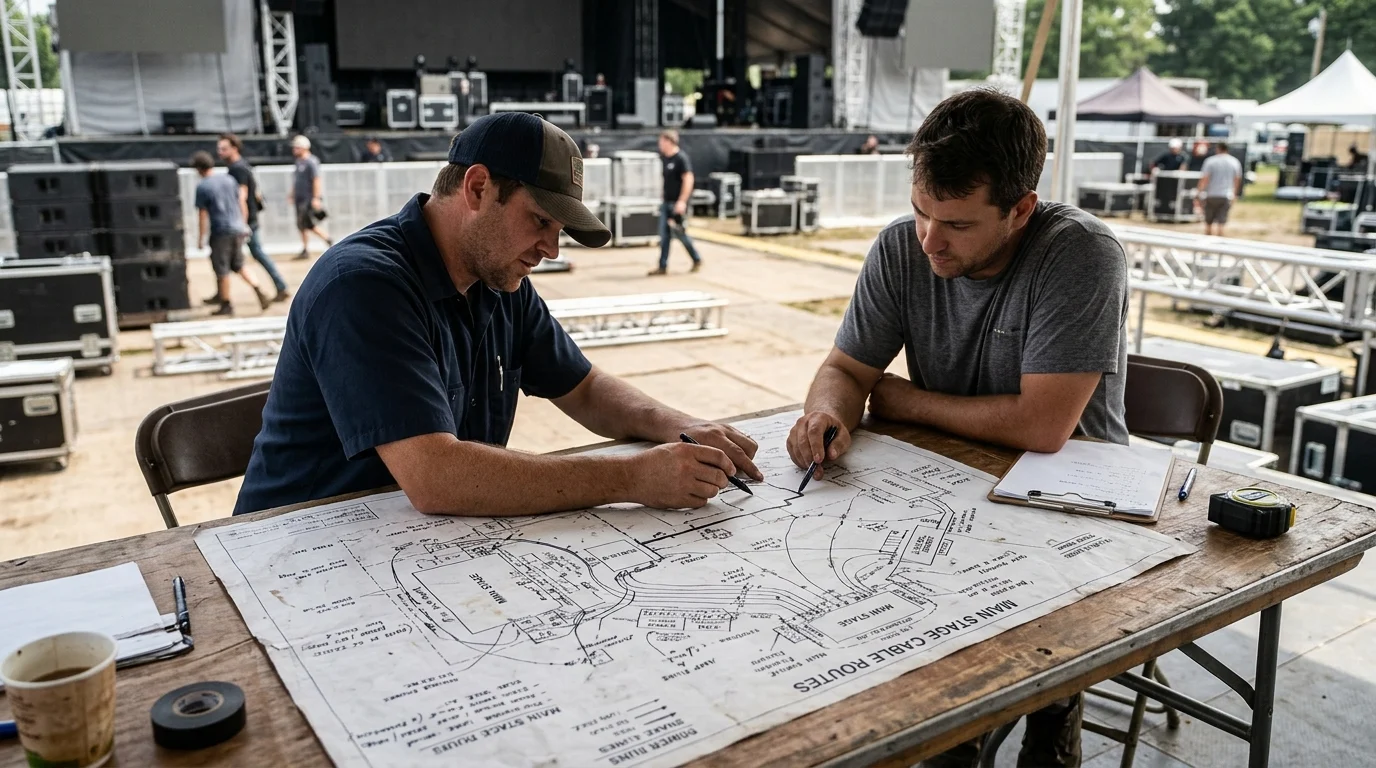
Establishing a logical network of pathways requires technicians to map the site meticulously before the first road case is unloaded. A comprehensive plan minimizes the total linear footage of cable required while maximizing accessibility for mid-show troubleshooting.
How to define primary routes for power and signal
Defining primary routes involves establishing high-capacity trunk lines between the stage, front of house (FOH), and generator farms or shore power tie-ins. The standard approach separates high-voltage feeder cables, such as 4/0 Cam-Lok runs, from multi-channel audio snakes, DMX lighting control lines, and video fiber. Mapping these primary arteries early ensures subsequent branch lines to delay audio towers, broadcast trucks, or vendor tents do not cross over or interfere with the core production infrastructure.
When to use perimeter, overhead, under-deck, or trench paths
The choice of pathway depends heavily on the site’s layout, the production’s budget, and the duration of the event.
| Routing Path | Best Application | Key Consideration | Relative Cost |
|---|---|---|---|
| Perimeter | Long runs around audience areas | Keeps cables out of foot traffic | Low to Medium |
| Overhead (Truss/Catenary) | FOH to Stage across audience | Requires structural rigging and ballasting | High |
| Under-deck | Beneath stage or VIP platforms | Excellent protection, keeps stage clean | Medium |
| Trenching | Multi-day festivals on soft ground | Requires heavy machinery and site repair | High |
Selecting the right path mitigates risks associated with weather and crowd dynamics, ensuring uninterrupted performance while keeping the site visually clean.
How to handle crossings and separation distances
When power and signal cables must traverse the same area, strict separation protocols are mandatory to prevent inductive coupling. Industry best practices dictate maintaining a minimum parallel separation distance of 12 to 24 inches between high-voltage power lines and low-voltage signal cables, depending on the amperage load. If power and signal paths must cross, technicians must route the cables at strict 90-degree angles. This perpendicular crossing minimizes the cross-sectional area where electromagnetic interference can transfer between the conductors.
Protection Methods and Routing Hardware
Physical protection is non-negotiable in outdoor environments where cables are exposed to heavy machinery, pedestrian traffic, and unpredictable weather. Deploying the correct hardware safeguards the internal conductors from crushing forces and jacket abrasions.
When to use cable ramps, matting, loom, and trays
Cable ramps are the industry standard for ground-level crossings, offering channeled protection for multiple runs. ADA-compliant ramps featuring gradual slopes are mandatory where public walkways intersect cable paths to accommodate wheelchairs and prevent tripping. Rubber matting is suitable for low-profile signal cables in low-traffic areas, while wire loom and split tubing protect against abrasion in tight truss bends or scaffolding drop points. Cable trays are typically reserved for under-stage distribution, keeping massive bundles organized, supported, and elevated above potential ground moisture.
How weather, traffic, and load ratings affect protection choices
The selection of protection hardware must align with the anticipated mechanical stress and environmental exposure present at the venue.
| Hardware Type | Typical Load Capacity (lbs per axle) | Primary Threat Mitigated | Weight per Unit (approx.) |
|---|---|---|---|
| Heavy-Duty Polyurethane Ramps | 20,000 – 40,000 lbs | Forklifts, heavy trucks | 25 – 30 lbs |
| Standard Pedestrian Ramps | 2,000 – 5,000 lbs | Foot traffic, golf carts | 12 – 15 lbs |
| ADA Compliant Ramps | 20,000 lbs | Wheelchairs, trip hazards | 40+ lbs |
| Rubber Matting | N/A (Low impact only) | Light abrasion, UV exposure | Variable |
Failing to match the hardware to the vehicle traffic—such as routing cables under a telehandler path using only pedestrian-grade ramps—will inevitably lead to catastrophic cable failure, equipment damage, and potential electrical fires.
What layout standards improve reliability and access
Layout standards extend beyond just laying cables flat; they involve strategies for thermal management and fault tolerance. Cables, especially heavy-gauge power feeders, generate significant heat under continuous load. Stacking too many cables in a confined ramp channel restricts airflow, potentially degrading the thermoplastic insulation over time. Implementing service loops at connection points ensures tension is relieved from the connectors, while utilizing figure-8 coiling techniques for excess slack prevents the internal twisting and knotting that typically damages copper strands.
Safe Installation and Onsite Management
The transition from a paper diagram to a physical installation requires rigorous onsite management. Production electricians and site managers must enforce strict safety standards while adapting to real-time logistical and environmental challenges.
Which electrical and site-safety requirements to follow
Compliance with regional electrical codes is a fundamental requirement for any outdoor stage build. In North America, NEC Article 525 specifically governs electrical systems for carnivals, circuses, and fairs, detailing strict guidelines for outdoor temporary wiring. A critical component of this code is the mandatory implementation of Ground Fault Circuit Interrupter (GFCI) protection for all 15- and 20-ampere, 125-volt receptacles accessible to personnel or the public. These safety devices must trip when a ground fault exceeds 4 to 6 milliamperes, a precise threshold engineered to prevent lethal shocks in wet outdoor conditions.
How crews should install, label, and test cable runs
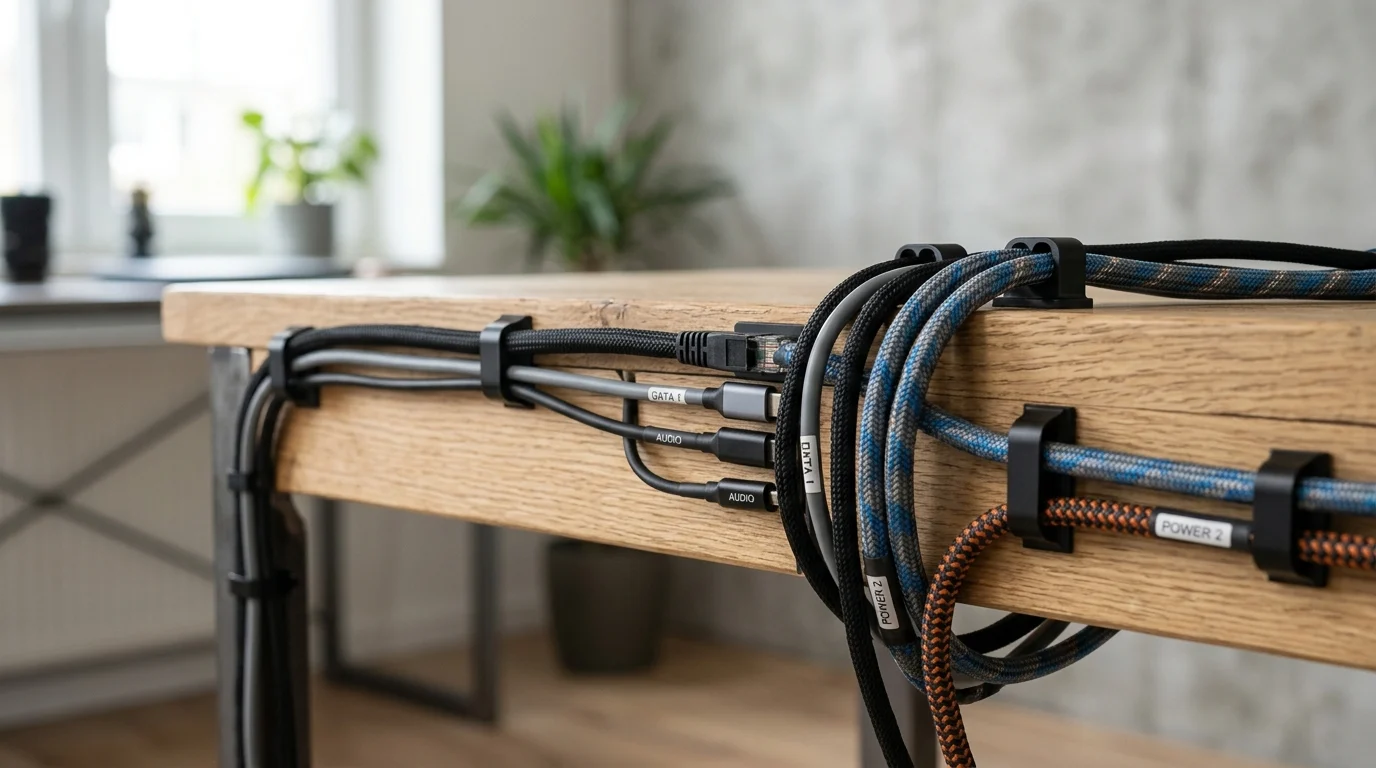
Efficient installation relies on standardized procedures and clear inter-departmental communication. Crews should route cables methodically, securing them to trusses or barricades with appropriate friction tape or specialized ties that do not pinch or deform the outer jacket. Comprehensive labeling at both ends of every single cable—utilizing durable, weather-resistant tags detailing the source, destination, and signal type—drastically reduces troubleshooting time during a live show. Before the system is energized, technicians must conduct rigorous testing, including phase rotation checks for three-phase power systems and continuity tests for all multi-pin signal snakes.
How to manage drainage, redundancy, and maintenance during the event
Outdoor events are highly susceptible to sudden weather changes, making drainage and elevation paramount. Connectors should never rest directly on the ground; they must be elevated on blocks or wrapped in waterproof enclosures to achieve an IP65 or IP67 equivalent rating against water ingress. Redundancy is also critical for high-stakes productions. Running a secondary, dark fiber line or a backup analog audio snake along a completely separate physical path ensures the show can continue seamlessly if the primary route is accidentally severed by a vehicle strike or equipment failure.
Choosing the Best Routing Approach
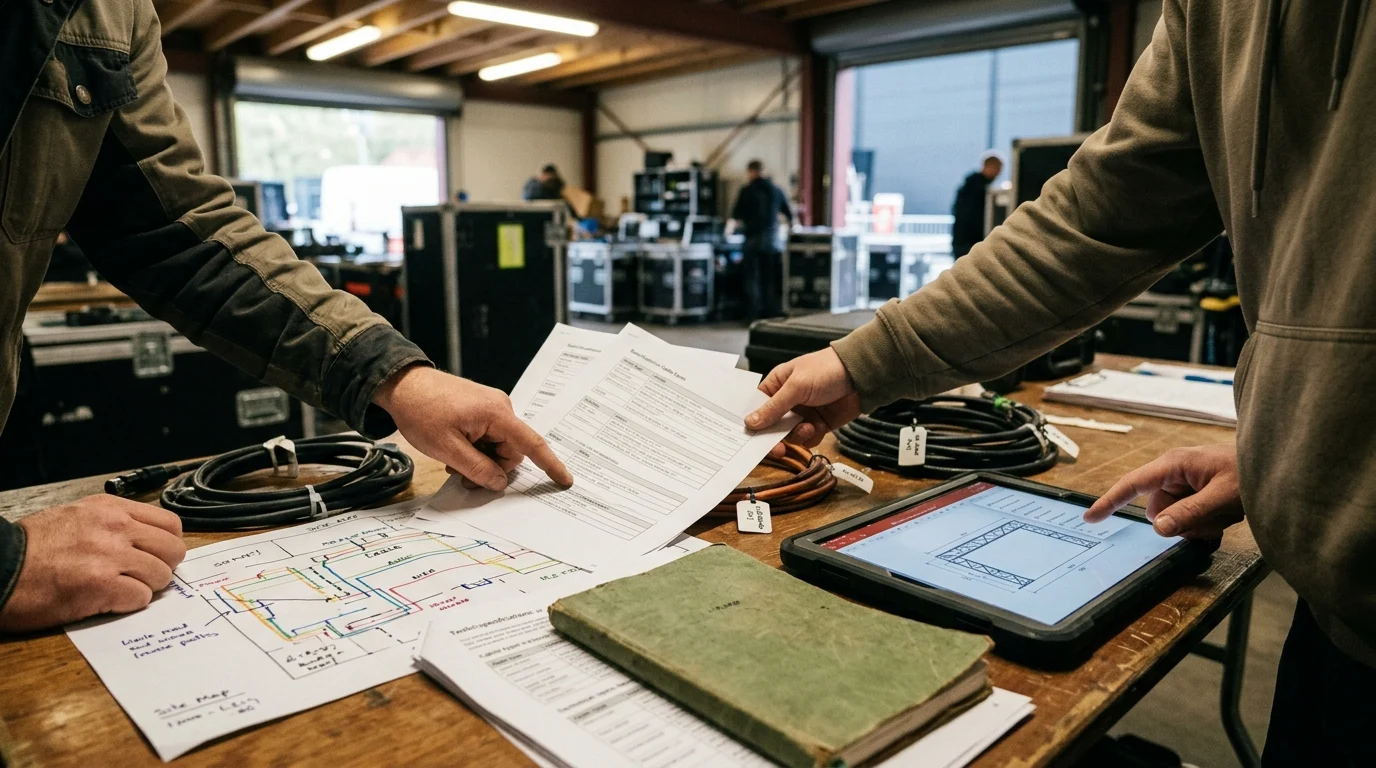
Determining the optimal cable routing strategy involves weighing upfront expenditures against the operational reliability required for the specific production. There is no universal solution, as each event presents unique structural constraints and performance expectations.
How to balance budget, speed, and reuse value
Production managers must balance labor costs, material rentals, and the long-term reuse value of the infrastructure. Complex overhead routing or extensive trenching requires specialized labor and heavy machinery, significantly driving up initial costs. For example, deploying 500 feet of heavy-duty cable ramps can incur rental costs exceeding $1,500 per week and require approximately 10 to 15 labor hours just for precise placement and alignment. However, this investment drastically reduces the risk of expensive cable replacement and liability claims, ultimately providing a strong return on investment for high-traffic, multi-day events.
Which routing options fit different event types
The scale and duration of the event ultimately dictate the routing methodology. A single-day municipal concert may rely heavily on simple perimeter routing and pedestrian ramps to minimize load-in time and site impact. In contrast, a massive three-day electronic dance music festival—featuring multiple stages, extensive vendor villages, and high-capacity generator farms—demands robust, permanent-grade temporary infrastructure. Such large-scale events often utilize a hybrid approach: trenching high-voltage feeders under primary access roads weeks in advance, utilizing overhead catenary systems for FOH data links, and deploying thousands of feet of heavy-duty ramps for localized stage distribution.
Key Takeaways
- The most important conclusions and rationale for Route Cables
- Specs, compliance, and risk checks worth validating before you commit
- Practical next steps and caveats readers can apply immediately
Frequently Asked Questions
How far should power and signal cables be separated on an outdoor stage?
Keep them 12–24 inches apart when running parallel. If they must cross, do it at 90 degrees to reduce EMI and audible hum.
What routing path works best from stage to FOH at outdoor concerts?
Use perimeter routes when possible to avoid audience traffic. For clean central coverage, overhead truss or catenary runs are often best if rigging and safety support are available.
When should cable ramps be used on festival grounds?
Use cable ramps anywhere cables cross pedestrian paths, carts, or vehicles. Choose channel sizes that fit your snake, power, and Ethernet runs without pinching jackets.
How long can Dante or Cat5e/Cat6 cable runs be outdoors?
Standard Ethernet runs should stay within 100 meters (328 feet). For longer distances, add a network switch or convert to fiber to avoid packet loss.
Which cables are best for reliable outdoor stage routing?
Use rugged, well-shielded pro cables with durable jackets and quality connectors. JINGYI’s OEM/ODM XLR, DMX, speaker, and Ethernet cable options are built for low noise and dependable live-event use.


