Audio connectors serve as the lifeline of pro audio cables and professional audio systems. They bridge various devices, ensuring sound travels seamlessly from one point to another. Understanding the different types of audio connectors is crucial for optimal performance. Professionals often rely on specific connectors from a trusted audio connectors wholesale supplier to maintain sound quality and reduce interference.
Balanced connectors, like XLR, utilize two wires that cancel out noise, making them ideal for long cable runs. In contrast, unbalanced connectors, such as TS and RCA, are simpler but more susceptible to interference. Choosing the right connector from a reputable stage equipment supplier can elevate audio quality dramatically, especially when utilizing high-quality China audio components.
Key Takeaways
- Choose balanced connectors like XLR for long cable runs to minimize noise and maintain audio quality.
- Use unbalanced connectors like TS and RCA for short distances in low-interference environments to avoid signal degradation.
- Invest in high-quality connectors to ensure reliable connections and prevent unwanted noise during performances.
- Consider the specific application and environment when selecting connectors to enhance audio performance.
- Avoid common mistakes like ignoring compatibility and opting for cheap cables, as these can lead to poor sound quality.
Understanding Audio Connectors
Definition and Purpose
Audio connectors are essential components in the world of sound. They serve as electrical connectors specifically designed for audio frequencies, whether analog or digital. These connectors join electrical terminations, creating circuits that allow sound to flow between devices. Think of them as the bridges that connect microphones, speakers, and mixers, ensuring that audio signals travel with minimal loss or interference. Common types include 3.5mm jacks, RCA connectors, and XLR connectors, each tailored for specific applications.
The primary functions of audio connectors revolve around signal transmission. They act as physical interfaces for transmitting audio signals between devices. Here are the two main roles they play:
- Audio Output: This function transmits sound signals to playback devices like headphones and speakers.
- Audio Input: This allows sounds from external sources, such as microphones, to be fed into devices for processing.
Importance in Professional Settings
In professional audio environments, the choice of connectors can significantly impact sound quality. High-quality connectors, like those from Ningbo Jingyi Electronics Corporation, ensure reliable connections that withstand the rigors of live performances. For instance, balanced connectors, such as XLR, are vital for long cable runs in electrically noisy environments. They provide noise rejection, which is crucial for maintaining signal integrity.
Moreover, using the correct connectors prevents issues like ground loops and signal loss. Professionals must avoid using incorrect connectors, as this can lead to noise and even permanent damage to audio equipment. For example, using a speaker cable as a guitar cable can result in unwanted interference due to inadequate shielding.
Balanced vs. Unbalanced Connectors
Key Differences
When diving into the world of audio connectors, professionals often encounter two main types: balanced and unbalanced connectors. Each type has unique characteristics that affect audio quality and performance. Here’s a quick comparison:
| Feature | Balanced Connectors | Unbalanced Connectors |
|---|---|---|
| Number of Conductors | Three (two signal wires + ground) | Two (one signal wire + ground) |
| Signal Transmission | Uses polarity inversion to cancel noise | More susceptible to noise due to single signal wire |
| Cable Length | Supports longer runs (50-100 feet) | Maximum length of 15-20 feet |
| Common Connectors | XLR, TRS | TS, RCA |
| Noise Rejection | Better noise cancellation through differential signaling | Limited noise rejection, acts like an antenna |
Balanced connectors, like XLR and TRS, excel in environments where noise is a concern. They utilize two signal wires that work together to cancel out interference. This design allows them to maintain audio clarity over long distances. In contrast, unbalanced connectors, such as TS and RCA, rely on a single signal wire. This makes them more vulnerable to electromagnetic interference (EMI) and radio frequency interference (RFI), especially in high-interference environments.
When to Use Each Type
Choosing between balanced and unbalanced connectors depends on the specific audio situation. Here are some scenarios where each type shines:
-
Balanced Connectors are ideal for:
- Professional recording studios where multiple devices and power cables create electrical interference.
- Live performance venues where cables need to run long distances (over 20 feet).
- Broadcast facilities requiring pristine audio quality.
- Commercial installations with complex routing requirements.
- Any situation where multiple electronic devices might create interference.
- Connecting professional-grade microphones that require phantom power.
-
Unbalanced Connectors are suitable for:
- Short cable runs in home audio setups or simple applications.
- Situations where the environment is relatively free from electrical noise.
- Connecting consumer audio devices, such as home stereo systems.
Using unbalanced connectors in high-interference environments can lead to unwanted noise, such as hums, buzzes, or static in audio signals. The risk of signal degradation increases over longer cable runs, making unbalanced lines less suitable for professional applications. Therefore, understanding the differences between these connectors helps professionals make informed decisions that enhance audio quality.
Types of Balanced Connectors
XLR Connectors
XLR connectors stand as the gold standard in professional audio. They feature a robust design that ensures reliability and durability. These connectors typically come in three-pin configurations, but variations exist with more pins for specialized applications. The three pins serve distinct functions:
| Connector Type | Pin Number | Function | Common Applications |
|---|---|---|---|
| 3-Pin XLR | 1 | Ground (shield) | Microphone connections, line-level audio feeds |
| 2 | Positive (+ or ‘hot’) | Studio and live sound, stage boxes | |
| 3 | Negative (− or ‘cold’) |
XLR connectors transmit balanced audio signals, where identical signals travel along two conductors (Pins 2 and 3) in opposite polarity. This design significantly reduces electromagnetic interference and noise. When these signals reach their destination, they recombine, canceling out any noise picked up along the cable path.
The metal housing of XLR connectors provides excellent shielding against radio frequency interference (RFI). The locking mechanism secures the connection, preventing accidental disconnections during performances.
TRS Connectors
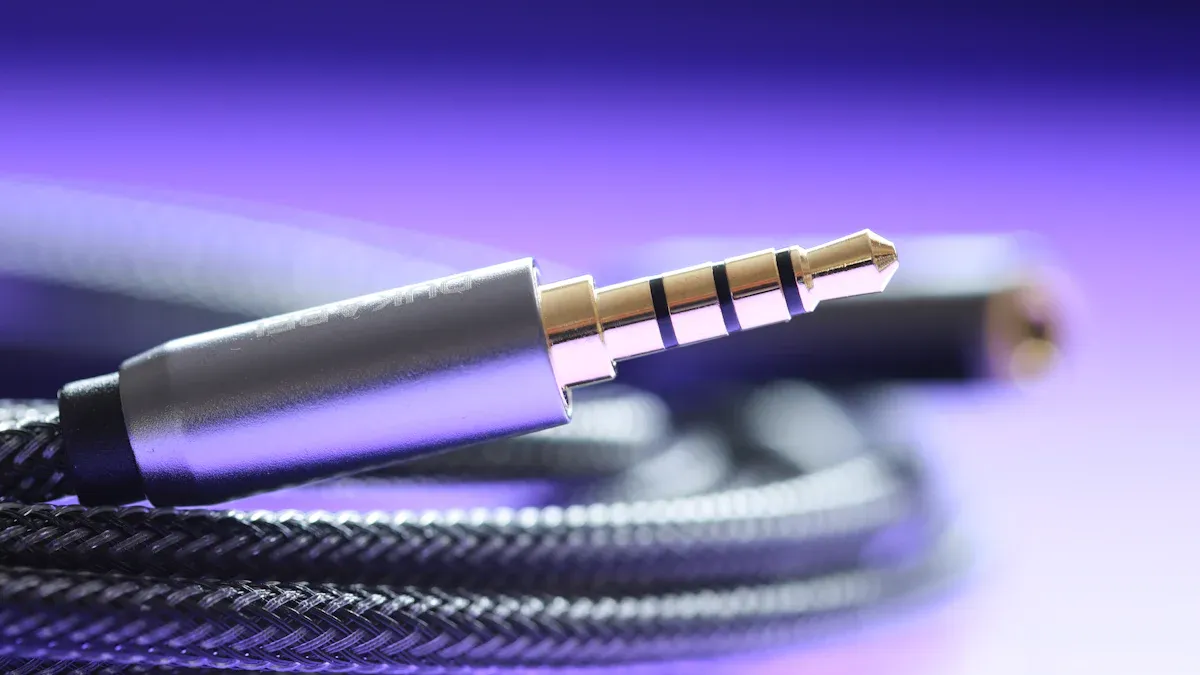
TRS connectors, short for Tip-Ring-Sleeve, also play a vital role in balanced audio transmission. They feature three conductors: the tip carries the positive signal, the ring carries the negative signal, and the sleeve serves as the ground. This arrangement allows TRS connectors to effectively cancel out noise and interference, making them particularly effective for professional audio applications.
In studio and live sound setups, TRS connectors find their place in various applications:
- Professional headphones and monitor outputs
- Balanced patch cables in studios
- Mixer insert cables and synthesizer outputs
Balanced signals, which TRS cables utilize, minimize noise and interference over long distances. This makes them ideal for studio environments, where clarity is paramount.
AES/EBU Connectors
AES/EBU connectors represent the pinnacle of digital audio transmission. They maintain signal integrity over long distances without degradation, making them essential in professional audio settings. These connectors typically use a 110-ohm shielded twisted pair (STP) with XLR connectors or a 75-ohm coaxial with BNC connectors.
Here are some key specifications of AES/EBU connectors:
| Specification | Details |
|---|---|
| Cable Types | 110 ohm shielded twisted pair (STP) with XLR connectors; 75-ohm coaxial with BNC connectors |
| Impedance | 110 ohms for STP; 75 ohms for coaxial |
| Maximum Distance | 100 meters for STP; 1,000 meters for coaxial |
| Audio Channels | Supports two channels of PCM audio at up to 24-bit depth and 192 kHz sample rate |
| Applications | Used in broadcasting, studio recording, live sound environments, and more |
| Signal Integrity | Maintains digital audio signal integrity over long distances without degradation |
AES/EBU connectors differ from analog balanced connectors in several ways. They transmit digital audio, which allows for noise-free, high-quality sound. Unlike analog connections, AES/EBU does not require digital-to-analog (D/A) or analog-to-digital (A/D) conversion, making them ideal for professional setups.
Types of Unbalanced Connectors
TS Connectors
TS connectors, or Tip-Sleeve connectors, are the go-to choice for many musicians. These connectors feature a simple design with two conductors: one for the audio signal and the other for ground. While they are easy to use, TS connectors come with a few caveats. Their unbalanced nature makes them more susceptible to noise and interference, especially over long distances. This can lead to distortion, which is not ideal for sensitive audio equipment.
Common applications for TS connectors include:
- Standard Electric Guitars and Basses: These instruments require TS cables for their mono, unbalanced output.
- Effects Loops and Pedals: Musicians often use TS connectors to chain effects pedals on their pedalboards.
- Amplifiers and Mixing Desks: Many devices accept both TS and TRS connections, but TRS offers balanced connections for better performance.
- Audio Interfaces and Recorders: Using TRS cables can improve signal integrity and reduce noise in recording setups.
RCA Connectors
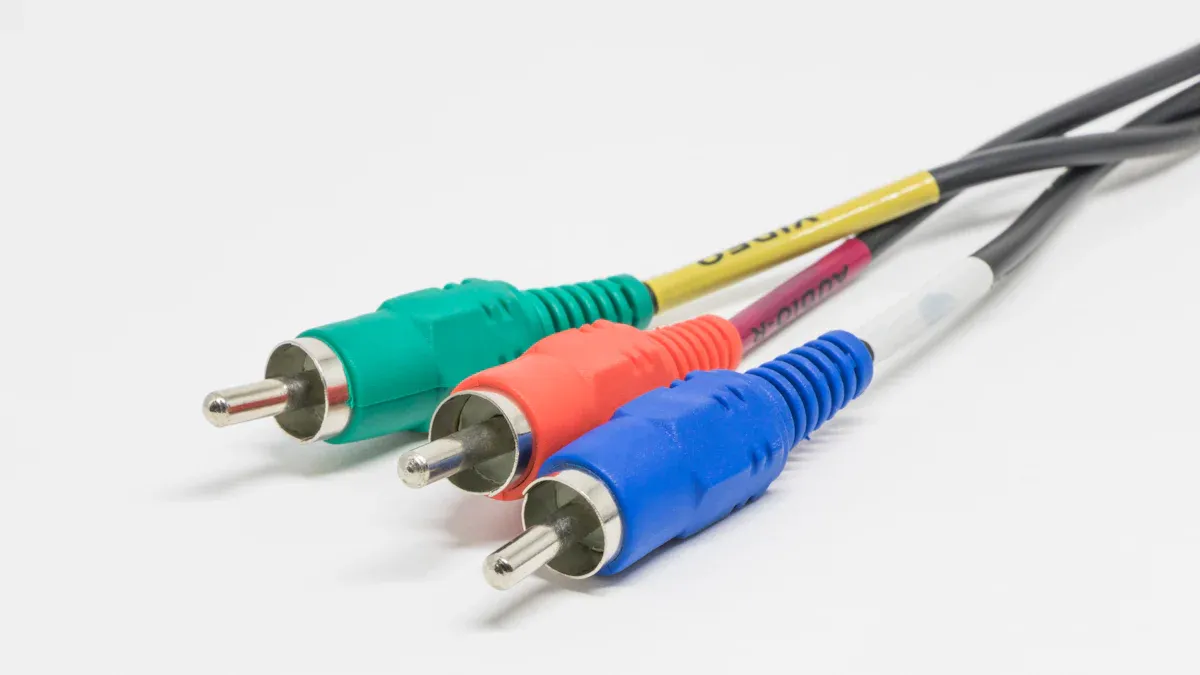
RCA connectors are a staple in both consumer and professional audio equipment. Their popularity stems from their ease of use and affordability. However, they do have their drawbacks.
| Advantages | Disadvantages |
|---|---|
| Easy to use | Limited transmission distance |
| High popularity | Highly affected by interference |
| Cheap price | Does not support high-definition video transmission |
| Good audio and video transmission quality |
RCA connectors find their way into various devices, such as televisions, DVD players, and gaming consoles. In professional settings, they appear in DJ controllers, mixers, and studio monitoring equipment. However, their unbalanced design makes them vulnerable to noise, which can degrade audio quality.
1/4" Phone Connectors
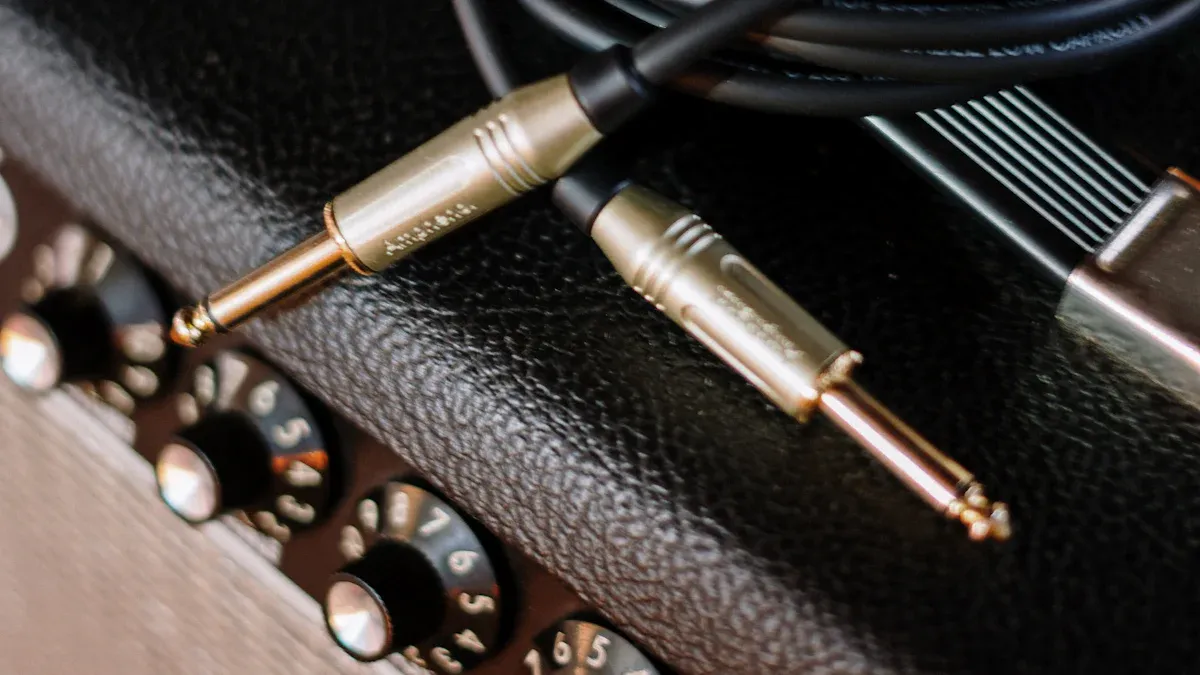
1/4" phone connectors, also known as jacks, are another popular unbalanced option. These connectors come in two varieties: TS (unbalanced) and TRS (balanced). The TS version is commonly used for instruments, while the TRS version can handle balanced signals.
Musicians often use 1/4" phone connectors for connecting guitars, keyboards, and other instruments to amplifiers. They also serve as headphone jacks in many audio devices. Despite their versatility, the unbalanced TS version can suffer from the same noise issues as other unbalanced connectors, making them less suitable for long cable runs.
Specialty Connectors
Speakon Connectors
Speakon connectors shine in the world of professional audio, especially for loudspeakers. They offer unique features that set them apart from traditional connectors. Here’s what makes them special:
- Designed for High-Quality Signal Transfer: Speakon connectors ensure that audio signals remain clear and powerful.
- Robust Locking Mechanism: This feature secures connections, even in high-vibration environments. No more worrying about accidental disconnections during a live show!
- High Current Capacity: These connectors handle significant power, making them perfect for professional audio applications.
- Foolproof Design: Speakon connectors prevent incorrect usage with low-current cables, ensuring safety and reliability.
Their durability and performance have made them the industry standard for speaker connections. When professionals need a reliable connection, they turn to Speakon.
Mini XLR Connectors
Mini XLR connectors offer a compact alternative to standard XLR connectors. They serve specific applications where space is at a premium. Here’s a quick comparison:
| Feature | Mini XLR | Standard XLR |
|---|---|---|
| Size | Compact, designed for limited space | Larger, standard size |
| Compatibility | Used in specific applications (e.g., bodypacks, cameras) | Universal compatibility in pro audio environments |
| Typical Use Cases | Theatre, broadcast, lightweight rigs | Venues, rentals, rugged environments (tours, festivals) |
| Signal Carrying | Balanced audio signals | Balanced audio signals |
Mini XLR connectors excel in situations where gear concealment is essential, such as in theatre or broadcast settings. They fit perfectly in lightweight rigs, like drones or handheld devices. For larger setups, standard XLR connectors remain the go-to choice.
Optical Connectors
Optical connectors revolutionize digital audio transmission. They use light signals to transmit audio, ensuring high-quality sound without interference. Here are some benefits of using optical connectors:
| Benefit | Description |
|---|---|
| High-Quality Audio | Transmits audio using light signals, ensuring high-quality sound without interference. |
| Immunity to Electrical Interference | Not affected by electromagnetic interference, resulting in cleaner audio compared to analog cables. |
| Digital Transmission | Maintains audio quality over longer distances by transmitting in a digital format. |
| Compatibility | Widely used in home theater setups, gaming consoles, and audio equipment, ensuring broad compatibility. |
| Supported Audio Formats | Supports PCM 2.0, Dolby Digital 2.0 to 5.1, DTS Digital Surround, and more. |
Optical connectors have become a favorite in home theaters and gaming setups. Their ability to deliver pristine audio makes them a must-have for any serious audio enthusiast.
Choosing the Right Connector
Factors to Consider
Selecting the right audio connector can feel like navigating a maze. Professionals must consider several factors to ensure optimal performance. Here are some key points to keep in mind:
- Application: Determine the specific use case. Will the connector serve a microphone, instrument, or speaker? Each application demands different connector types.
- Cable Length: Longer runs require balanced connectors to minimize noise. For short distances, unbalanced connectors may suffice.
- Environment: Assess the surroundings. High-interference areas, like live venues, benefit from balanced connectors. In quieter settings, unbalanced connectors can work just fine.
- Durability: Choose connectors that withstand wear and tear. Look for robust designs, especially for live performances where equipment faces constant movement.
Common Mistakes to Avoid
Even seasoned professionals can make errors when selecting connectors. Here are some common pitfalls to avoid:
- Ignoring Compatibility: Always check if the connector matches the device. Using the wrong type can lead to poor sound quality or even damage.
- Overlooking Cable Quality: Cheap cables may save money upfront but can lead to signal loss. Investing in quality pro audio cables pays off in the long run.
- Neglecting Shielding: Failing to consider shielding can result in unwanted noise. Always opt for connectors with good shielding, especially in noisy environments.
- Choosing Based on Price Alone: While budget matters, don’t let it dictate your choice. Quality connectors enhance audio performance and reliability.
By considering these factors and avoiding common mistakes, professionals can ensure they select the right connectors for their audio needs.
Selecting the right audio connector is crucial for achieving top-notch audio performance. Quality connectors ensure reliable connections, preventing signal loss and unwanted noise. They can make or break a sound system, especially in professional settings where every detail matters.
Specific needs and applications should guide your choice. For instance, gold-plated connectors resist oxidation, ensuring durability and consistent performance. In contrast, silver-plated connectors offer superior conductivity but may oxidize more quickly.
Ultimately, investing in high-quality connectors pays off. They withstand demanding conditions, ensuring your audio experience remains clear and vibrant. Remember, a small choice can lead to a big difference in sound quality! 🎶
FAQ
What is the difference between balanced and unbalanced connectors?
Balanced connectors use two signal wires to cancel noise, making them ideal for long distances. Unbalanced connectors use one signal wire, making them more susceptible to interference.
When should I use XLR connectors?
Use XLR connectors for professional microphones and long cable runs. They provide excellent noise cancellation and secure connections, perfect for live performances and studio settings.
Can I use RCA connectors for professional audio?
Yes, but with caution. RCA connectors work well for consumer audio devices. However, they may introduce noise in professional settings due to their unbalanced nature.
How do I choose the right audio connector?
Consider the application, cable length, and environment. For noisy settings, opt for balanced connectors. For short runs, unbalanced connectors may suffice.
Are optical connectors worth the investment?
Absolutely! Optical connectors deliver high-quality audio without interference. They excel in home theaters and gaming setups, ensuring a pristine listening experience.