
Introduction
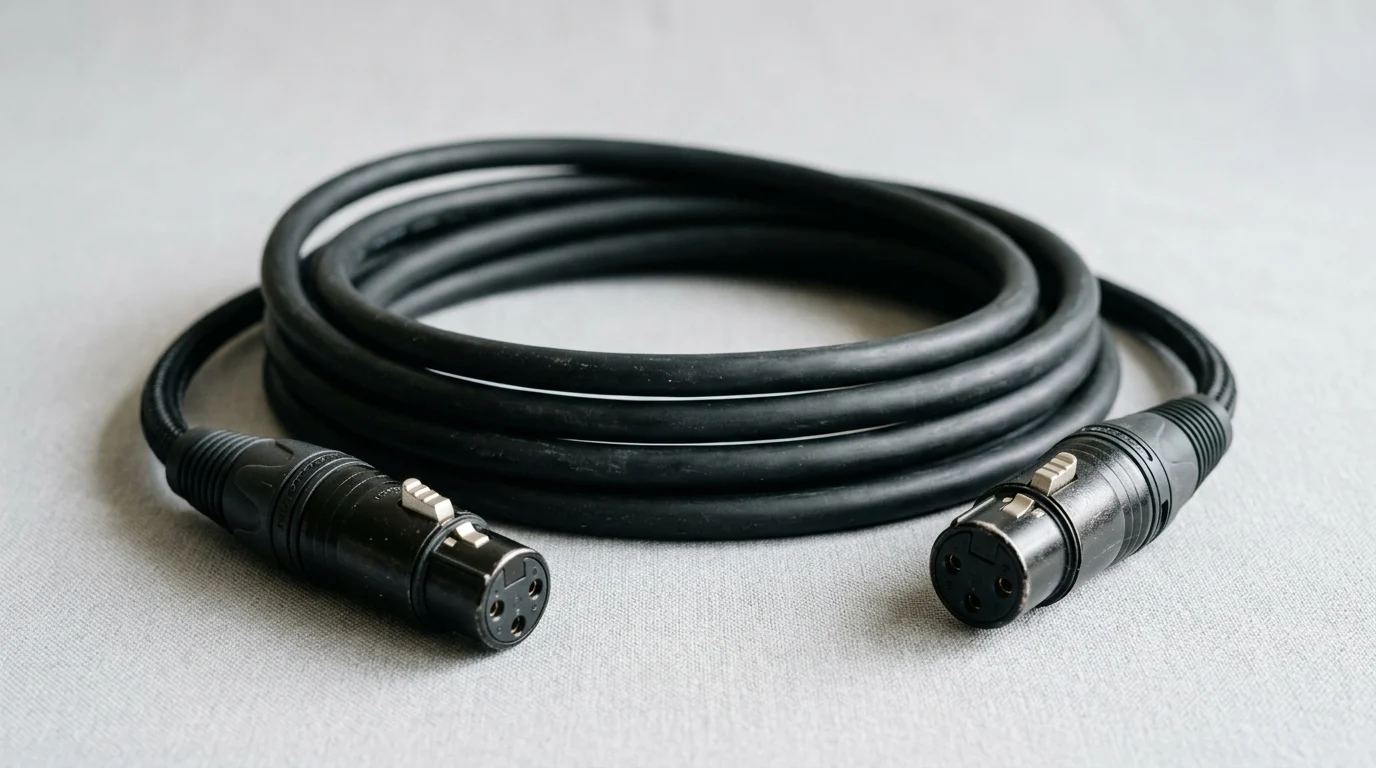
Selecting a pro audio cord affects far more than simple connectivity: it shapes signal clarity, noise rejection, and reliability under constant setup, teardown, and transport. The right choice depends on where and how the cable will be used, from short studio patch runs to long stage lines exposed to interference and physical stress. This article explains the key factors that matter most, including conductor and shielding design, connector quality, cable length, capacitance, and durability. By the end, you’ll be able to compare options more confidently and choose a cord that supports clean audio performance in both controlled studio work and demanding live environments.
Why Choosing the Right Pro Audio Cord Matters
The structural integrity and electrical characteristics of a pro audio cord dictate the baseline fidelity of any sound system. In professional environments, the cabling infrastructure is often the most vulnerable segment of the signal chain. A compromised cable not only degrades acoustic quality but also introduces severe operational liabilities during live broadcasts or recording sessions.
Engineers and procurement specialists must view audio cables not as passive accessories, but as critical components that require rigorous technical evaluation. Understanding the physics of signal transmission and the mechanical limits of cable construction is essential for preventing catastrophic audio dropouts.
Signal integrity, durability, and failure risk
Signal degradation occurs when cables present excessive electrical resistance and capacitance. For instance, high-quality audio cables maintain capacitance levels below 30 picofarads per foot (pF/ft). Staying below this threshold is critical for preventing high-frequency roll-off in long cable runs, ensuring that transient details in the audio signal remain intact.
Furthermore, industry data indicates that up to 80% of intermittent signal failures in live sound environments originate from compromised cabling. Shielding integrity plays a massive role in this failure rate; inadequate shielding allows electromagnetic interference (EMI) and radio frequency interference (RFI) to permeate the audio path, introducing hums and buzzes that can ruin a production.
Different priorities by use case
Audio professionals must weigh environmental demands against electrical perfection. Studio applications prioritize absolute signal purity, often utilizing quad-core designs with 95% braided shielding to eliminate EMI in environments saturated with digital equipment. In these static setups, flexibility is secondary to acoustic transparency.
Conversely, stage environments demand robust mechanical construction. Touring cables must withstand severe mechanical stress, often requiring crush resistance exceeding 150 pounds per square inch to survive flight cases and heavy foot traffic. The priority shifts toward ruggedized jackets capable of surviving extreme temperature fluctuations and repeated coiling cycles without compromising the internal conductor geometry.
Technical Specifications to Evaluate
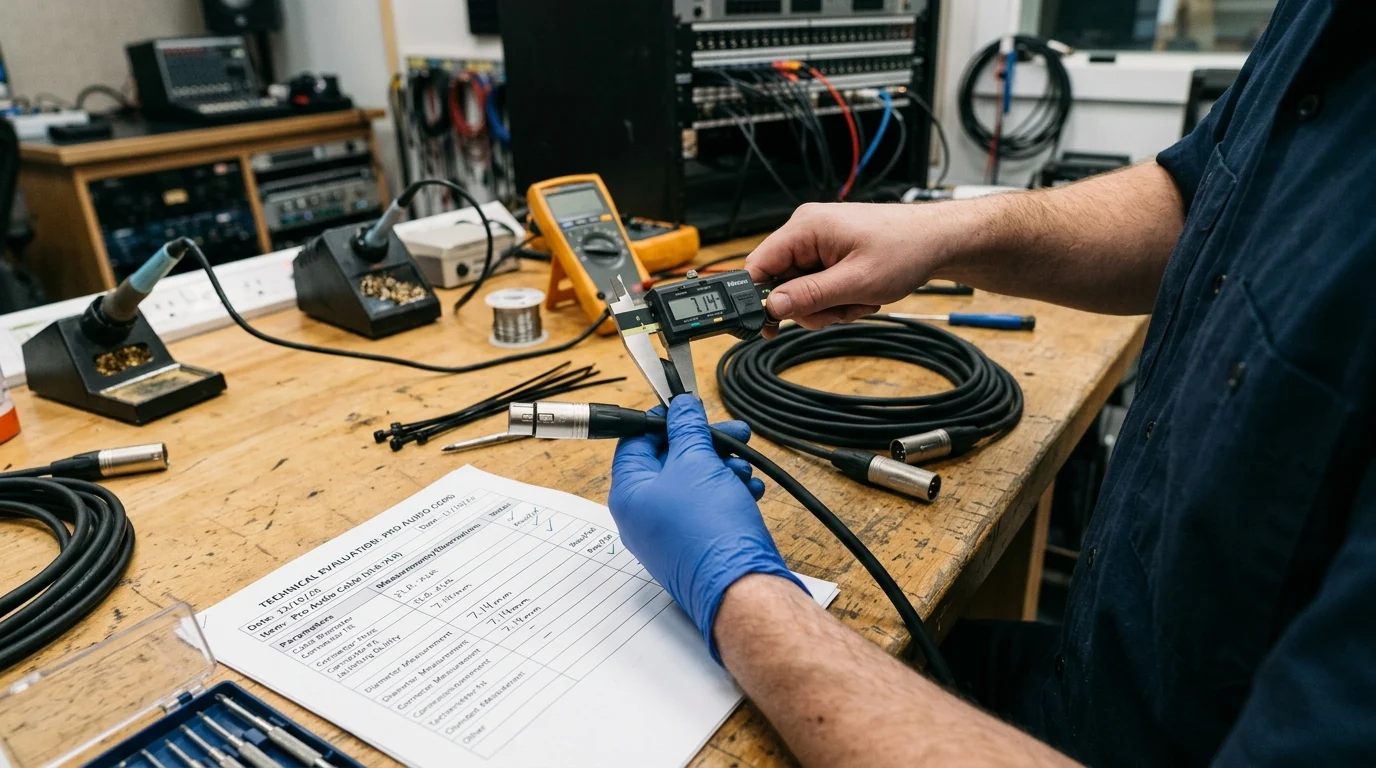
Evaluating pro audio cords requires a rigorous analysis of their core technical specifications. The interplay between conductor material, shielding geometry, and connector mechanics defines the operational limits of the cable and its suitability for specific acoustic tasks.
Connector type, conductor gauge, and shielding
Conductor gauge, measured in American Wire Gauge (AWG), directly impacts current delivery and signal integrity. Microphone and line-level signals typically utilize 20 to 24 AWG oxygen-free copper (OFC) conductors, which provide excellent conductivity for low-voltage signals. Conversely, passive speaker cables require 12 to 14 AWG to handle high-current loads—often exceeding 15 amps—without inducing dangerous voltage drops or thermal damage.
Shielding configurations also vary significantly based on application. The choice of shield dictates both the cable’s flexibility and its ability to reject external noise.
| Shielding Type | Coverage | Flexibility | Best Application |
|---|---|---|---|
| Braided Copper | Up to 95% | Moderate | High-EMI environments, stage |
| Spiral (Serve) | 80% – 90% | High | Instrument cables, frequent coiling |
| Foil (Aluminum) | 100% | Low | Permanent studio installations |
Balanced vs unbalanced cords
The distinction between balanced and unbalanced architectures is paramount for noise rejection. Balanced cords utilize two identical conductors carrying inverted signals alongside a ground shield. This design leverages Common Mode Rejection Ratio (CMRR) at the receiving endpoint to cancel out induced noise, permitting balanced runs to safely exceed 100 feet without signal degradation.
Unbalanced cords, utilizing a single conductor and a shield, are highly susceptible to interference. Due to cumulative capacitance and noise floor vulnerabilities, unbalanced connections are strictly limited to runs under 15 to 18 feet. Pushing an unbalanced cord beyond this threshold results in noticeable high-frequency attenuation and unacceptable noise floors.
Flexibility, jacket material, and strain relief
Mechanical resilience relies heavily on jacket material and strain relief systems. Polyvinyl chloride (PVC) is the industry standard for its cost-effectiveness, but polyurethane (PUR) or neoprene jackets offer superior flexibility and resistance to chemical degradation, oil, and UV exposure.
Internally, the connection points are the most fragile aspect of the cord. Chuck-type strain relief systems within the connector housing are engineered to absorb mechanical tension. High-grade pro audio cords feature strain relief mechanisms that routinely withstand over 30 pounds of longitudinal pull force, ensuring that the delicate solder joints connecting the wire to the pins are never subjected to direct stress.
Comparing Pro Audio Cord Types
Pro audio infrastructure relies on a standardized ecosystem of cable types, each engineered for specific voltage levels, impedance requirements, and signal formats. Selecting the correct format is foundational to system architecture.
XLR, TRS, TS, and speaker cables
XLR connectors remain the industry standard for balanced microphone and line-level signals, featuring a locking mechanism vital for live stage security. For digital applications, AES/EBU XLR cables are strictly manufactured to a 110-ohm impedance specification to prevent data jitter and signal reflection. Tip-Ring-Sleeve (TRS) cables provide balanced connections primarily for patch bays and outboard gear, while Tip-Sleeve (TS) cables are designed exclusively for unbalanced instrument signals.
Speaker cables physically resemble large TS or specialized Speakon connectors but differ fundamentally in construction. They lack internal shielding entirely to maximize conductor mass, ensuring uninhibited power transfer for amplified signals.
| Cable Format | Connector | Signal Type | Max Recommended Run | Typical AWG |
|---|---|---|---|---|
| Microphone | XLR | Balanced Analog | 300+ feet | 22 – 24 |
| Instrument | TS | Unbalanced Analog | 18 feet | 20 – 24 |
| Digital Audio | XLR | AES/EBU Digital | 328 feet (100m) | 24 (110-ohm) |
| Passive Speaker | Speakon / 1/4″ | Amplified High-Level | 50 feet | 12 – 14 |
Length, interference, and handling demands
Cable length and environmental interference dictate handling demands. Long cable runs inherently increase total capacitance, requiring low-loss dielectrics like polyethylene (PE) to maintain transient response over distances greater than 50 feet.
Furthermore, handling demands vary drastically by application. Cables designed for broadcast or touring must feature lay-flat properties and resist memory retention. A cord that retains its coiled shape poses a severe tripping hazard during rapid stage changeovers, making specialized jacket compounds a necessity for live event production.
Procurement, Compliance, and Quality Control
For large-scale installations, live event production companies, or OEM integrations, the procurement of pro audio cords extends beyond individual specifications to encompass rigorous quality control and regulatory compliance.
Supplier consistency and termination quality
Supplier consistency is evaluated through the precision of connector termination and contact plating. Premium connectors utilize gold plating, typically applied at a thickness of 0.2 to 0.5 microns, to prevent oxidation in humid environments. While standard silver plating offers superior initial conductivity, it tarnishes rapidly and requires frequent maintenance.
High-tier procurement contracts often mandate defect rates below 0.1% (1 in 1,000 units). Achieving this level of consistency necessitates automated soldering processes, high-grade silver solder, and individual continuity testing at the factory level prior to shipment.
Safety, materials, and regional compliance
Regional compliance and material safety standards dictate the legality of cable installations in commercial spaces. Cables routed through drop ceilings or HVAC return spaces must carry a Plenum rating (CMP). This certifies that their jackets exhibit low smoke production and fire retardance, often tested against the stringent UL 1666 standard.
Additionally, global procurement requires strict adherence to environmental directives. RoHS and REACH compliance ensures that cable components and jackets are free from hazardous substances like lead, cadmium, and certain phthalates, protecting both end-users and the environment during the product’s lifecycle.
Making the Final Decision
Selecting the optimal pro audio cord requires synthesizing acoustic goals, environmental realities, and budget constraints into a cohesive purchasing strategy. Haphazard cable selection inevitably leads to system bottlenecks.
Step-by-step selection process
The selection process begins with an audit of the facility or touring rig. Procurement managers must define the exact signal type (analog vs. digital, mic vs. line level) and calculate precise routing distances. Best practices dictate adding a standard 10% to 15% tolerance allowance for slack and future rerouting.
Next, the specification phase matches the conductor gauge and shielding topology to the ambient EMI footprint of the venue. Finally, verifying the mechanical specifications of the connectors ensures seamless compatibility with existing hardware matrices, preventing the need for cumbersome adapters.
Premium vs standard cord options
The dichotomy between premium and standard cords ultimately comes down to lifecycle cost analysis. Standard commercial audio cords, typically priced between $15 and $25 per 10-foot segment, are sufficient for static, low-stress applications where the cable is rarely disturbed.
Conversely, premium options costing $40 to $80+ utilize oxygen-free copper and proprietary connector housings from top-tier manufacturers. These premium investments yield substantial longevity, often rated for up to 10,000 mating cycles compared to the 1,000-cycle lifespan of standard consumer-grade equivalents. Over a five-year operational period, investing in premium cords drastically reduces long-term replacement costs and troubleshooting downtime.
Key Takeaways
- The most important conclusions and rationale for Pro Audio Cord
- Specs, compliance, and risk checks worth validating before you commit
- Practical next steps and caveats readers can apply immediately
Frequently Asked Questions
What conductor gauge should I choose for a pro audio cord?
Use 20–24 AWG OFC for mic and line signals, and 12–14 AWG for passive speakers. Match gauge to signal level and cable length to reduce loss and heat.
When should I use a balanced pro audio cord instead of an unbalanced one?
Choose balanced XLR or TRS for runs over 15–18 feet or in noisy stage/studio setups. Use unbalanced only for short connections where interference risk is low.
Which shielding type is best for studio and stage use?
Braided copper works best for noisy stages, spiral shield suits flexible instrument leads, and foil shield fits fixed studio installs. Pick based on EMI level and how often the cable is moved.
What cable features matter most for stage use?
Prioritize rugged jackets, strong strain relief, secure connectors, and crush resistance. For touring, choose cords that handle repeated coiling, foot traffic, and temperature changes without signal dropouts.
Can JINGYI provide custom pro audio cords for OEM or private label projects?
Yes. JINGYI offers OEM/ODM and private-label pro audio cables, including XLR, speaker, DMX, Ethernet, and snake cables, with OFC conductors and low-noise shielding for studio and live applications.


