
Choosing reliable XLR 3-P connectors is crucial for any professional audio system. These pro audio connectors play a significant role in ensuring high sound quality and maintaining stable connections. In fact, the XLR audio connector market is projected to grow significantly, driven by the demand for high-quality audio equipment. Reliable connectors, including the stable XLR connector for stage use, not only enhance audio performance but also streamline workflows in professional environments. Key selection criteria include durability, compatibility, and compliance with industry standards, such as RoHS, particularly for RoHS compliant XLR 3-P connectors and XLR 3-P connector socket panels.
Key Takeaways
- Choose XLR 3-P connectors for their ability to transmit balanced audio signals, reducing noise and ensuring high sound quality.
- Assess your audio setup carefully to determine the right type of connectors based on application, durability, and compatibility.
- Invest in high-quality materials like gold-plated contacts to enhance signal integrity and prevent oxidation.
- Prioritize weather-resistant connectors for outdoor use to protect against moisture and dust, ensuring reliable performance.
- Regularly maintain your connectors by inspecting for damage and cleaning contacts to prolong their lifespan and performance.
Understanding XLR 3-P Connectors
What are XLR 3-P Connectors?
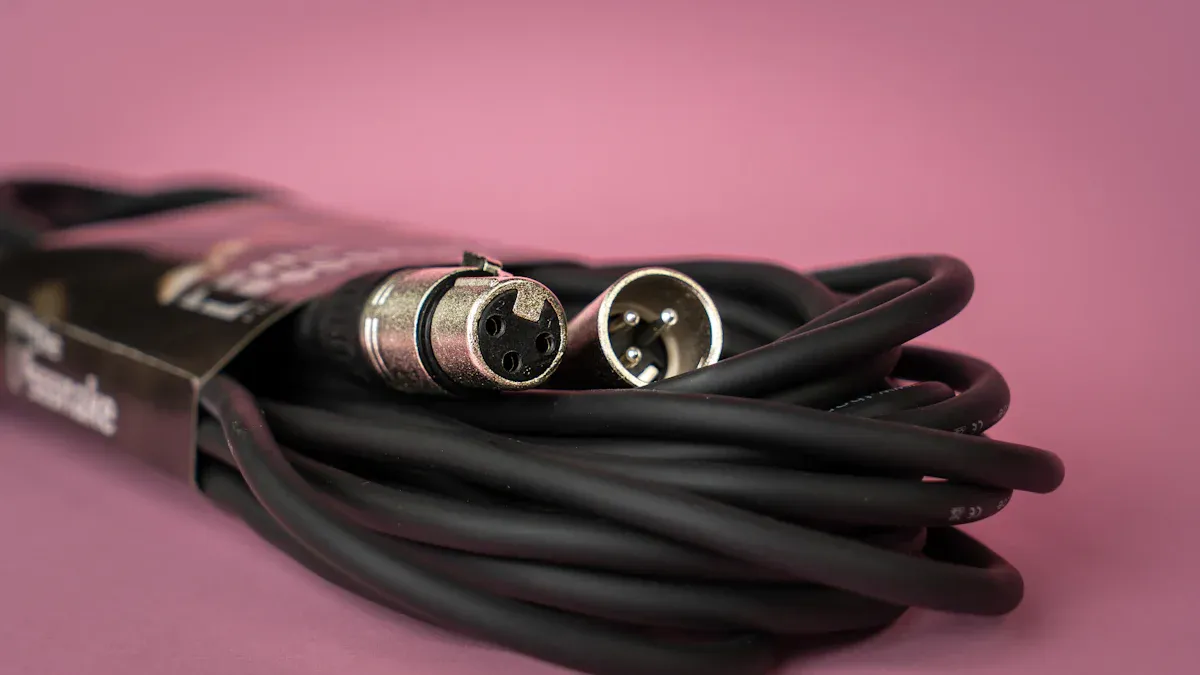
XLR 3-P connectors are a type of professional audio connector widely used in sound systems. They feature three pins arranged in a circular housing. The male connector typically outputs the audio signal, while the female connector receives it. This design supports balanced audio signals, which help reduce noise and interference during transmission.
The table below highlights how XLR 3-P connectors differ from other common audio connectors in terms of structure and function:
| Feature | XLR 3-P Connectors | Other Audio Connectors |
|---|---|---|
| Pin Configuration | Three pins, male for output, female for input | Varies (e.g., 1/4" TRS has two or three) |
| Typical Uses | Industry standard for balanced audio signals | Varies widely (e.g., unbalanced signals) |
| Signal Flow | Male connector outputs signal, female receives | Varies (e.g., TRS can be input/output) |
| Current Capacity | Accepts 14 AWG wire, 15 amps | Varies (e.g., Speakon connectors handle more) |
| Phantom Power | Flows from socket to plug | Not all connectors support phantom power |
This configuration allows XLR 3-P connectors to carry phantom power, which powers microphones and other devices without extra cables. Their robust design also supports higher current capacity compared to many other connectors.
Common Uses in Professional Audio
XLR 3-P connectors serve as the backbone of many professional audio setups. Audio engineers rely on them for their reliability and ability to maintain clear sound quality. They connect microphones, instruments, and stage monitors to mixing consoles and amplifiers.
In live events such as concerts and theater productions, these connectors play a critical role. They ensure stable connections that prevent audio dropouts or interference. Gold-plated versions reduce contact resistance, which helps maintain consistent signal flow and cleaner sound reproduction. This reliability minimizes disruptions during performances, which is vital for audio professionals.
Additionally, XLR 3-P connectors perform well in electrically noisy environments. Their balanced signal transmission cancels out unwanted noise, delivering clear, noise-free audio. This feature makes them indispensable for both live sound and studio recording applications.
Note: Choosing high-quality XLR 3-P connectors can significantly improve the overall audio system performance and reduce maintenance issues.
Identifying Your Needs for XLR 3-P Connectors
Assessing Your Audio Setup
Before selecting XLR 3-P connectors, audio professionals must assess their audio setup thoroughly. This assessment involves several critical factors that influence the choice of connectors. The following table outlines these factors:
| Factor | Description |
|---|---|
| Industry Application | Different settings (live sound, broadcast, recording) require specific performance characteristics. |
| Durability and Build Quality | Look for robust materials and construction features to withstand repeated use and environmental stress. |
| Compatibility and Standards | Ensure adherence to established standards for seamless integration with existing audio infrastructure. |
| Performance Features | Advanced features enhance signal quality and reliability, crucial for professional use. |
| Supplier Reliability | Evaluate suppliers for bulk procurement to ensure consistent quality and availability. |
Understanding these factors helps professionals make informed decisions about which XLR 3-P connectors will best suit their needs. For instance, in a live sound environment, durability and performance features become paramount due to the demanding nature of the setting.
Determining Connector Requirements
Determining the specific requirements for XLR 3-P connectors involves several technical considerations. Professionals should follow these steps:
- Application and Connector Gender: Identify the correct type and gender based on intended use. Male connectors serve as outputs, while female connectors function as inputs.
- Connector Materials and Conductivity: Select materials that impact signal quality and durability. Options include brass, silver, or gold plating, each offering different benefits.
- Connector Size and Variants: Be aware of standard sizes and specialized variants for different applications. This knowledge ensures compatibility with existing equipment.
- Shielding and Contact Design: Ensure proper shielding to prevent interference. High-quality contact designs enhance reliability and signal integrity.
- Mounting and Termination Types: Consider how cables attach to connectors. The method affects installation ease and long-term durability.
In addition, the scale of the audio system influences the choice of connectors. For high-end audio systems, balanced connections are essential. XLR connectors are typically used in professional setups where dual mono architecture is present. The quality and design of the audio system dictate the choice of XLR 3-P connectors, ensuring optimal performance.
Environmental factors also play a role in connector selection. In settings with high interference, the build quality of connectors becomes crucial for maintaining audio integrity. Properly tightened connectors ensure the best signal transmission, which is vital in professional recording environments.
Tip: Professional audio engineers evaluate the quality of XLR 3-P connectors by focusing on pin consistency, solder integrity, and shielding practices. These factors are critical to prevent noise, signal loss, and chronic product returns.
By carefully assessing their audio setup and determining connector requirements, professionals can select the most suitable XLR 3-P connectors for their specific applications.
Evaluating Pin Configuration of XLR 3-P Connectors
Standard Pin Layouts
The pin configuration of XLR 3-P connectors plays a vital role in ensuring optimal signal integrity. Each pin serves a specific function:
- Pin 1: Ground (shield)
- Pin 2: Positive (+ or “hot”)
- Pin 3: Negative (− or “cold”)
This balanced configuration minimizes interference through common-mode rejection (CMR). In this process, identical interference on both signal lines cancels out at the receiving end, resulting in clearer audio signals. Understanding this layout is essential for audio professionals who seek to maintain high-quality sound in their systems.
Compatibility with Equipment
Ensuring compatibility of XLR 3-P connectors with existing audio systems requires careful consideration. Professionals should follow these steps:
- Choose IP-rated or weather-sealed connectors with rubber grommets and recessed mating surfaces.
- Look for stainless steel or nickel-plated shells to resist rust and corrosion.
- Use screw-locking or twist-lock variants to prevent accidental disconnection.
- Prioritize ruggedized connectors for frequent deployment in field recording.
- Stick to reputable brands like Neutrik, Switchcraft, Rean, or Amphenol for consistent quality.
- Keep spare connectors and tools for quick repairs.
- Regularly inspect connectors for damage and clean as necessary.
- Use cable testers to verify continuity and proper wiring.
- Store cables coiled loosely and connectors capped to prevent damage.
By following these guidelines, audio professionals can ensure that their XLR 3-P connectors integrate seamlessly with their equipment, enhancing overall system performance.
Assessing Build Quality of XLR 3-P Connectors
Materials and Durability
The build quality of XLR 3-P connectors significantly impacts their performance and longevity. High-quality connectors utilize robust materials that enhance durability. The table below summarizes the common materials used in the construction of these connectors:
| Component | Common Materials | Additional Details |
|---|---|---|
| Contacts | Brass, Bronze, Copper | Often gold or silver plated for conductivity and signal integrity |
| Contact Plating | Gold, Silver | Enhances conductivity and prevents signal degradation |
| Shell | Aluminum Alloy, Nickel, Zinc, Metal Alloys | Usually nickel plated for corrosion resistance and shielding |
| Insulators | Chloroprene, Nylon | Durable plastics used for insulation |
Using high-quality materials, such as metal alloys, ensures that connectors withstand mechanical stress and environmental factors. Robust construction and superior strain relief designs protect solder points from stress, maintaining reliable electrical contact over time.
Weather Resistance and Reliability
For outdoor audio applications, weather resistance is crucial. Waterproof XLR 3-P connectors are recommended for such environments. They typically meet IP67 or IP68 ratings, indicating they are dust-tight and can handle moisture exposure. Features like rubber O-rings or silicone gaskets, along with corrosion-resistant contacts, enhance their reliability in harsh conditions.
To maintain the longevity of XLR 3-P connectors, professionals should follow these maintenance practices:
- Always grasp the connector housing to unplug a cable, avoiding yanking on the wire itself.
- Periodically inspect connectors for loose parts or signs of damage.
- Use velcro ties or cable straps to keep coiled cables organized and prevent tangling.
- Employ the "over-under" coiling method to avoid twisting the internal conductors and shield.
By prioritizing build quality and weather resistance, audio professionals can ensure that their XLR 3-P connectors perform reliably in various conditions, ultimately enhancing the overall audio experience.
Budget Considerations for XLR 3-P Connectors
Cost vs. Quality
When selecting XLR 3-P connectors, professionals must balance cost and quality. While lower-priced connectors may seem appealing, they often compromise performance and longevity. Investing in higher-quality connectors typically yields better results. The table below illustrates the average price range for various professional-grade XLR 3-P connectors:
| Product Name | Price (per piece) |
|---|---|
| Copper 3 Pins Microphone XLR Connector Female and Male Speaker Connector | $0.46 |
| Professional High Quality Male and Female Gold Plated XLR Connectors | $0.53 |
| Shield Miniature XLR Connector 3 Pin Mini XLR Female Connector | $0.90 |
| XLR Male Female Connector 3 5 Pin | $1.00 |
| 3pin XLR Male / Female to RJ45 Network Connector | $0.85 |
| XLR Connector Audio Plug Microphone Plug | $0.32 |
| XLR 3-Pin Male Connector Copper Contact | $0.20 |
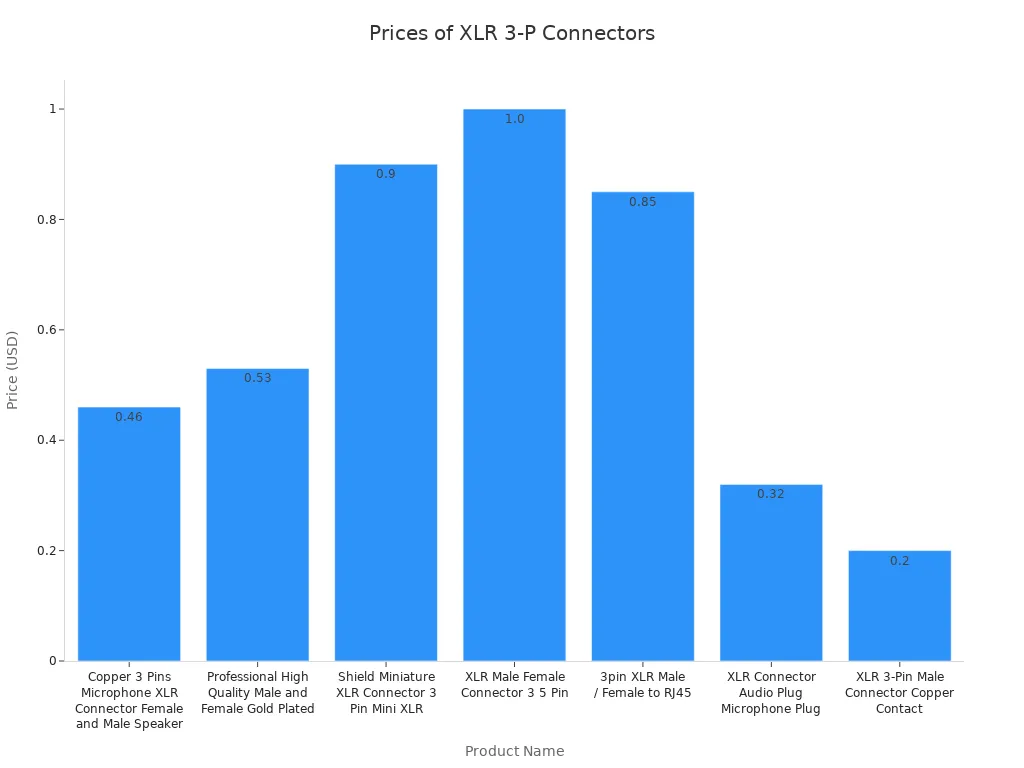
Higher-priced connectors often feature superior materials and design elements that enhance durability and performance. For instance, connectors with gold-plated contacts resist oxidation, ensuring consistent signal integrity over time.
Finding Value in Connectors
To find the best value in XLR 3-P connectors, professionals should prioritize specific features. The table below outlines essential characteristics to consider:
| Feature | Description |
|---|---|
| Compatibility | Ensure connectors are compatible with existing audio equipment to prevent signal issues. |
| Signal Integrity | Use gold-plated contacts to minimize oxidation and maintain conductivity. |
| Application Environment | Choose connectors based on use case: locking for live sound, precision for studio, weather-resistant for outdoor. |
| Material Quality | Opt for oxygen-free copper or brass contacts for better conductivity and durability. |
| Budget vs. Long-Term Value | Consider total cost of ownership; investing in quality connectors can reduce long-term expenses. |
By focusing on these features, audio professionals can make informed decisions that align with their budget while ensuring reliable performance. Ultimately, the right choice of XLR 3-P connectors can enhance audio quality and reduce maintenance costs in the long run.
Reliable XLR 3-P connectors are essential for achieving optimal audio performance in professional systems. Their robust design and high-grade materials enhance durability and clarity. Professionals should prioritize informed selection to minimize signal loss and interference. Key features such as balanced connections and precision engineering significantly contribute to superior sound quality.
By investing in quality connectors, audio engineers can ensure long-lasting performance and reliability. Ultimately, the right choice of XLR 3-P connectors can elevate any audio setup, making it a worthwhile investment for any professional.
FAQ
What is the primary function of XLR 3-P connectors?
XLR 3-P connectors primarily transmit balanced audio signals. They reduce noise and interference, ensuring high-quality sound in professional audio systems.
Are all XLR 3-P connectors compatible with each other?
Most XLR 3-P connectors are compatible due to standardized pin configurations. However, always verify specifications to ensure seamless integration with specific equipment.
How do I maintain my XLR 3-P connectors?
To maintain XLR 3-P connectors, regularly inspect for damage, clean contacts, and avoid yanking cables. Store connectors properly to prevent wear.
Can I use XLR 3-P connectors outdoors?
Yes, but choose weather-resistant models with appropriate IP ratings. These connectors protect against moisture and dust, ensuring reliable performance in outdoor settings.
What materials should I look for in quality XLR 3-P connectors?
Look for connectors made from durable materials like brass or nickel-plated metals. Gold-plated contacts enhance conductivity and resist oxidation, improving signal integrity.


