
Why China Remains the World’s Top Pro Audio Manufacturing Hub
China produces approximately 65–70% of the world’s professional audio equipment, including mixing consoles, powered speakers, audio connectors, and complete sound system components. This figure is supported by the China Audio-Video Industry Association (CAVIA) and corroborated by market reports from Grand View Research. For international buyers — distributors, installers, touring companies, and music retailers — sourcing from China can cut product costs by 30–50% compared to equivalent European or North American manufacturers, without sacrificing quality when the right supplier is selected.
However, the gap between a low-cost supplier and a reliable long-term partner is significant. In the professional audio industry, where product failure during a live event or installation can cause serious reputational and financial damage, choosing the wrong manufacturer carries real business risk. This guide walks through the complete sourcing process: evaluation, qualification, sampling, negotiation, production oversight, and logistics.
Key takeaways covered in this guide:
- How to identify qualified professional audio equipment manufacturers in China
- What factory credentials and certifications actually matter
- How to validate product quality before committing to mass production
- Critical contractual and logistical considerations for international buyers
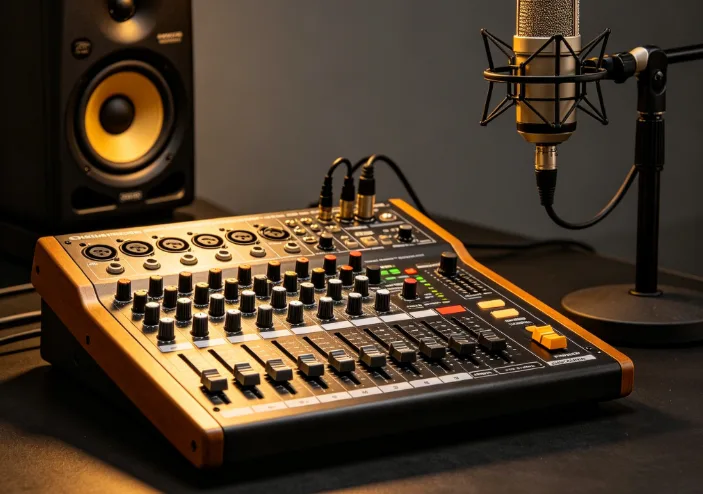
What Qualifies as a Professional Audio Equipment Manufacturer?
A professional audio equipment manufacturer produces gear designed for commercial, institutional, or high-demand use — not consumer home stereo systems. The distinction matters because professional-grade products require tighter engineering tolerances, extended durability ratings, and compliance with region-specific safety standards such as CE (European Union), ETL/UL (North America), and CCC (China).
According to the International Audio Equipment Manufacturers Association (IAPAE), professional audio products differ from consumer audio in three measurable ways:
- Mean time between failures (MTBF): Professional equipment is rated for a minimum of 8,000 operating hours under load, compared to 2,000–3,000 hours for consumer-grade gear.
- Thermal tolerance: Professional drivers and amplifiers operate at sustained peak temperatures of 85°C or higher without degradation.
- Connector durability: Professional audio connectors (XLR, SpeakON, Neutrik series) must withstand a minimum of 5,000 mating cycles versus 500–1,000 for consumer-grade equivalents.
Before evaluating any supplier, confirm that their product line aligns with these benchmarks. A credible professional audio systems manufacturer will publish MTBF ratings, thermal test reports, and connector cycle certifications on request.
How to Identify Qualified Professional Audio Equipment Manufacturers in China?
Use Industry Databases and Trade Directories
Start with verified B2B platforms that vet manufacturers: Global Sources, Made-in-China.com, and Alibaba.com allow filtering by product category, export certifications, and business registration verified by third-party agencies. However, directory presence alone does not guarantee manufacturing capability. Many trading companies appear as manufacturers on these platforms.
The most reliable indicator is onsite manufacturing documentation: look for a factory-owned production line, not a re-seller acting as an intermediary.
Attend or Visit Trade Shows
Prolight + Sound (Frankfurt), NAMM Show (Anaheim), and InfoComm (Las Vegas/Beijing) consistently feature Chinese manufacturers exhibiting professional-grade audio equipment. Physical attendance or virtual booth visits allow direct observation of product build quality, speaker demos, and initial conversations with engineering staff.
For deeper qualification, Canton Fair (Guangzhou) in its audio and electronics sections remains one of the most comprehensive in-person sourcing environments.
Evaluate Online Presence and Technical Depth
A credible pro audio equipment manufacturer China typically maintains a dedicated website with:
- Detailed product specifications and CAD drawings
- Factory photos and production line videos (not stock imagery)
- Case studies or project references in international markets
- An engineering team with documented audio industry experience (10+ years is a meaningful benchmark)
Manufacturers that provide only marketing collateral without technical documentation are generally not suitable for professional-grade procurement.
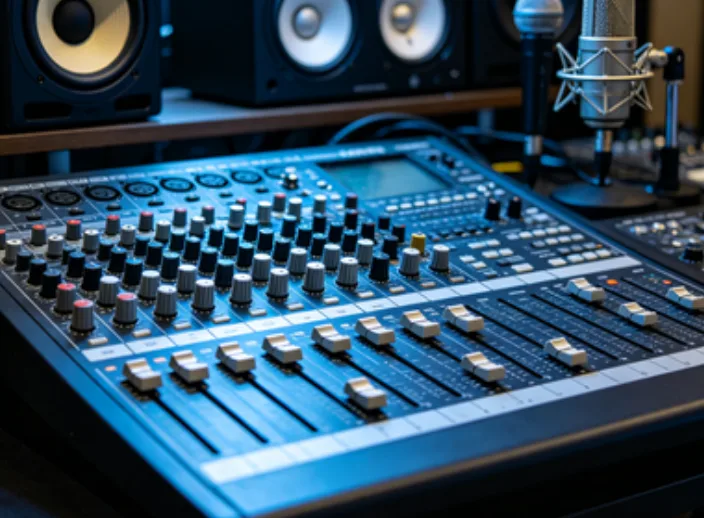
What Factory Credentials Actually Matter for Audio Equipment Buyers?
Export certifications are not uniformly regulated globally, and the presence of a certificate logo on a website does not guarantee its validity. Here is a breakdown of which credentials warrant verification and how to verify them.
| Certification | Region | What It Covers | How to Verify |
|---|---|---|---|
| CE Marking | EU | Safety, EMC, RoHS compliance | Request test reports from an EU-recognized notified body (e.g., TÜV, SGS) |
| ETL/UL | North America | Electrical safety | Verify at ul.com database using the manufacturer’s listed file number |
| CCC | China | Mandatory safety for electronics sold in China | Issued by CNCA; verify certificate number on SAMR website |
| ISO 9001 | International | Quality management system | Verify on IQNet or respective national accreditation body website |
| RoHS | EU | Hazardous substance restriction | Request test reports from IECQ-approved laboratories |
For audio connectivity solutions specifically — including cables, connectors, patch panels, and junction boxes — buyers should request REACH and RoHS compliance test reports for all materials in contact with signal paths, as these affect both safety and audio fidelity.
Factory audit checklist (minimum):
- Business license and export license verification via China’s SAMR (State Administration for Market Regulation)
- Production capacity verification (m² of facility, number of production lines, monthly output capacity)
- Staff count and engineering team size
- In-house testing equipment (Hi-pot testers, audio analyzers, vibration tables, climatic chambers)
According to a 2023 report by the China Council for the Promotion of International Trade (CCPIT), over 22% of buyer complaints in cross-border audio equipment procurement originated from buyers who skipped factory audits and relied solely on video calls and brochure documentation.
How to Validate Product Quality Before Mass Production?
Request Pre-Production Samples
Always order samples before committing to a production run. For professional audio equipment, the sampling process should include:
- Prototype sample (1–2 units): For design and dimensional verification.
- Pre-production sample (3–5 units): For assembly consistency and initial burn-in testing.
- Production sample (5–10 units): Drawn from actual production tooling for final approval.
For audio equipment specifically, conduct these measurable tests on samples:
- Frequency response measurement: Verify within ±3 dB tolerance across the rated range (e.g., 20 Hz – 20 kHz for full-range systems).
- Total Harmonic Distortion + Noise (THD+N): Should not exceed 0.1% at rated power output per IEC 60268-5 standards.
- Power handling test: Apply rated RMS power for 2 hours continuously; measure driver temperature and check for voice coil rub or deformation.
- Connector pull-out force: Test at a minimum of 50 N per industry standard for professional audio connectors.
A reputable audio connector manufacturer will have no objection to sharing test data alongside physical samples. Reluctance to provide objective measurement data is a significant red flag.
Conduct or Commission a Third-Party Inspection
For orders exceeding $10,000 USD, commissioning a third-party inspection firm (SGS, Bureau Veritas, or QIMA) for during-production (DUPRO) or pre-shipment inspection is standard practice in the professional audio industry. Typical inspection criteria include:
- Cosmetic grading per AQL 2.5
- Labeling and bar code accuracy
- Safety test re-verification (Hi-pot, earth continuity)
- Packaging integrity under simulated transit conditions (ISTA 2A or 3A)
How to Negotiate Payment Terms and Contracts with Chinese Audio Manufacturers?
Payment Terms
The standard payment structure for first orders with a new professional sound system wholesale manufacturer is:
- 30% deposit upon order confirmation
- 70% balance before shipment (against Bill of Lading or inspection report)
Avoid manufacturers who demand 100% prepayment on first orders. Legitimate factories with export experience routinely accept split payments because they use the deposit to procure components.
Key Contract Clauses for Audio Equipment
Ensure the purchase agreement specifies:
- Technical specifications: Exact frequency response, power ratings, THD+N limits, and connector types (referenced to published datasheets).
- Quality agreement: Defines defect rates acceptable (typically ≤1.5% AQL for professional equipment), inspection standards, and remedies for non-conformance.
- Intellectual property protection: NDAs for custom designs, proprietary tooling, and firmware — particularly relevant for buyers sourcing custom audio connectivity solutions with unique form factors or software.
- Force majeure clause: Addresses production delays beyond the manufacturer’s control.
- Warranty period: Industry standard for professional audio equipment is 12–24 months from date of shipment.
How to Maintain Production Oversight and Quality Control During Manufacturing?
For orders of $20,000 USD or more, or production runs exceeding 6 weeks, plan at minimum two quality control touchpoints:
Week 2–3: Initial Production Check (IPC)
Verify that production has begun with correct materials and component specifications. Identify tooling issues before they affect the full run. Issue a corrective action request (CAR) if deviations are found.
Week 5–6: During Production Inspection (DUPRO)
Sample 10–20 units from the production run and conduct full functional testing. If defect rates exceed agreed AQL limits, negotiate a production hold and request root cause analysis from the manufacturer.
According to the China Import-Export Quality Inspection Association, buyers who conducted DUPRO inspections resolved quality issues an average of 4 weeks earlier than those relying solely on pre-shipment inspections — reducing the cost of rework or return shipments by an estimated 18–25%.
What Are the Shipping, Logistics, and Customs Requirements for Pro Audio Equipment?
Professional audio equipment typically falls under HS Code 8518 (microphones, loudspeakers, headphones, and parts thereof) when classified internationally. Key logistics considerations:
- Incoterms: Use EXW (Ex Works) or FOB (Free on Board) for sea freight. CIF should only be used if you want the supplier to manage the full freight chain.
- Sea freight lead time: 3–5 weeks from major Chinese ports (Ningbo, Shanghai, Shenzhen) to US West Coast; 5–7 weeks to European ports.
- Customs duties: US: ~0–3% for pro audio equipment (HTS 8518.40); EU: ~2–6.5% depending on product classification; UK: ~0–2.5%.
- Packaging for sea freight: Professional audio equipment must be packed in ISTA 3A-certified cartons with moisture indicators (desiccant packs) and shock monitoring labels for shipments exceeding 100 kg.
For buyers ordering professional audio systems supplier products with mixed product categories (speakers + electronics + cabling), confirm that the supplier provides split HS Code documentation to avoid customs delays caused by misclassification of bundled shipments.
Conclusion: Building a Sustainable Procurement Partnership
Sourcing professional audio equipment from China is not a one-time transaction — it is a partnership that compounds in value over time. Buyers who invest in thorough supplier qualification upfront consistently report 20–30% lower total procurement costs and significantly fewer quality incidents compared to buyers who select suppliers based on price alone.
The most successful long-term buyer-supplier relationships in the professional audio industry share three characteristics: transparent technical communication, shared quality standards documented in writing, and regular presence (physical or via trusted third party) during production.
Recommended next steps for new buyers:
- Identify 3–5 candidate pro audio equipment manufacturers China using the criteria in Step 1.
- Request technical documentation packages from each — genuine factories will provide this within 5 business days.
- Conduct at least one factory audit (in-person or via video with a qualified interpreter).
- Place a sample order of 10–30 units to validate quality before volume commitments.
- Negotiate a 12-month quality agreement and exclusivity clause if your order volumes exceed $100,000 USD annually.
FAQ: Frequently Asked Questions About Sourcing Professional Audio Equipment from China
What is the minimum order quantity (MOQ) for professional audio equipment from China?
MOQ varies by product type. Standard pro audio products such as powered speakers or mixing consoles typically have an MOQ of 10–50 units per SKU. Custom audio connectivity solutions such as bespoke cable assemblies or proprietary connectors may require MOQs of 100–500 units due to component procurement and tooling setup costs. Some manufacturers offer reduced MOQs for a premium per-unit price, which is worth calculating against your inventory turnover rate.
How long does it take from order placement to delivery?
For standard catalog products, production lead time is typically 4–6 weeks after deposit confirmation, plus 3–5 weeks for sea freight to most international destinations. Custom products or first-order runs can extend production to 8–12 weeks. Buyers should plan total procurement timelines of 10–18 weeks for standard orders and 16–24 weeks for custom-manufactured professional audio systems.
What certifications are required to import professional audio equipment into the United States?
Importing professional audio equipment into the US requires FCC Class A or Class B compliance (for digital electronics), ETL or UL listing for electrical safety, and product-specific labeling under 16 CFR Part 1203 (safety standard for loudspeakers). All claims of certification should be verified on the official UL (ul.com) or ETL (intertek.com) online databases before placing orders with any supplier.
How do I protect my custom-designed products when sourcing from China?
Protect custom-designed professional audio equipment through a combination of legal and operational measures: file a provisional patent in China through the CNIPA before disclosing designs; execute a Non-Disclosure Agreement (NDA) with the manufacturer covering all technical drawings, firmware, and tooling; register tooling as buyer property in the purchase contract; and consider using split-tooling arrangements where your tooling is stored at a third-party assembly facility to prevent unauthorized use by the manufacturer.
Can I request factory audits before placing a large order?
Yes. Reputable manufacturers accept third-party factory audits before major commitments. Request audits through established inspection firms (SGS, Bureau Veritas, TÜV) which offer standardized audit protocols covering production capacity, quality management systems, social compliance (SA8000), and environmental management (ISO 14001). Audit reports should include photographic documentation of production lines, test equipment calibration records, and staff interviews. Factories that decline or delay audit scheduling should be disqualified from further consideration.


