
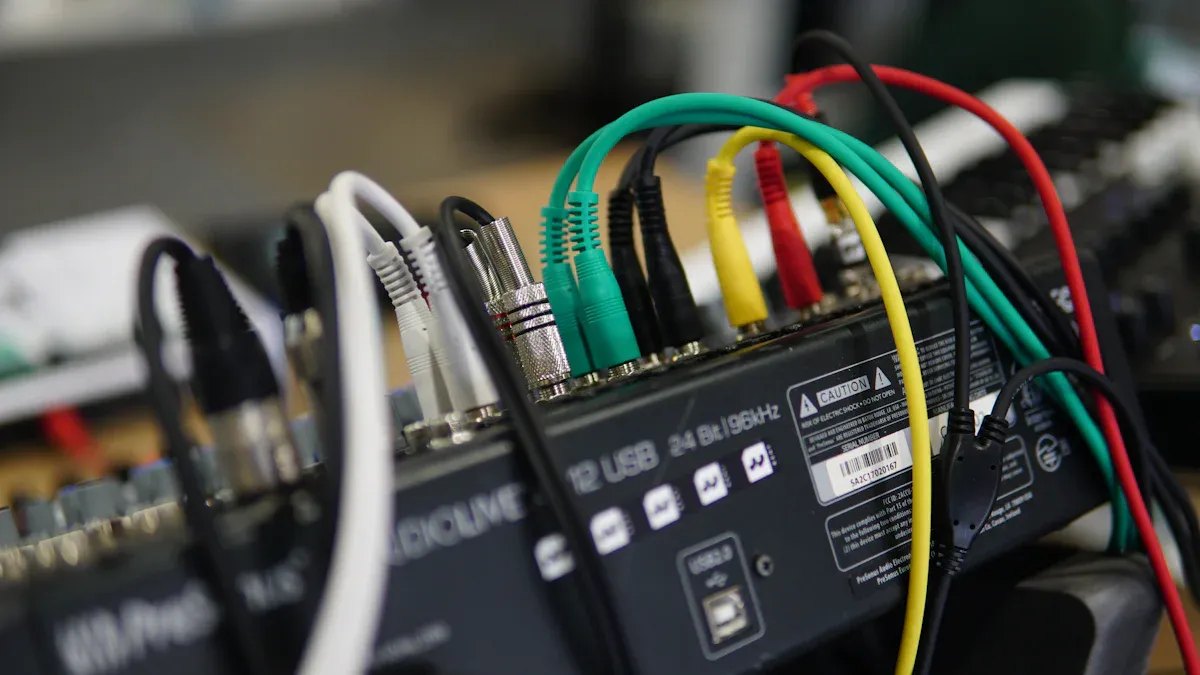
Unreliable connections silently sabotage sound quality. They cause immediate signal degradation, frustrating interruptions, and costly re-takes or performance failures. Investing in a quality XLR Connector today prevents these critical issues. It ensures pristine audio from the start. This also protects a professional’s reputation. A robust design, featuring corrosion resistance and wear resistance XLR Connector properties, guarantees consistent performance. This commitment to quality saves time and money in the long run.
Key Takeaways
- Unreliable XLR connectors cause bad sound. They lead to signal loss and interruptions. This costs time and money.
- Good XLR connectors have precise parts. They block noise well. They are built to last a long time.
- Using good XLR connectors prevents problems. It stops production delays. It protects your expensive audio gear.
- Reliable XLR connectors improve sound quality. They make your work easier. They prepare your setup for the future.
- Choose XLR connectors with good materials. Look for strong parts and good shielding. This ensures the best performance.
The Foundation of Flawless Sound: What Makes a Reliable XLR Connector?
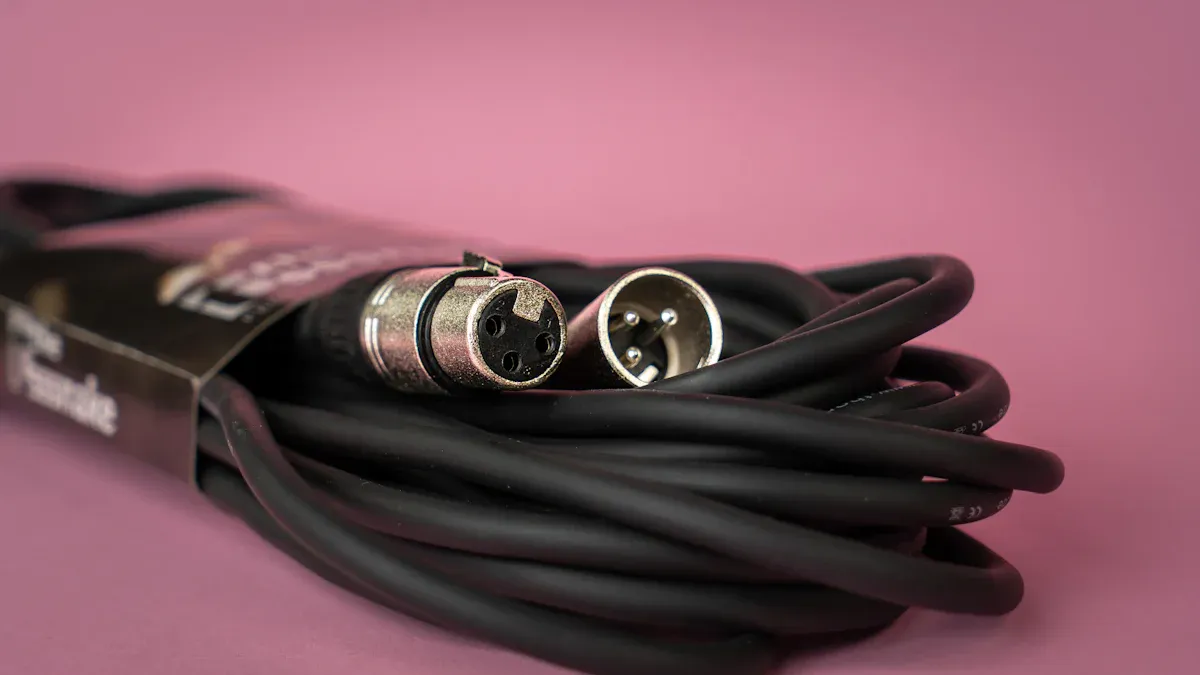
Precision Engineering of XLR Connectors: Beyond Just ‘Plugging In’
Reliable audio connections begin with precise engineering. This involves more than simply plugging in a cable. Manufacturers use advanced materials and processes to create superior connectors. For example, pure silver conductors, made with the ‘Ohno Continuous Cast’ technique, ensure an unbroken signal path. This method creates a single grain in approximately 125 meters of conductor. Microporous PTFE tape acts as a dielectric, maintaining conductor geometry. Cold-weld terminations minimize signal loss and improve audio performance. Additionally, the Furutech Floating Field Damper addresses stray electrical potentials. It shunts generated electrical potentials to ground, significantly lowering noise and reducing distortion. This contributes to ultra-clean and stable power transfer.
Superior Shielding and Noise Rejection in XLR Connectors
Effective shielding is crucial for clear audio. It protects signals from unwanted interference. The OFC spiral shield construction in cables provides flexibility and superior protection against electromagnetic interference (EMI) and radio frequency interference (RFI). This enhances signal fidelity. Different shielding types offer varying levels of protection. Braided shields provide excellent rejection and durability, making them suitable for live sound. Foil shields are highly effective for RFI, often used in permanent installations. Star-quad wiring uses four internal conductors to reject RFI, ideal for environments with electrical equipment. Dual shielding, with two layers of copper, creates a robust barrier against EMI. This ensures pristine audio in noisy venues.
Durability and Longevity: XLR Connectors Built to Last
Professional audio demands connectors that last. A professional-grade XLR Connector can withstand over 1000 mating cycles without performance degradation. These connectors often feature high-quality zinc alloy housing and silver-plated contacts for enhanced conductivity. General build quality indicators include gold-plated connectors, robust metal housings, and thick, flexible jackets. Internal strain relief at connection points also adds to longevity. Industry standards confirm this durability. IEC 61076-2-103 sets a baseline for design and performance. Compliance with IEC 68-2-20 ensures robust solder connections. UL 94 HB indicates flame resistance, and IP40 signifies protection against solid objects. Proper care, such as over-under coiling and dry storage, further extends the life of quality cables.
The Immediate Cost of Compromise: Why Waiting on XLR Connectors is More Expensive
Avoiding Signal Degradation and Dropouts with Quality XLR Connectors
Poor quality audio connections directly impact sound. They cause signal degradation. This means the sound loses its clarity and richness. Listeners hear a muffled or distorted output. Dropouts are another common problem. The audio signal completely disappears for short periods. This creates frustrating interruptions during recordings or live performances. High-quality connectors maintain a strong, consistent signal path. They ensure the audio remains clear and uninterrupted. Investing in good connections prevents these issues from the start.
Preventing Production Delays and Rework Caused by Poor XLR Connectors
Unreliable connectors lead to significant production delays. Technicians spend valuable time troubleshooting connection issues. They might re-record entire sections of audio. This rework costs money and wastes resources. Imagine a live event where sound cuts out. The crew must stop the show to fix the problem. This damages the event’s reputation. Quality connectors work reliably every time. They allow productions to run smoothly. This saves time and avoids costly interruptions.
Protecting Your Valuable Equipment: The Role of Your XLR Connector
A faulty XLR Connector can harm expensive audio gear. Intermittent or poor electrical contact is a common issue. Bent or corroded pins create unstable connections. This instability causes crackling or sudden signal drops. These electrical irregularities send voltage spikes to sensitive preamps or microphones. Over time, these spikes stress internal components. They lead to premature failure of capacitors or resistors. A short circuit from a bad connector can draw too much current. This blows fuses or damages power supply parts. Loose connectors also strain input jacks. This causes mechanical wear or damage to solder joints. Quality connectors protect your equipment from these damaging effects.
The Professional Edge: How Reliable XLR Connectors Elevate Your Audio Now
Uncompromised Audio Fidelity with Premium XLR Connectors
Premium audio connections deliver top-tier sound quality. They ensure every nuance of your audio signal remains intact. High-quality connectors offer better shielding against interference. Gold-plated contacts, for example, provide enhanced protection from external signal disruptions. This gold plating also resists oxidation in humid environments. This resistance is crucial for maintaining signal integrity over time. It reduces the risk of crackling or dropouts. By preventing corrosion, these connectors ensure a stable connection. This avoids audio interruptions. Gold’s excellent electrical conductivity and resistance to tarnish guarantee reliable audio transmission. It also extends product life, especially under frequent use or challenging conditions. This improves signal integrity over time. This is particularly beneficial in damp or salty air. It ensures uncompromised audio fidelity in various environments. Their reliability makes them ideal for broadcasting, scientific measurement, and professional studio recordings. Signal fidelity is paramount in these mission-critical applications.
High-quality connectors also minimize impedance mismatches and signal loss across various audio frequencies. Modern audio equipment primarily uses voltage matching. This approach minimizes impedance mismatches and signal loss. Equipment designers create devices with very low output impedance, typically 150Ω or below. They also design devices with a relatively high input impedance, at least 10kΩ. This significant difference ensures the full output voltage develops across the input impedance. It effectively disregards cable impedance. This method maximizes signal fidelity even when using impedance mismatched gear. It minimizes high-frequency and level loss caused by signal reflections. It also eliminates noise and hum caused by an impedance mismatch. This approach is a departure from older impedance-matched systems. It is now standard for all microphone types.
Enhanced Workflow and Peace of Mind with Dependable XLR Connectors
Reliable audio connections streamline professional operations. They allow audio engineers to focus on creativity, not troubleshooting. XLR connectors are the industry standard for professional audio. They connect microphones, studio monitors, microphone preamps, and mixing consoles. Their design includes a locking mechanism. This prevents accidental disconnection. They also feature robust shielding. These elements are crucial for maintaining signal integrity in demanding professional environments. These features create a more stable and reliable connection. They indirectly improve workflow efficiency. They reduce troubleshooting time and ensure consistent signal quality.
Dependable connectors offer several benefits. They reduce electromagnetic interference (EMI) and radio-frequency interference (RFI). They provide a lower noise floor. This is especially noticeable in quiet passages or with sensitive transducers. They ensure greater signal integrity over long cable runs, typically above 15–20 feet (5–6 meters). They also improve dynamic range and headroom in well-designed systems. XLR couplers facilitate audio workflows. They enable rapid changes between services and events. This reduces setup and teardown time. Reliable fits and repeatable terminations in connectors lead to faster installations and fewer callbacks. This minimizes troubleshooting efforts. It keeps project schedules on track. Prioritizing suppliers who offer reliable technical documentation, sample kits, and responsive customer service also helps. A reliable partner can significantly reduce downtime during troubleshooting and system upgrades. This directly increases operational uptime for audio engineers. It minimizes interruptions.
Future-Proofing Your Setup: Investing in Quality XLR Connectors
Investing in quality audio connections provides significant long-term value. It ensures your setup remains relevant and efficient for years. Long-term value comes from fewer replacements and reduced troubleshooting sessions. Investing in high-performance cables for critical applications ensures reliability. This translates to cost savings. It prevents downtime and issues. With proper selection and care, a high-quality cable can endure for years. This holds true even under demanding conditions. It extends its lifespan and reduces replacement costs.
Investing in professional practices for cables, such as building custom cables, offers significant long-term cost savings and reliability. Custom cable creation, especially for outfitting an entire studio, allows for substantial cost reductions. It also provides precise length customization for an organized setup. This approach ensures control over component quality. It contributes to overall system reliability and longevity. The primary return on investment for premium cables is not superior sound quality alone. It is enhanced reliability, durability, and peace of mind. These cables act as an insurance policy. They prevent failures during critical recording sessions or live performances. This avoids costly disruptions and re-dos.
Choosing the Right Professional Audio XLR Connector Series
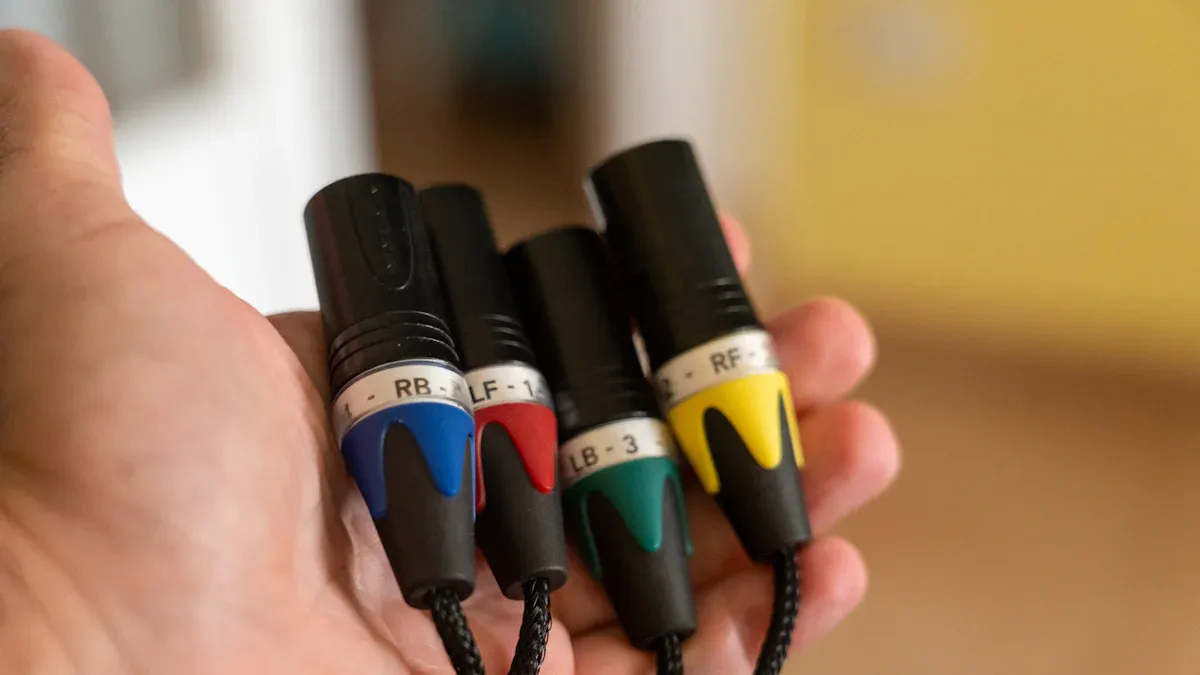
Key Features to Look for in a High-Quality XLR Connector
Selecting a high-quality XLR Connector involves examining its electrical and mechanical properties. A superior connector minimizes signal loss. It features a low capacitance between contacts, typically less than 4 pF. Contact resistance should be minimal, around 3 mΩ or less, ensuring superior conductivity. Excellent insulation is crucial; look for a dielectric strength of 1.5 kV DC and an insulation resistance greater than 10 GΩ. These features maintain the integrity of electrical isolation. The connector must handle substantial power, with a rated current per contact of 16 A and a rated voltage below 50 V for low-voltage applications.
Mechanically, a durable connector offers a service life exceeding 1000 mating cycles. It provides ease of use with an insertion/withdrawal force of 20 N or less. A latch lock ensures a secure connection. Stainless steel housing provides robustness. Gold plating on contacts enhances conductivity and corrosion resistance. POM material for strain relief protects the cable. An IP40 protection class indicates ingress protection. High-grade materials ensure durability against impacts. Innovative grounding mechanisms minimize interference. Advanced sealing technology protects against bending and pressure, enhancing cable reliability.
Understanding the Balanced Design of XLR Connectors
Balanced audio designs are crucial for noise rejection and signal integrity. Balanced connections ensure both signal conductors have absolutely equal impedance to ground. This symmetry causes external electromagnetic interference (EMI) to induce the same noise in both conductors. The receiving device measures the difference between these two signals. The identical noise components then cancel each other out, resulting in a clean signal.
Most balanced audio systems are also differential. The second conductor carries an inverted copy of the signal. This design effectively doubles the signal voltage swing compared to a single-ended setup. This increased signal level, relative to any remaining noise, significantly improves the signal-to-noise ratio by approximately 60 dB. This combination allows XLR connections to be used for extremely long cable runs without significant noise pickup. XLR balanced cables are an engineering solution designed to eliminate common-mode noise while preserving signal integrity. They provide a clean signal path, ensuring pure, unadulterated sound transmission.
The Importance of Material Quality in XLR Connector Performance
The materials used in an XLR Connector directly impact its performance and longevity. For pins, brass is a standard contact material for male pins, while phosphor bronze is often used for female pins. Phosphor bronze offers enhanced spring retention and longevity. Silver plating on pins is common, but gold plating is recommended for superior corrosion resistance and maintaining low contact resistance over time.
| Component | Material |
|---|---|
| Pins | Brass (Male) |
| Phosphor bronze (Female) | |
| Pin Plating | Silver |
| Shell | Zinc alloy |
| Chuck | POM |
| Boot | PVC |
For insulation, ceramic or high-temperature plastic inserts ensure pin alignment and prevent short circuits. Zinc alloy is a common material for the shell, providing robustness. POM is used for the chuck, and PVC for the boot, contributing to the connector’s overall durability and protection.
Real-World Impact: Case Studies of Reliable XLR Connectors in Action
Studio Recording: Achieving Pristine Sound with the Right XLR Connector
In studio recording, pristine sound is essential. High-quality XLR connectors play a vital role. They ensure every subtle audio detail passes through without degradation. These connectors maintain signal integrity from the microphone to the recording interface. They minimize noise and interference, which allows engineers to capture pure, unadulterated sound. This precision helps artists achieve their desired sonic quality. A reliable XLR connection means fewer retakes and a more efficient recording process.
Live Sound Reinforcement: Ensuring Uninterrupted Performance with XLR Connectors
Live sound environments demand robust and dependable connections. XLR connectors are the backbone of these complex setups. Their locking mechanism guarantees a reliable and steady connection. This prevents disconnections during performances. The balanced design and shielding effectively reduce noise and interference. This leads to clean and high-quality audio for the audience. The robust construction of XLR microphone cables allows them to withstand the rigors of daily use. They endure frequent setup and teardown. Multi-conductor XLR cables, with more than three pins, handle specialized applications. These include multiple audio channels or complex signal routing. XLR connectors incorporate recessed pins within the female connector. This protects them from damage and reduces the risk of electrical shorts. High-quality XLR connectors use gold-plated contacts. These resist corrosion and maintain optimal conductivity over time. Strain relief protects internal cable connections from damage due to pulling or bending. Most professional XLR connectors are rated for thousands of connect/disconnect cycles. This makes them ideal for frequent use in touring, rental, and studio environments.
Broadcast and Post-Production: The Critical Role of XLR Connectors in Professional Workflows
Broadcast and post-production facilities rely heavily on consistent, high-fidelity audio. These environments often involve long cable runs. High-quality XLR connectors prevent signal loss through the use of 99.99% pure copper dual center conductors. This ensures signal integrity. It allows subtle audio details to pass through. Interference is prevented by a braided gold cotton outer jacket and a low-loss third conductor. These work together to reject noise from RFI and EMI. This is crucial for maintaining pure tonal quality over long cable runs. Proprietary custom-tooled gold/gun metal barrels maintain signal integrity. They also withstand frequent connections. This contributes to long-term performance in demanding broadcast environments. These features ensure that audio signals remain clear and strong. They meet the stringent quality standards of broadcast and post-production.
The question is not if you need reliable XLR connectors. It is why you have not prioritized them. The immediate benefits of precision, reliability, and uncompromised audio quality are clear. These benefits far outweigh the short-term savings from inferior alternatives.
Upgrade connections now. Safeguard your sound. Streamline your workflow. Elevate professional audio to its deserved standard.
FAQ
What is an XLR connector?
An XLR connector is a type of electrical connector. Professionals use it mainly for audio equipment. It has three pins for balanced audio signals. This design helps reduce noise. It also ensures a secure connection with a locking mechanism.
Why do professionals prefer XLR connectors for audio?
Professionals prefer XLR connectors for several reasons. They offer balanced audio transmission, which rejects noise. Their robust design ensures durability. A locking mechanism prevents accidental disconnections. These features provide reliable, high-quality sound.
How does a balanced XLR connection reduce noise?
A balanced XLR connection uses two signal wires and a ground. It sends the audio signal and an inverted copy. The receiving device subtracts the inverted signal from the original. This process cancels out any noise picked up equally by both wires.
What key features define a high-quality XLR connector?
A high-quality XLR connector features precision engineering. It has superior shielding for noise rejection. Look for durable materials like zinc alloy housing and gold-plated contacts. These elements ensure longevity and consistent performance.