
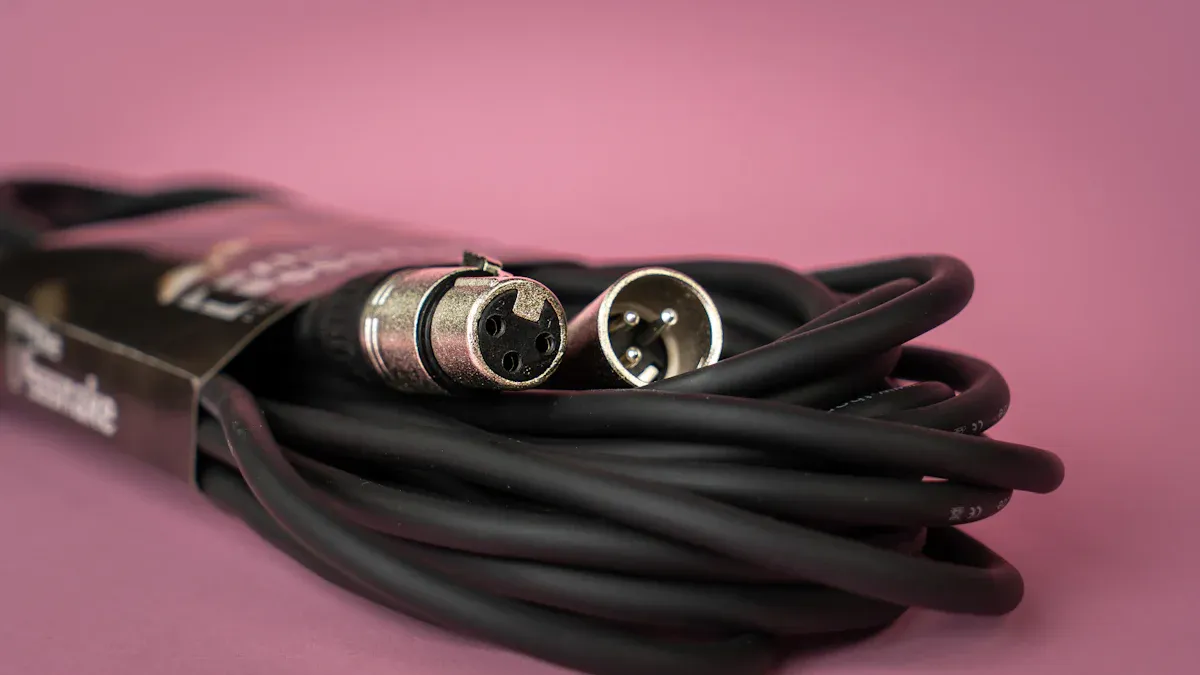
XLR connectors generally offer superior noise rejection, effectively handling long cable runs. For shorter distances in quiet environments, an OEM premium RCA plugs audio connector can provide sufficient performance and often delivers high fidelity. Understanding the core differences between these connection types is crucial for engineers to achieve optimal audio quality. The robust design of an XLR 3-P Audio Connector ensures reliable signal transmission. Professionals consider the specific application for components like the XLR Connector Socket Panel JYA5155&JYA5156. (Images: jya5155.png, jya5156.png, jya5155+5156-1.png, jya5155+5156-main image.png)
Key Takeaways
- XLR connectors offer superior noise rejection. They are best for long cable runs and professional use.
- RCA connectors are unbalanced. They work well for short distances and home audio systems.
- Cable length greatly affects RCA audio quality. Keep RCA cables under 10-15 feet for best sound.
- Premium RCA plugs improve sound quality. They use better materials and construction.
- Choose connectors based on your needs. Consider your environment, equipment, and desired sound.
XLR and RCA: Defining Audio Connections
The Balanced Advantage of XLR
XLR connectors offer a significant advantage through their balanced audio design. This system uses three pins to transmit the audio signal. Pin 1 serves as the ground or shield, effectively protecting against electromagnetic interference. Pin 2 carries the positive (hot) signal, while Pin 3 carries the negative (cold) signal. This balanced setup is crucial for noise rejection through common-mode rejection (CMR). Identical interference picked up on both the positive and negative signal lines cancels out at the receiving end. XLR connectors transmit signals with identical but opposite polarity. When these signals reach their destination, they recombine, effectively eliminating any noise picked up along the cable path. This process preserves the original audio quality. The metal housing of an XLR connector also provides shielding against radio frequency interference, with Pin 1 connecting to this shield for a protective barrier.
The Unbalanced Nature of RCA
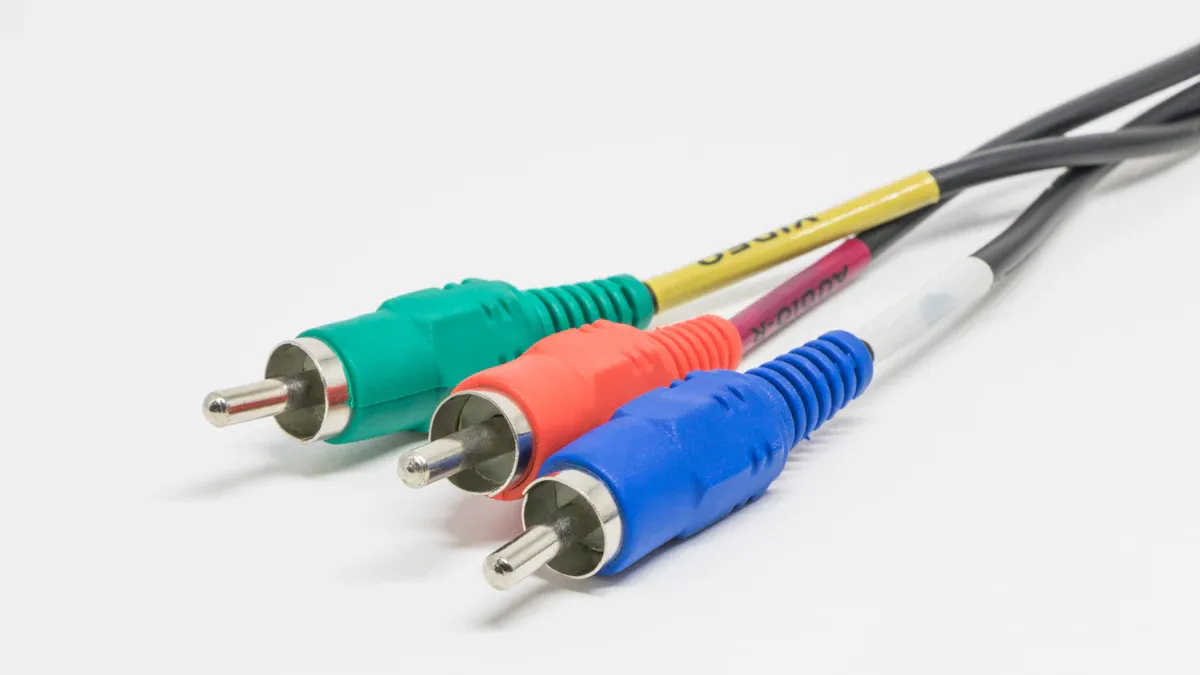
RCA connections operate on an unbalanced audio signal path. This design carries the audio signal on a single conductor, with a ground wire serving as the shield. The center connector transmits the positive signal, and the outer ring acts as the ground return. This configuration is unbalanced because the positive connection has a high impedance to ground, while the ground wire offers a very low impedance path. This impedance difference makes the system vulnerable to external interference. Noise picked up by the two conductors produces different voltages. Noise on the positive connection, due to its high impedance path, remains. Noise on the ground wire effectively drains away. Unbalanced cables are more prone to interference because they lack the noise-canceling features found in balanced audio. They are susceptible to electromagnetic interference (EMI) and radio frequency interference (RFI) from sources like power cables or wireless devices. Any interference picked up by the signal wire can degrade audio quality. Even an OEM premium RCA plugs audio connector, despite its quality construction, operates within these inherent limitations. RCA cables should ideally remain under 25 feet to minimize noise interference.
Pin Configurations and Signal Paths
Understanding the pin configurations clarifies the signal paths for both connector types. For an XLR 3-pin connector, the standard assignments are clear:
| Pin | Function |
|---|---|
| 1 | Chassis ground (cable shield) |
| 2 | Positive polarity terminal for balanced audio circuits (aka "hot") |
| 3 | Negative polarity terminal for balanced circuits (aka "cold") |
To summarize, Pin 1 handles Ground/Shield, protecting against electromagnetic interference. Pin 2 carries the Hot/Positive (+) signal, and Pin 3 carries the Cold/Negative (-) signal. In contrast, an RCA connector features a simpler design. It has a central pin that carries the audio signal and an outer metal ring that serves as the common ground connection. This single signal path, referenced to ground, defines its unbalanced nature.
Noise Rejection: XLR’s Superiority
Common-Mode Rejection in XLR
XLR’s balanced design excels at rejecting unwanted noise. This system uses a clever technique called common-mode rejection. Noise induces an equal voltage in both wires of a balanced audio line. This happens because each wire has balanced impedance. A differential device at the receiving end only responds to the difference in voltage between the two signal lines. Since the induced noise is identical on both wires, the differential device effectively rejects it. Twisted pairs further enhance this process. They minimize the loop area between conductors. This ensures magnetic fields induce equal noise levels on both lines for effective cancellation.
RCA’s Vulnerability to Interference
RCA connections, due to their unbalanced nature, show greater vulnerability to interference. They lack the noise-canceling capabilities of balanced lines. Ungrounded, unshielded RCA-terminated interconnects can act as antennas. They pick up radio station signals. One editor experienced RF interference when using a tube amp and preamp. These were connected by 30-foot ungrounded, unshielded, RCA-terminated interconnects. A radio station signal was clearly audible. This demonstrated the susceptibility of these connections to radio frequency interference (RFI). Dirty nickel-plated RCA interconnects can also cause ‘break-in’ interference from sources like CB radios. This occurs due to a diode antenna effect.
Eliminating Hum and Buzz
Common sources of hum and buzz in audio systems primarily stem from ground loops. These occur when audio components connect, creating multiple paths for ground currents to flow. A closed loop forms when signal grounds of two units tie together through interconnecting cables and another path. This other path could be the third wire in a line cord or metal chassis connections via rack rails. Current flowing through this loop, especially when it affects the audio signal ground, generates hum. Properly implemented and completely balanced interconnects are excellent at rejecting these ground loop and other noise currents. This effectively mitigates the hum. XLR connections mitigate hum and buzz by utilizing balanced lines. These lines require three conductors: two for the signal (+ and -) and one for the shield. The AES48 standard specifies tying the cable shield to the metal chassis at both ends of the cable. This happens right where it enters the chassis. This method, along with twisted pair cable, guarantees hum-free results. It also provides the best possible protection from radio frequency interference (RFI) and other noises. These noises include those from neon signs or lighting dimmers.
Sound Quality and Performance Factors
Audio connection choices significantly influence sound quality and overall system performance. Engineers consider various factors, including cable length, output voltage, and the quality of the connectors themselves, to optimize audio fidelity.
Cable Length Limitations
Cable length directly impacts signal integrity. Longer cables can introduce signal degradation, especially with unbalanced connections. XLR cables, with their balanced design, effectively transmit signals over considerable distances without significant loss or noise pickup. This makes them ideal for professional setups requiring long runs.
RCA connections, however, face inherent limitations due to their unbalanced nature. Signal degradation becomes more noticeable as the cable length increases. The table below illustrates the maximum recommended lengths for different types of RCA connections before quality issues arise:
| RCA Type | Maximum Length (Noticeable Quality) | Maximum Length (Varying Quality) | HD Quality Guarantee |
|---|---|---|---|
| Composite RCA | 100 feet or shorter | Up to 300 feet | N/A |
| Component RCA | N/A | Up to 100 feet | 16 feet |
For instance, component RCA cables guarantee HD quality only up to 16 feet. Exceeding these lengths can lead to a noticeable drop in audio clarity and an increased susceptibility to interference. Therefore, system designers carefully consider cable length when choosing between XLR and RCA.
Output Voltage Differences
Output voltage levels also play a crucial role in audio performance. Professional audio equipment, which typically uses XLR connections, operates at higher output voltage levels, often around +4 dBu (1.23 Vrms). Consumer audio gear, commonly utilizing RCA, operates at lower nominal levels, usually -10 dBV (0.316 Vrms).
These voltage differences affect the signal-to-noise ratio. Higher output voltages mean the audio signal is stronger relative to any inherent system noise. This results in a cleaner, more robust signal that is less susceptible to noise pickup over longer distances. When connecting equipment with different nominal output levels, users may need to adjust gain settings to prevent clipping or ensure adequate volume. Matching these levels correctly helps maintain optimal sound quality throughout the audio chain.
The Impact of OEM Premium RCA Plugs Audio Connector
The quality of the connector itself significantly influences signal integrity, even for RCA connections. An OEM premium RCA plugs audio connector can enhance performance by employing superior materials and construction techniques. These advanced designs aim to minimize signal loss and reduce susceptibility to external interference.
Manufacturers use specific materials and construction methods to achieve this improved performance:
- Conductor Materials: Oxygen-free copper (OFC) conductors provide superior signal transmission. Some premium applications even use proprietary alloy conductors. Optimized conductor gauge ensures efficient signal flow across specific frequency ranges.
- Insulation and Shielding: Low-capacitance designs extend frequency response. Braided copper shields offer robust electromagnetic interference (EMI) protection. Aluminum foil barriers provide effective radio frequency interference (RFI) rejection. Spiral-wound shield configurations offer flexibility, while quad-shield designs provide maximum interference rejection.
- Contact Quality: High-purity copper and gold plating improve conductivity, reduce signal loss, and offer excellent corrosion resistance. Gold-plated brass reduces signal loss and improves conductivity, with gold plating offering up to a 90% reduction in resistance compared to standard nickel plating.
- Mechanical Design: Robust mechanical designs include strain relief and sturdy housings. These features prevent wear and tear, ensuring uninterrupted connections. Improved gold-plated contacts and enhanced shielding reduce interference and signal degradation, with better shielding decreasing EMI by up to 90%. Robust strain relief mechanisms can increase durability by 30%.
These material choices and construction techniques, even in an OEM premium RCA plugs audio connector, significantly contribute to a cleaner audio signal. They reduce signal loss and minimize the impact of external noise, allowing RCA connections to perform optimally within their inherent limitations.
Practical Applications and System Integration
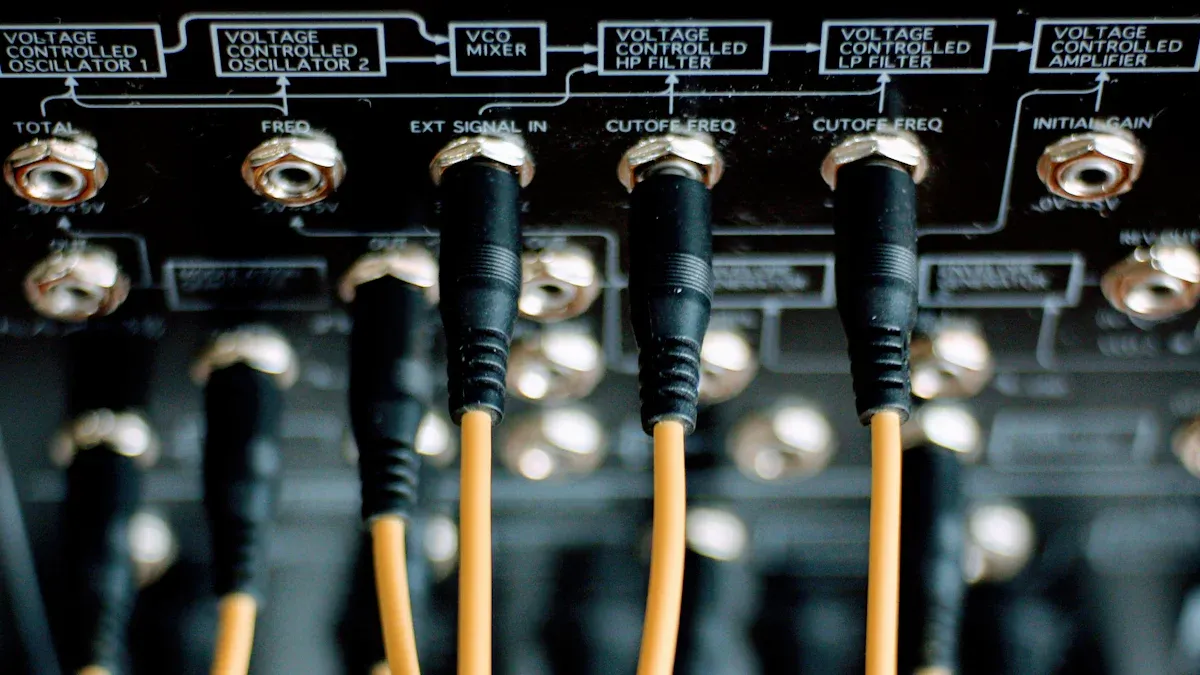
Engineers make critical decisions about audio connections based on the specific application and system requirements. Understanding when to deploy XLR and when RCA is suitable ensures optimal performance and sound quality.
When to Choose XLR for Professional Use
Professionals consistently choose XLR connections for demanding audio environments. Balanced interconnection stands as the superior method for connecting audio equipment. This approach ensures optimal performance. Implementing an entirely balanced interconnection connects both ends of the shield to chassis ground at the entry point. Over 60 years of documentation supports this method. It guarantees hum-free results when combined with high-quality input/output stages. This contrasts with common practices where manufacturers often connect balanced shields to signal ground. Users sometimes modify wiring to connect only one end of the shield, leading to varied outcomes.
The audio industry clearly divides between balanced and unbalanced systems. Professional users consistently opt for balanced gear. This indicates a strong preference for its performance advantages. Balanced interconnection offers a superior interface compared to unbalanced systems. Both balanced and unbalanced shields provide electric field shielding. However, the twisted-pair construction of balanced cables significantly enhances immunity to magnetic field interference. Unbalanced cable shields also carry return current, distinguishing them from ‘true’ shields. A shield is a metallic partition controlling electric and magnetic field propagation. Balanced systems serve this function better.
Many audio manufacturers improperly connect balanced shields to audio signal ground, such as pin 1 for 3-pin XLR-type connectors. This practice allows currents induced into the shield to modulate the ground, affecting the signal. Despite circuit designers’ efforts to ensure clean audio signal grounds, this widespread practice of draining noisy shield currents to signal ground is surprising. While some systems achieve acceptable performance, this often misleads manufacturers into continuing improper practices. The resulting hum and buzz problems in balanced systems with signal-grounded shields have unfortunately given balanced equipment a negative reputation. This causes confusion among users, system designers, and equipment designers alike. Therefore, for live sound, recording studios, broadcast, and any setup requiring long cable runs or operating in electromagnetically noisy environments, XLR remains the undisputed choice.
Optimal Scenarios for RCA Connections
RCA connections find their optimal use in specific scenarios where their inherent limitations pose less of a concern. These typically include home audio systems, short-distance connections between components, and environments with minimal electromagnetic interference. For instance, connecting a CD player to an amplifier within a home entertainment setup often uses RCA cables. The short cable runs and controlled environment minimize the risk of noise pickup.
RCA also serves well for connecting consumer-grade audio equipment. Many turntables, receivers, and older video game consoles utilize RCA for their audio outputs. In these cases, the equipment itself may not support balanced XLR connections. Using RCA becomes the practical and intended solution. When the distance between components is minimal, usually under 10-15 feet, and the surrounding electrical environment is relatively quiet, RCA connections can deliver perfectly acceptable sound quality. They offer simplicity and widespread compatibility in these less demanding applications.
The Role of Premium RCA in High-End Systems
Even with the inherent limitations of unbalanced design, premium RCA connectors play a significant role in high-end audiophile systems. Enthusiasts often invest in high-quality RCA cables and connectors to maximize the performance of their expensive equipment. Poor quality RCA cables often cause issues like annoying static noise, sound dropouts, weak bass, dull treble, and overall fuzzy sound. Good quality RCA cables help audio equipment perform as designed.
An OEM premium RCA plugs audio connector can significantly elevate the listening experience. These connectors use superior materials and construction to minimize signal degradation. Gold-plated RCA connectors provide a secure, corrosion-resistant connection. This maintains signal integrity over time. Cold-welded connectors, as opposed to soldered ones, can create a more stable connection. This further contributes to consistent sound quality. Such enhancements reduce the impact of external interference and preserve the delicate nuances of the audio signal. While premium RCA cannot overcome the fundamental unbalanced nature, it optimizes the signal path within that framework. This allows high-end systems to achieve the best possible sound fidelity when RCA is the chosen or only available connection type.
OEM Design Considerations for 2026
As the audio industry evolves, OEM manufacturers like Ningbo Jingyi Electronics Corporation continue to innovate. They focus on designing connectors that meet future demands. For 2026, design considerations for both XLR and RCA connectors will emphasize enhanced durability, improved shielding, and compatibility with emerging audio technologies. Jingyi Electronics, with its 15,000 square meter factory and over 120 employees, including a professional engineers team, focuses on innovation excellence and customer needs. They aim to provide comprehensive solutions. Their dedication to using environmentally friendly materials and social responsibility also guides future product development. This ensures connectors not only perform exceptionally but also align with sustainable practices.
OEM Design Considerations for 2026
The audio industry continuously evolves. OEM manufacturers, therefore, must innovate to meet future demands. For 2026, design considerations for both XLR and RCA connectors will emphasize enhanced durability, improved shielding, and compatibility with emerging audio technologies. Companies like Ningbo Jingyi Electronics Corporation lead this charge. Founded in 1992, Jingyi Electronics operates a 15,000 square meter factory with over 120 employees. This team includes a professional engineers group. They focus on innovation excellence and customer needs, aiming to provide comprehensive solutions. Their dedication to using environmentally friendly materials and social responsibility also guides future product development. This ensures connectors not only perform exceptionally but also align with sustainable practices.
OEMs will prioritize robust construction. They will use advanced materials to withstand rigorous professional and consumer use. This means developing connectors that resist wear, corrosion, and physical stress. Improved shielding techniques will also become paramount. Manufacturers will integrate new materials and designs to further reduce electromagnetic interference (EMI) and radio frequency interference (RFI). This is crucial for maintaining signal integrity in increasingly noisy environments. Even an OEM premium RCA plugs audio connector will benefit from these advancements, offering better performance within its inherent design.
Furthermore, compatibility with new audio standards and high-resolution formats drives design. Connectors must support higher bandwidths and maintain signal purity for lossless audio transmission. This involves optimizing contact surfaces and internal geometries. OEMs will also consider modular designs. These designs allow for easier integration into diverse systems and future upgrades. Jingyi Electronics, a member of the Association Group of Goods and Materials of Chinese Theatrical Festival, has won awards for its excellent products. This background positions them well to address these future challenges. They will continue to build connectors that meet the evolving demands of high-fidelity audio.
The Future of Audio Connectors
Emerging Technologies and Standards
The audio connector landscape constantly evolves. New technologies and standards shape its future. The United States connector audio and video market experiences significant growth. Technological advancements drive this expansion. Increasing demand for high-quality multimedia connectivity also contributes. Key drivers include innovations in wireless and hybrid connectivity solutions. Continuous innovation in these areas pushes the market forward. The market projects continued upward trajectory. These innovations and the integration of 5G technology support this growth. While specific new audio connector technologies are not detailed, these broader trends indicate a shift. They point towards more integrated and versatile connection methods.
Evolving Demands of High-Resolution Audio
High-resolution audio places increasing demands on connectors. These formats require pristine signal transmission. Connectors must handle higher bandwidths. They must also maintain signal purity. This ensures a lossless audio experience. Future connectors will feature optimized contact surfaces. They will also have improved internal geometries. These enhancements minimize signal degradation. They preserve the subtle nuances of high-resolution sound. Manufacturers will focus on materials that offer superior conductivity. They will also prioritize advanced shielding. This protects delicate audio signals from interference.
Longevity of XLR and RCA in Modern Setups
XLR and RCA connectors have a long history. They will likely maintain their relevance in modern audio setups. XLR remains the gold standard for professional applications. Its balanced design offers unmatched noise rejection. This makes it essential for long cable runs and noisy environments. RCA connectors will continue serving consumer-grade equipment. They are suitable for short distances and controlled settings. Both connector types will see continuous refinement. Manufacturers will improve their materials and construction. This ensures they meet evolving performance expectations. Their established presence and reliability guarantee their continued use.
XLR connectors remain the gold standard. They provide superior noise rejection and handle long cable runs effectively. Premium RCA connectors offer excellent performance in controlled environments. Users should select connections based on their specific environment, equipment, and desired audio performance. Future trends may introduce new connector options. However, the core principles of signal integrity and noise management will endure.
FAQ
What makes XLR connections superior for noise rejection?
XLR connections use a balanced design. This design employs two signal wires with opposite polarities. It also includes a separate ground wire. This setup allows the receiving device to cancel out common-mode noise. This effectively eliminates interference picked up along the cable.
Can premium RCA cables eliminate hum and buzz?
Premium RCA cables use better shielding and materials. This reduces interference. However, their unbalanced nature makes them more susceptible to hum and buzz than XLR. They perform best in short runs and quiet environments. 🔇
When should engineers choose RCA connections for audio systems?
Engineers choose RCA for home audio systems. They also select RCA for short-distance connections between components. RCA works well in environments with minimal electromagnetic interference. Many consumer-grade devices utilize RCA.
How does cable length affect audio quality with RCA connections?
Cable length significantly impacts RCA audio quality. Longer RCA cables increase susceptibility to noise and signal degradation. For optimal performance, engineers recommend keeping RCA cable runs under 10-15 feet. 📏
What role do OEM premium RCA plugs play in high-end audio?
OEM premium RCA plugs enhance high-end audio performance. They use superior materials and construction. This minimizes signal loss and reduces interference. These plugs optimize the signal path within the RCA framework. They ensure the best possible sound fidelity. ✨


