
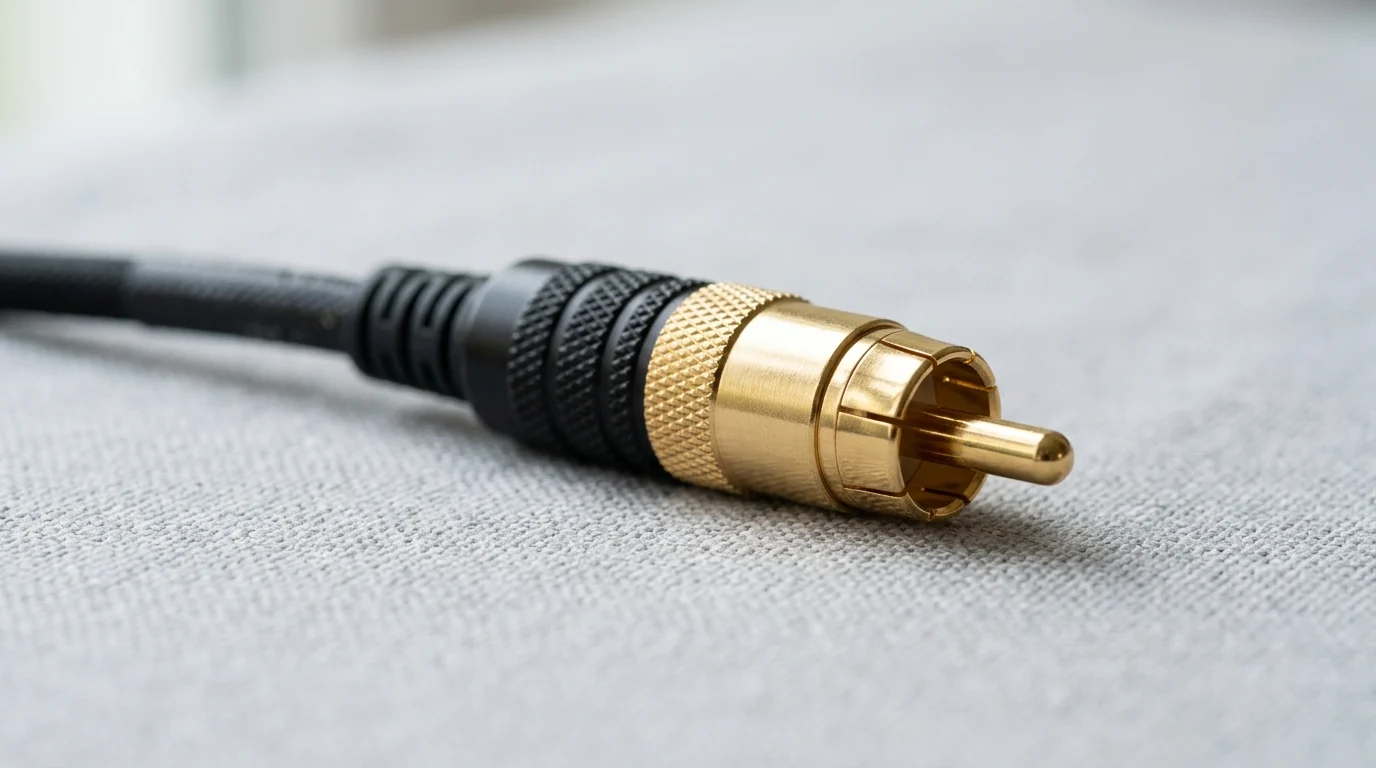
RCA Plug Basics and Ongoing Market Demand
Despite the rapid proliferation of digital audio interfaces, the RCA plug remains a foundational component in the global audio equipment supply chain. For B2B distributors, integrators, and original equipment manufacturers (OEMs), understanding the enduring relevance of this legacy connector is critical for maintaining optimized inventory and meeting persistent market demands. The RCA plug operates as a standard unbalanced analog audio connector, bridging a vast array of hardware across professional, commercial, and consumer acoustic environments.
While consumer markets trend toward wireless and digital formats, the wholesale demand for physical analog interconnects sustains a robust global trade. Procurement teams must navigate varying grades of manufacturing quality, raw material costs, and geographical supply chain shifts to secure profitable margins in this high-volume commodity category.
RCA plug definition in B2B audio
In the context of B2B pro-audio and commercial electronics, an RCA plug (often referred to as a phono connector) is a specialized electrical connector designed to carry audio and video signals. Mechanically, it features a standardized 3.2mm diameter central pin surrounded by a segmented or solid metallic outer ring. The central pin transmits the audio signal, while the outer ring serves as the return path and electrical ground.
Industrial buyers categorize RCA plugs into two primary form factors: male plugs (typically cable-mounted) and female jacks (chassis or panel-mounted). Professional-grade variants heavily prioritize structural integrity and signal fidelity, utilizing precision-machined conductor materials such as Oxygen-Free Copper (OFC) rather than lower-cost stamped brass to ensure minimal signal degradation over long cable runs.
Why demand remains stable across distributors
The stability of RCA plug demand across global distribution channels is anchored in the massive installed base of legacy audio equipment and specific high-growth niche markets. Turntables, DJ mixers, studio monitor subwoofers, and commercial public address (PA) systems universally rely on RCA connectivity. The recent resurgence in vinyl record sales, which has seen consistent 5% to 10% year-over-year market growth globally, directly fuels the need for high-quality analog interconnects.
Furthermore, commercial integrators require significant volumes of RCA components for retrofitting and maintaining existing hospitality, retail, and live-venue audio systems. Because analog signals do not suffer from digital latency or require complex handshake protocols, RCA connections provide a fail-safe, immediate audio path. This reliability ensures that wholesale distributors consistently turn over inventories of bulk connectors and premade RCA cable assemblies, maintaining predictable revenue streams.
How RCA Plugs Work and Key Buying Specifications

Procurement professionals must look beyond the basic form factor of an RCA plug to understand its electrical characteristics and material specifications. The performance of an analog connection is entirely dependent on the physical properties of the plug and its compatibility with the mating jack. Evaluating these specifications ensures that bulk purchases align with the end-user’s quality expectations, whether for entry-level consumer electronics or high-fidelity studio environments.
How RCA plugs transmit analog audio signals
RCA plugs facilitate unbalanced analog audio transmission. In this configuration, the audio signal operates as an alternating current (AC) voltage carried solely by the central pin. The outer metallic ring provides the ground reference and acts as a shield against electromagnetic interference (EMI) and radio frequency interference (RFI).
Standard line-level audio signals typically operate at a nominal voltage of -10 dBV (0.316 Vrms) for consumer and semi-professional gear. Because these signal voltages are relatively low, the physical connection must present minimal electrical resistance. Any imperfection in the contact surface or inadequate grounding can introduce audible hum, ground loops, or signal attenuation, making the mechanical tolerance of the plug critical to its acoustic performance.
Specifications that matter for wholesale purchasing
When sourcing RCA plugs at scale, buyers must scrutinize several technical specifications to determine product viability. Conductor material is paramount; premium B2B suppliers utilize 99.99% Oxygen-Free Copper (OFC) or tellurium copper for the central pin to maximize conductivity. Plating thickness is another crucial metric. While commercial-grade plugs may feature a standard nickel wash or a flash of 1-micron gold, professional-grade connectors demand 24K gold plating with a thickness of 3 to 5 microns to prevent oxidation and withstand repeated use.
Housing materials and strain relief mechanisms also dictate the plug’s durability. Die-cast zinc or CNC-machined aluminum housings offer superior shielding and crush resistance compared to injection-molded plastics. Additionally, buyers must specify the maximum cable outer diameter (OD) the plug can accommodate, which typically ranges from 4.0mm for standard patch cables up to 8.0mm for heavy-duty, double-shielded professional interconnects.
How buyers can compare RCA plug options
To effectively evaluate RCA plug options, buyers should benchmark technical specifications against their target cost parameters. A comparative analysis helps distinguish between products suited for budget retail channels versus those engineered for professional integrators.
| Specification | Entry-Level Commercial | Professional B2B Grade |
|---|---|---|
| Conductor Material | Stamped Brass | 99.99% OFC / Tellurium Copper |
| Contact Plating | Nickel / 1μ Gold Flash | 24K Gold (3-5μ thickness) |
| Housing / Shell | Molded Plastic / Thin Aluminum | CNC Machined Zinc Alloy |
| Contact Resistance | < 50 mΩ | < 30 mΩ |
| Insertion/Extraction | ~500 Cycles | > 5,000 Cycles |
| Typical FOB Cost | $0.10 – $0.35 per unit | $0.80 – $2.50+ per unit |
By utilizing this matrix, procurement teams can align their sourcing strategy with specific channel requirements, ensuring they do not over-specify for budget markets or under-specify for high-fidelity audio clients.
How to Source RCA Plug Products Effectively
Securing a reliable supply chain for RCA plugs requires rigorous vetting of manufacturing partners. The global market is saturated with low-tier assemblers producing substandard connectors that can compromise overall audio system integrity. Effective sourcing strategies prioritize direct engagement with established OEM/ODM manufacturers capable of demonstrating advanced production methodologies and stringent quality control protocols.
Supplier capabilities to verify
A capable RCA plug manufacturer should possess end-to-end production infrastructure. Buyers must verify the presence of automated die-casting equipment, CNC precision machining centers, and robotic assembly lines. These technologies ensure tight dimensional tolerances—specifically the 3.2mm pin diameter—preventing issues with jacks being too loose or destructively tight.
Furthermore, factory scale and vertical integration are strong indicators of reliability. A facility boasting upwards of 15,000 square meters and a dedicated workforce of over 100 personnel generally indicates the capacity to handle large-scale global orders while managing raw material processing in-house. Suppliers that manage their own electroplating and tooling design are better positioned to control costs and maintain consistent quality across large production runs.
MOQ, packaging, branding, and sample requirements
Minimum Order Quantities (MOQs) for RCA plugs typically vary based on customization requirements. Standard off-the-shelf bulk connectors may require an MOQ of 1,000 to 3,000 pieces. However, OEM buyers seeking private label laser engraving, custom shell colors, or proprietary strain relief designs should anticipate MOQs ranging from 5,000 to 10,000 units per SKU.
Packaging requirements must be specified early in the negotiation phase. Bulk orders for factory-floor assembly are usually shipped in anti-static polybags or blister trays to minimize waste. Conversely, distributors selling directly to retail or installation professionals may require customized blister packs or branded retail boxes. Securing pre-production samples is a non-negotiable step; buyers should request 10 to 20 samples from the actual production tooling to verify plating quality, solderability, and mechanical fit before authorizing mass production.
Sourcing steps that reduce defects and margin loss
Defective connectors cause disproportionate financial damage through RMA processing, brand degradation, and lost channel margins. To mitigate these risks, wholesale buyers must mandate specific Quality Control (QC) metrics in their purchasing contracts. A robust supplier agreement should enforce a defect rate threshold of strictly less than 0.5%.
Sourcing teams should request documentation of mechanical and electrical stress tests. This includes insertion and extraction testing (verifying performance beyond 5,000 cycles without plating degradation), salt spray testing to confirm corrosion resistance (typically 48 to 72 hours for gold-plated items), and contact resistance testing under load. Implementing third-party pre-shipment inspections (PSI) based on AQL 1.5/4.0 standards ensures that the factory adheres to these metrics before the container is sealed.
Compliance, Packaging, and Logistics Considerations
Executing a profitable cross-border transaction for audio components extends beyond negotiating the FOB price. RCA plugs, like all electronic components, are subject to stringent international environmental regulations, complex logistics, and fluctuating import duties. Mastering compliance, optimizing packaging density, and accurately calculating landed costs are essential practices for protecting wholesale margins and preventing customs delays.
Compliance checks for RCA plug products
To legally distribute RCA plugs in major global markets, the products must comply with environmental and safety directives. The most critical of these is the RoHS 3 directive (EU 2015/863), which strictly limits the presence of hazardous substances such as lead, cadmium, and mercury in electrical equipment. Because low-cost brass alloys historically utilized lead to improve machinability, buyers must demand valid RoHS test reports from certified third-party laboratories to ensure lead content remains below the 0.1% threshold.
Additionally, for the European market, compliance with the REACH regulation regarding Substances of Very High Concern (SVHC) is mandatory. Importers supplying to the US market should also verify compliance with California Proposition 65 if the connectors contain specific plastics or metal alloys. Failure to secure these compliance documents can result in cargo impoundment, severe fines, and immediate channel delisting.
Packaging, labeling, and pallet planning
Optimizing packaging is a highly effective method for reducing per-unit freight costs. RCA plugs are dense, heavy components; a standard export carton measuring 40x30x20 cm can hold approximately 1,000 premium zinc-alloy plugs and weigh up to 15 to 18 kilograms. Because of this high weight-to-volume ratio, cartons must be constructed from double-wall corrugated cardboard and utilize internal dividers to prevent scratching of the connector housings during transit.
For LCL (Less than Container Load) and FCL (Full Container Load) sea freight, pallet planning is crucial. Standard industrial pallets (120×100 cm) must be uniformly stacked, shrink-wrapped, and clearly labeled with accurate gross weights, SKU numbers, and country of origin markings to facilitate rapid customs clearance. Efficient palletization prevents structural collapse in transit and maximizes the use of container floor space.
Landed cost and channel margin considerations
Accurate landed cost calculation requires analyzing multiple supply chain variables. The factory FOB price is only the baseline; buyers must factor in freight, insurance, and import tariffs to determine the final cost of goods sold (COGS) and set appropriate channel pricing.
| Cost Component | Percentage of Landed Cost | Strategic Consideration |
|---|---|---|
| FOB Factory Price | 65% – 75% | Highly sensitive to global copper and zinc commodity indices. |
| Logistics & Freight | 10% – 15% | High product density favors sea freight; air freight rapidly erodes margins. |
| Import Duties | 5% – 10% | Varies heavily by origin and destination (e.g., HS Code 8536.69 for plugs/sockets). |
| Customs & Brokerage | 2% – 5% | Fixed costs per shipment; favors larger volume orders to dilute the expense. |
Understanding this breakdown allows procurement teams to negotiate better incoterms, forecast retail pricing structures, and maintain the 30% to 50% gross margins typically required by regional B2B audio distributors.
How to Evaluate and Select the Right Supplier

The final phase of procurement involves consolidating supplier data and making a strategic partnership decision. The ideal RCA plug manufacturer acts as an extension of the buyer’s own business, providing not just physical commodities but engineering support, market insight, and reliable lead times. Evaluating suppliers systematically ensures a resilient supply chain capable of adapting to shifting audio market demands.
Selection criteria for supplier evaluation
When auditing potential suppliers, procurement managers should prioritize manufacturers with a proven track record in the professional audio sector. Key selection criteria include verifiable ISO 9001:2015 quality management certifications and a demonstrable history of exporting to 50 or more global markets. A supplier with a decade or more of operational experience is far more likely to have refined their tooling and stabilized their supply chain for raw materials like OFC copper.
Furthermore, buyers should evaluate the
Key Takeaways
- Wholesale sourcing and supply-chain implications for RCA Plug
- Specifications, compliance, and commercial terms buyers should validate
- Actionable recommendations for distributors and procurement teams
Frequently Asked Questions
What does an RCA plug do in an audio system?
It carries unbalanced analog audio: the center pin sends the signal and the outer ring provides ground and shielding.
Where are RCA plugs still commonly used today?
They are common on turntables, DJ mixers, subwoofers, older amplifiers, PA retrofits, and many consumer stereo devices.
Why does RCA cable quality matter?
Low-voltage analog signals are sensitive to poor contact and weak shielding, which can cause hum, noise, or signal loss.
What should buyers check when sourcing RCA plugs in bulk?
Focus on OFC conductors, reliable plating, precise machining, strong strain relief, and consistent assembly quality for repeatable performance.
Can JINGYI provide custom RCA cable solutions for OEM/ODM projects?
Yes. JINGYI offers OEM/ODM RCA connectors and premade cables, plus private label and custom production for pro-audio applications.


