
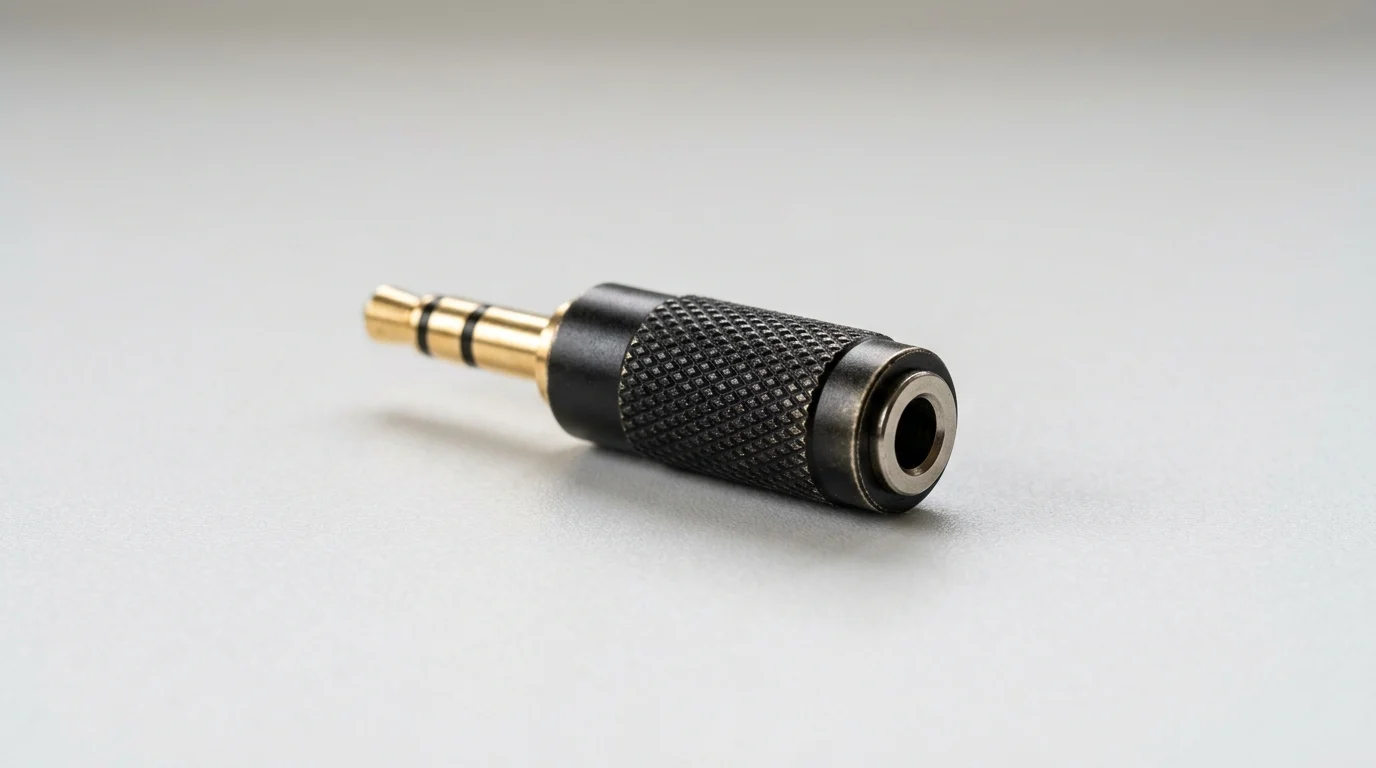
Why AV Jack Adapter Selection Matters
The procurement of AV jack adapters is often overshadowed by primary hardware acquisitions, yet these critical components act as the central nervous system of any audio-visual setup. For B2B buyers, distributors, and system integrators, selecting the right adapters directly influences overall system reliability and end-user satisfaction.
Impact on compatibility and return rates
Substandard AV jack adapters frequently suffer from loose tolerances and poor plating, directly resulting in signal dropouts and increased mechanical failures. Distributors often find that sourcing unverified adapters can drive return merchandise authorization (RMA) rates as high as 4% to 7%, severely eroding profit margins and damaging brand reputation. In contrast, precision-machined adapters maintain stable contact resistance under 5 milliohms, ensuring seamless compatibility across varied hardware ecosystems and keeping defect-related returns below a strict 0.5% threshold.
Buyer needs by application and market
Procurement strategies must align with the specific application environments of the target market. Consumer retail channels prioritize cost-effective 3.5mm to RCA or 6.3mm splitters with attractive retail packaging, whereas professional markets—such as livehouses, recording studios, and festival infrastructures—demand robust 6.3mm to XLR or Speakon adapters capable of withstanding heavy daily use. Identifying the exact impedance matching requirements and mechanical load capacities needed by these distinct buyer segments prevents over-specifying for budget markets while ensuring adequate performance in mission-critical professional deployments.
Technical Specifications to Compare

Evaluating the technical specifications of AV jack adapters requires a rigorous approach beyond basic visual inspection. Procurement teams must scrutinize the underlying metallurgy, pin configurations, and shielding architectures to ensure the product meets the stringent demands of modern audio-visual environments.
Connector types and pin configurations
The primary differentiator in AV adapters lies in their connector formats and internal wiring configurations. Buyers must distinguish between TS (Tip-Sleeve) for unbalanced mono signals, TRS (Tip-Ring-Sleeve) for balanced mono or unbalanced stereo, and TRRS (Tip-Ring-Ring-Sleeve) for integrated microphone support. Specifying the exact pinout standard—such as CTIA versus OMTP for TRRS adapters—is critical, as a mismatch will result in inverted ground and microphone channels, rendering the adapter useless for the end consumer.
Materials, shielding, and durability
Material selection dictates both the mechanical longevity and signal integrity of the adapter. Premium adapters utilize Oxygen-Free Copper (OFC) with a purity of 99.99% for conductors, drastically reducing signal attenuation. Housing materials range from basic injection-molded PVC to automated die-cast zinc alloys that offer superior crush resistance. Furthermore, contact plating thickness is a vital metric; standard consumer adapters may feature a 1μ” to 3μ” gold flash, whereas professional-grade adapters require 15μ” to 30μ” hard gold plating to withstand up to 10,000 mating cycles without degradation.
Signal performance and comparison criteria
Signal performance is quantified by insertion loss, crosstalk, and contact resistance. High-fidelity applications demand ultra-low-noise shielding to reject electromagnetic interference (EMI) and radio frequency interference (RFI).
| Specification | Consumer Grade | Professional Grade (Pro-Audio) |
|---|---|---|
| Contact Resistance | < 30 mΩ | < 5 mΩ |
| Mating Cycles | 1,000 – 3,000 | 5,000 – 10,000+ |
| Plating Thickness | 1μ” – 3μ” Gold Flash | 15μ” – 30μ” Hard Gold |
| Housing Material | Molded PVC / ABS | Die-cast Zinc / Aluminum Alloy |
| Conductor Purity | Standard Copper / CCA | 99.99% OFC |
How to Evaluate Suppliers
Partnering with a capable manufacturer is just as important as the product specifications themselves. A systematic supplier evaluation minimizes supply chain risks and ensures that the AV jack adapters delivered at scale match the quality of the initial golden samples.
Factory qualifications and compliance
A baseline requirement for any global supplier is strict adherence to international environmental and safety directives. Procurement managers must verify active compliance with RoHS and REACH standards to ensure adapters are free from restricted heavy metals and hazardous substances, which is mandatory for import into the European Union and North America. Additionally, assessing the supplier’s ISO 9001 certification ensures they maintain a formalized quality management system (QMS) rather than relying on ad-hoc inspection processes.
MOQ, sampling, and customization options
Flexibility in Minimum Order Quantities (MOQ) and customization capabilities are key indicators of a supplier’s suitability for B2B partnerships. While standard off-the-shelf adapters might carry an MOQ of 1,000 pieces, OEM/ODM projects involving custom tooling, specific impedance matching, or private label laser-engraving often require MOQs ranging from 3,000 to 5,000 units. A reliable supplier will offer a structured sampling phase, typically turning around functional prototypes within 7 to 14 days, allowing buyers to validate mechanical tolerances and acoustic performance before committing to volume production.
Production capacity and quality consistency
Evaluating production capacity requires looking beyond claimed facility size to the actual degree of manufacturing automation. Leading suppliers operating large-scale facilities (e.g., 15,000 square meters with 100+ personnel) increasingly rely on automated die-casting and robotic assembly lines. This automation is crucial for maintaining strict quality consistency across large batches. Buyers should inquire about the supplier’s defect rate targets; advanced robotic assembly should yield a production defect rate of less than 0.2%, ensuring that every adapter in a 50,000-unit container performs identically to the approved sample.
Commercial and Logistics Considerations
The total landed cost of AV jack adapters encompasses much more than the ex-works (EXW) unit price. Strategic buyers must analyze packaging configurations, freight density, and warranty coverage to protect their profit margins and optimize their global supply chains.
Cost, margins, and warranty terms
Unit costs for AV adapters can range from $0.15 for basic consumer models to over $3.50 for heavy-duty, precision-machined professional variants. Distributors must balance these procurement costs against target retail or wholesale margins, typically aiming for gross margins between 40% and 60%. Furthermore, negotiating favorable warranty terms—such as a standard 12-month to 24-month replacement guarantee for defective batches—provides a crucial financial safety net against unforeseen manufacturing anomalies.
Packaging options for retail and distribution
The choice of packaging directly impacts both the product’s market presentation and its shipping volume. For retail channels, PE/PET blister packs or full-color retail boxes enhance shelf appeal but significantly increase volumetric weight. Conversely, B2B distributors and system integrators prefer bulk packaging—such as 50 to 100 units per heavy-duty polybag—which minimizes waste and maximizes carton density. Optimizing carton dimensions can increase the number of units per shipping pallet by up to 30%, driving down the per-unit freight cost.
Lead times, freight, and regional requirements
Managing lead times and freight logistics requires careful planning, especially when navigating peak manufacturing seasons. Standard production lead times for AV adapters generally span 25 to 35 days, though custom OEM tooling can add an additional 15 to 20 days.
| Logistics Factor | Bulk B2B Packaging | Retail Blister Packaging |
|---|---|---|
| Typical Units per Master Carton | 1,000 – 2,000 pcs | 200 – 400 pcs |
| Volumetric Efficiency | High (Low freight cost/unit) | Low (Higher freight cost/unit) |
| Production Lead Time | 20 – 30 Days | 30 – 40 Days (includes print) |
| Best Freight Method | Ocean Freight (LCL/FCL) | Air Freight or Ocean LCL |
Building a Reliable Selection Process

Establishing a repeatable and objective selection process is the final step in securing a robust supply chain for AV jack adapters. By standardizing how samples are tested and how suppliers are vetted, procurement teams can confidently transition from initial sourcing to long-term partnership.
Qualification steps from sample to approval
The qualification journey must begin with a comprehensive First Article Inspection (FAI). Upon receiving the initial samples, engineering teams should conduct rigorous physical testing, including insertion/extraction force measurements (typically requiring 10N to 35N of force) and salt spray testing (often 24 to 48 hours) to verify the corrosion resistance of the plating. Only after the samples pass these mechanical and electrical benchmarks—and a small pilot run of 500 to 1,000 units is successfully deployed—should full mass production approval be granted.
Final supplier and product selection
Final supplier selection hinges on synthesizing technical compliance, commercial viability, and communication efficiency. Buyers should finalize a comprehensive purchasing agreement that clearly defines the acceptable quality limit (AQL), typically set at AQL 1.5 for major defects and 4.0 for minor defects in the electronic accessories sector. By locking in these parameters and establishing regular quarterly business reviews, importers and distributors can forge a resilient supply chain that consistently delivers high-fidelity AV adapters to their global markets.
Key Takeaways
- Wholesale sourcing and supply-chain implications for AV Jack Adapter
- Specifications, compliance, and commercial terms buyers should validate
- Actionable recommendations for distributors and procurement teams
Frequently Asked Questions
How do I choose the right AV jack adapter type for my device?
Match both connector size and signal format: TS for mono, TRS for stereo or balanced mono, and TRRS for headset use. Also confirm the exact interface, such as 3.5mm, 6.3mm, RCA, or XLR.
Why does TRRS pinout matter when buying an AV jack adapter?
TRRS adapters may use CTIA or OMTP wiring. If the pinout is wrong, the mic or ground will not work correctly. Always check your phone, tablet, or headset standard before ordering.
What specs matter most for professional AV jack adapters?
Focus on low contact resistance, strong shielding, durable housing, and thicker gold plating. For pro-audio, look for under 5 mΩ contact resistance, die-cast metal shells, and 15–30μ” plating.
How can I reduce return rates when sourcing AV jack adapters?
Use precision-machined adapters, verify sample compatibility, and confirm pin configuration before bulk purchase. Reliable manufacturing and tighter tolerances help prevent loose connections, signal dropouts, and unnecessary RMAs.
Can JINGYI support custom AV jack adapter projects?
Yes. JINGYI offers OEM/ODM, private label, premade cables, and connector solutions for studios, livehouses, festivals, and cinemas. Ask for samples, MOQ details, and compliance documents like RoHS and REACH first.


