
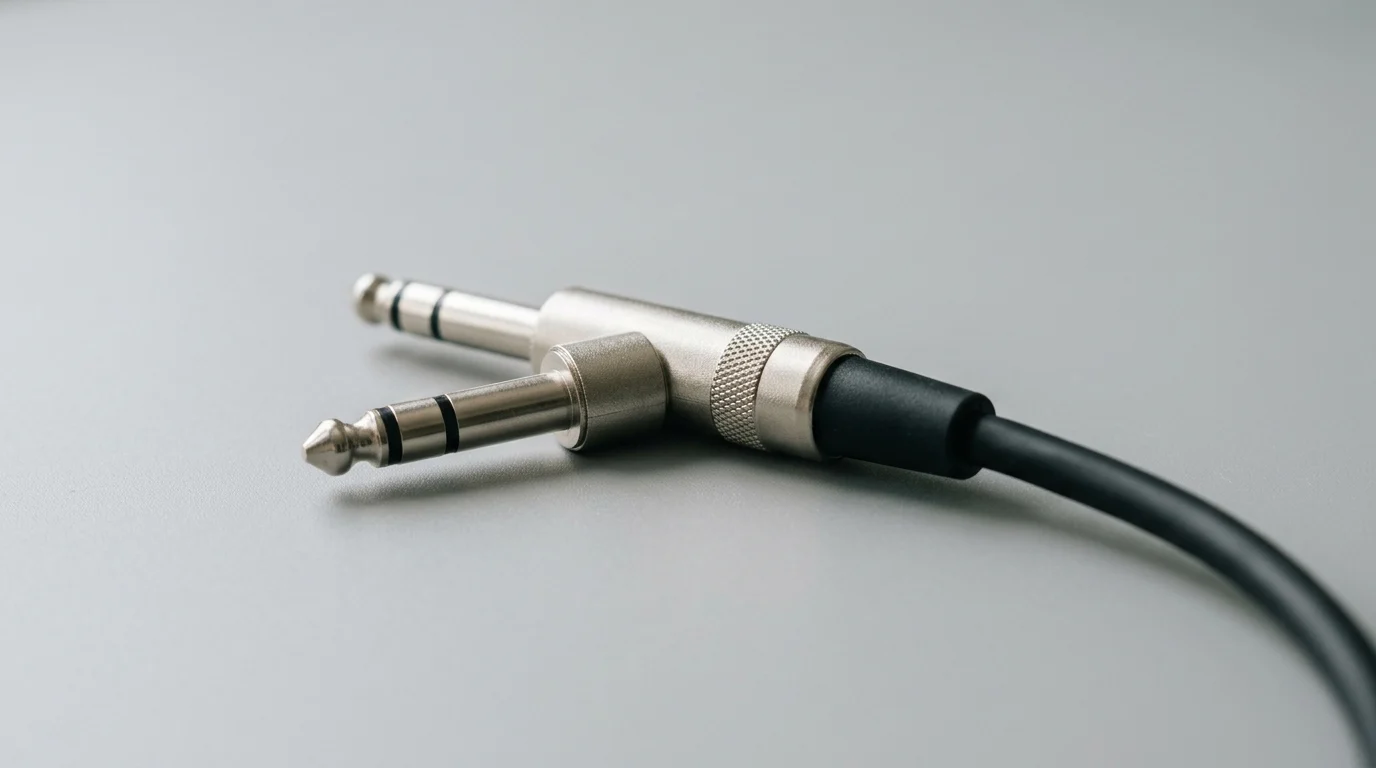
Why XLR vs 6.35mm TRS Matters for B2B Buyers
For B2B distributors, importers, and procurement teams in the professional audio sector, the choice between XLR and 6.35mm TRS connectors extends far beyond basic audio transmission. Both formats are industry standards for carrying balanced analog audio signals, effectively utilizing common-mode rejection to eliminate electromagnetic interference (EMI) and radio frequency interference (RFI) over long cable runs. However, their structural disparities directly influence inventory turnover, product lifespan, and overall profitability.
Sourcing the right mix of these interconnects requires a strategic understanding of how their physical designs align with specific commercial use cases. Procurement decisions must factor in mechanical durability, target market applications, and the total cost of ownership for end-users, ensuring that the selected product portfolio meets the rigorous demands of professional audio environments.
Impact on reliability and return rates
The mechanical design of an audio connector is the primary driver of field reliability and long-term customer satisfaction. XLR connectors feature a robust, latching mechanism that prevents accidental disconnection, making them an absolute necessity for dynamic live stage environments. In contrast, 6.35mm TRS (Tip-Ring-Sleeve) connectors rely entirely on a friction-fit mechanism inside the receiving jack.
While TRS is highly effective for stationary studio patching, inferior TRS components are prone to tip deformation and internal spring fatigue. Procurement data indicates that utilizing premium, precision-machined TRS contacts can keep return rates below 0.5%. However, sourcing low-grade friction-fit alternatives often results in defect and warranty return rates spiking to 3-5% within the first 1,000 to 2,000 mating cycles, eroding distributor margins and damaging brand reputation.
Typical channel and end-use applications
Understanding the end-use application is essential for accurate demand forecasting and channel strategy. XLR interconnects dominate the live sound, broadcast, and microphone markets due to their ruggedness, secure locking features, and ability to daisy-chain without adapters. They are the backbone of any stage production infrastructure.
Conversely, 6.35mm TRS connectors are the standard for high-density studio mixing consoles, outboard gear patching, and active studio monitor connections where panel space is at a premium. Distributors supplying live event production companies or staging integrators should heavily weight their inventory toward XLR configurations. Meanwhile, wholesalers servicing recording studios, commercial AV integrators, and prosumer audiophile markets will see significantly higher velocity in TRS and hybrid (XLR to TRS) SKUs.
Technical Differences Between XLR and 6.35mm TRS
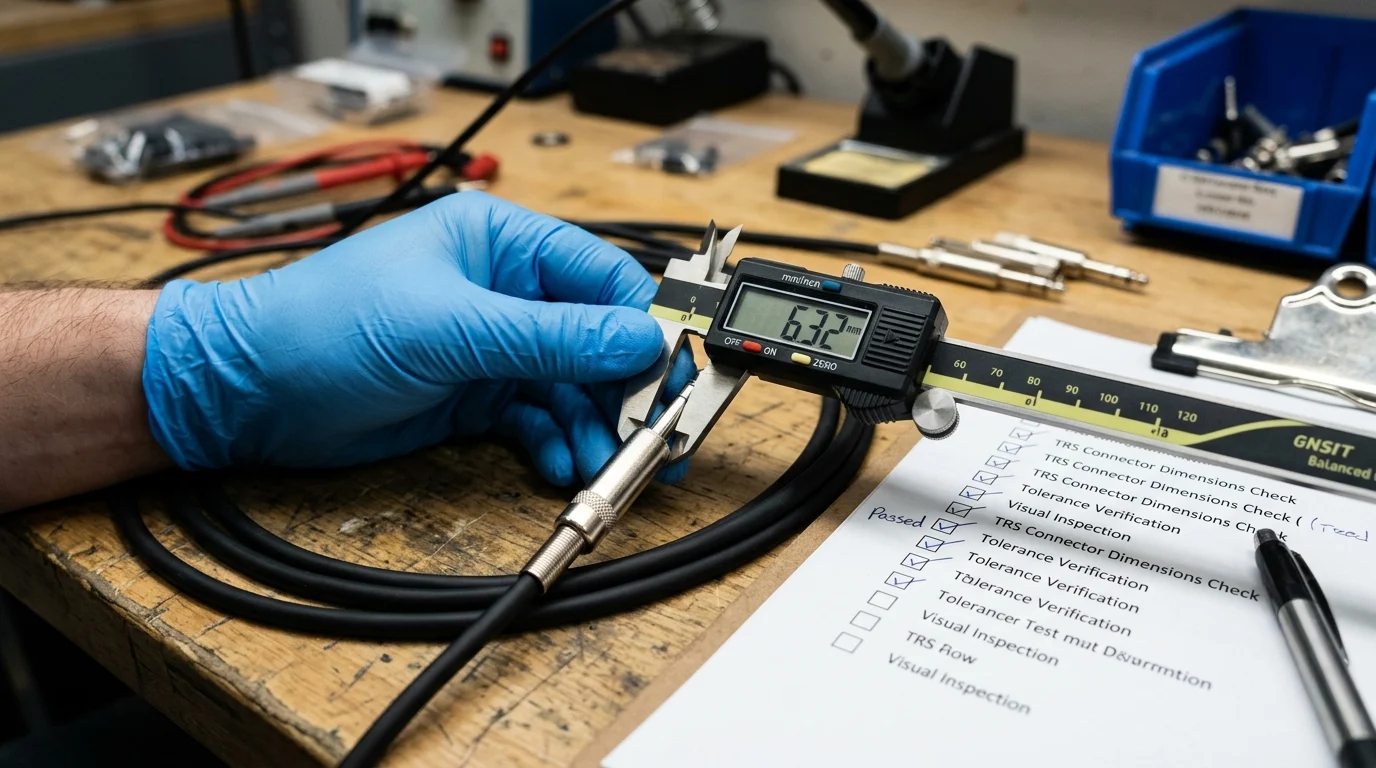
While both XLR and 6.35mm TRS cables are capable of transmitting identical balanced line-level signals, their mechanical architecture dictates how they interact with hardware under stress. Evaluating these technical differences is crucial for buyers tasked with sourcing durable, high-fidelity OEM/ODM cable assemblies.
Connector design and contact stability
The most critical architectural difference lies in the contact sequencing. The standard 3-pin XLR connector is designed so that Pin 1 (the ground/shield) makes contact before the positive and negative signal pins. This “ground-first” design protects audio equipment from damaging pops or spikes if a cable is hot-plugged while phantom power is active.
The 6.35mm TRS plug, due to its linear shaft design, sequentially bridges the tip, ring, and sleeve across the jack’s internal contacts during insertion. This temporary shorting can cause loud pops and potentially damage sensitive speaker components if hot-plugged. For environments where rapid patching is required while systems are live, XLR provides a distinct technical advantage.
Balanced audio performance factors
Balanced audio relies on two identical signals with inverted polarities to cancel out noise, measured by the Common-Mode Rejection Ratio (CMRR). To maintain a high CMRR (typically > 60dB in professional applications), the cable connecting the XLR or TRS plugs must feature precise twisting of the internal conductors and highly effective shielding.
Leading manufacturers achieve this by utilizing OFC (Oxygen-Free Copper) at 99.99% purity, paired with high-density braided shielding covering at least 95% of the internal core. Whether terminated with XLR or TRS, the internal cable geometry and the quality of the soldering at the connector joints are what ultimately determine the noise floor and signal integrity.
Key specs buyers should verify
Procurement teams must look beyond superficial aesthetics and verify strict electrical and mechanical specifications. Key metrics include a contact resistance of < 3 mOhms for optimal signal transfer, and a dielectric strength capable of withstanding at least 1,000V DC to prevent internal arcing.
| Feature | 3-Pin XLR | 6.35mm TRS |
|---|---|---|
| Locking Mechanism | Yes (Push-button latch) | No (Friction fit) |
| Hot-Plugging Safety | High (Ground connects first) | Low (Temporary shorting occurs) |
| Panel Space Required | High (~24mm diameter) | Low (~12mm diameter) |
| Typical Insertion Life | > 5,000 cycles | > 2,000 – 5,000 cycles |
| Contact Resistance | < 3 mOhms | < 3 mOhms |
Additionally, buyers should verify the housing materials. Die-cast zinc alloy shells for XLR and precision-machined brass for TRS plugs offer superior durability and EMI shielding compared to stamped steel or plastic alternatives.
Sourcing XLR and 6.35mm TRS Cable Assemblies
Transitioning from understanding connector specifications to actively sourcing cable assemblies requires a strategic approach to supplier selection. Partnering with a capable OEM/ODM manufacturer ensures consistent product quality, scalable production, and the ability to tailor product lines to specific market demands.
MOQ, customization, and private label options
For B2B buyers looking to establish their own brand identity, private labeling offers a significant competitive advantage. Most top-tier audio manufacturers require a Minimum Order Quantity (MOQ) ranging from 500 to 1,000 pieces per length or color variant for fully customized assemblies.
Customization extends beyond basic cable lengths to include specific jacket materials (such as flexible PVC or rugged polyurethane), custom color coding for inventory management, and laser-engraved logos on the connector housings. Negotiating a staggered delivery schedule against a larger annual volume commitment can often reduce initial MOQs while securing better tier-pricing.
Factory capabilities and quality control
The reliability of a cable assembly is directly proportional to the factory’s quality control infrastructure. Leading facilities, often operating in excess of 15,000 square meters, leverage automated die-casting for connector shells and robotic soldering stations to eliminate human error in pin termination.
Buyers should audit suppliers for ISO 9001 certification and request documentation on their testing protocols. Premium suppliers conduct 100% automated continuity testing and random sample bend-testing (e.g., 20,000 flex cycles at a 90-degree angle with a 500g load) to guarantee long-term performance in the field. These advanced capabilities typically allow for stable lead times of 25 to 35 days, even during peak seasonal demand.
SKU strategy for margin and inventory
Developing a profitable SKU strategy requires balancing comprehensive market coverage with lean inventory principles. A standard balanced audio cable portfolio should include standard lengths: 1m, 3m, 5m, and 10m. However, the margin profiles differ significantly.
Shorter patch cables (1m to 3m) usually yield lower absolute dollar margins but drive high-volume repeat purchases, particularly in the TRS category for studio patching. Longer runs (5m to 10m+), particularly heavy-duty XLR microphone cables, command higher premium pricing and gross margins. Distributors should analyze historical sales data to optimize their SKU mix, avoiding overcapitalization in slow-moving ultra-long (20m+) variants unless servicing specific installation contracts.
Compliance, Logistics, and Total Cost
Procuring high-quality XLR and 6.35mm TRS cables is only half the equation; landing them at a competitive price while adhering to international regulations is equally critical. Hidden costs in logistics, non-compliance penalties, and inefficient packaging can rapidly erode the profitability of an otherwise well-negotiated purchase order.
Compliance checkpoints for procurement
Audio cables imported into major markets must adhere to strict environmental and safety regulations. For the European Union and North America, RoHS 3 (EU 2015/863) and REACH compliance are non-negotiable. These directives mandate stringent limits on hazardous substances, particularly restricting lead (Pb) in solder to less than 0.1% by weight.
Procurement teams must demand verifiable compliance certificates and third-party lab testing reports from their suppliers. Failing to verify these checkpoints can result in shipments being seized by customs, leading to catastrophic supply chain disruptions and severe financial penalties.
Packaging, shipping, and defect handling
Packaging format significantly impacts both shipping costs and retail presentation. For wholesale distribution or installation contractors, bulk packing cables in minimalist PE (polyethylene) bags is the most efficient choice, reducing volumetric weight by 15-20% for ocean freight compared to retail packaging.
For retail-facing buyers, blister packs or custom-printed cardboard headers are necessary for shelf appeal but will increase the landed cost per unit. Regardless of packaging, buyers must establish a clear Defect Handling Protocol (DHP) with the factory, defining acceptable Quality Acceptance Limits (AQL) typically set at AQL 1.5 for major defects and AQL 4.0 for minor visual imperfections.
Total cost beyond unit price
The quoted FOB (Free On Board) unit price is just the starting point of the Total Landed Cost (TLC). Buyers must aggregate the BOM cost, ocean or air freight rates, import tariffs (which vary widely by origin and destination country under specific HS codes for copper cables), and domestic warehousing fees.
For example, a high-quality 3m XLR cable quoted at $2.50 FOB might carry a landed cost of $3.15 after applying a 10% import duty and amortized LCL (Less than Container Load) freight costs. Accurately modeling these expenses ensures that distributors set appropriate wholesale pricing to maintain their target gross margins, which typically range from 35% to 50% in the pro-audio connectivity sector.
How to Choose the Right Connector for Each Use Case

Optimizing a product catalog requires aligning the technical strengths of XLR and 6.35mm TRS connectors with the specific operational realities of the target customer base. A well-curated portfolio anticipates the needs of audio professionals and minimizes inventory obsolescence.
Decision criteria by application
The decision to specify XLR or TRS hinges on durability requirements and spatial constraints. For touring companies, live venues, and broadcast environments, XLR is the undisputed standard. Its locking mechanism withstands the physical abuse of stage setups, and its ground-first connection protects expensive PA systems during rapid changeovers.
Conversely, 6.35mm TRS is the optimal choice for studio environments and fixed installations where equipment density is high. Synthesizers, outboard compressors, and patch bays rely on TRS to maximize the number of connections in a limited rack space. Furthermore, hybrid cables (XLR to TRS) are essential problem-solvers, bridging the gap between mixing consoles and active studio monitors.
Building a balanced product portfolio
To maximize revenue and cater to diverse audio sectors, distributors must build a balanced portfolio. Over-indexing on one connector type limits market penetration, while stocking too many obscure configurations ties up working capital.
| Product Category | Primary Connector | Suggested Inventory Ratio | Target Gross Margin |
|---|---|---|---|
| Live Sound / Stage | XLR (Male to Female) | 50% | 40 – 50% |
| Studio Patching | 6.35mm TRS to TRS | 30% | 35 – 45% |
| Interconnect / Hybrid | XLR to 6.35mm TRS | 20% | 45 – 55% |
By maintaining an inventory ratio roughly balanced at 50% XLR, 30% TRS, and 20% hybrid solutions, B2B buyers can confidently service both the rugged demands of live event production and the high-density requirements of modern recording studios, ensuring steady turnover and maximized profitability.
Key Takeaways
- Wholesale sourcing and supply-chain implications for 6.35mm TRS
- Specifications, compliance, and commercial terms buyers should validate
- Actionable recommendations for distributors and procurement teams
Frequently Asked Questions
When should I choose 6.35mm TRS instead of XLR?
Choose 6.35mm TRS for studio patch bays, mixers, outboard gear, and active monitors where space is tight and connections stay mostly stationary.
Does 6.35mm TRS carry balanced audio as well as XLR?
Yes. A properly wired TRS cable can carry balanced line-level audio like XLR; noise performance depends more on cable construction, shielding, and termination quality.
Why is XLR often preferred for live sound?
XLR locks in place and resists accidental unplugging. That makes it more reliable on stages, rental systems, and touring rigs with frequent movement and repatching.
What should buyers check when sourcing 6.35mm TRS cables?
Verify precision-machined contacts, 99.99% OFC conductors, dense shielding, solid strain relief, and RoHS/REACH compliance to reduce failures and returns.
Can JINGYI support OEM/ODM 6.35mm TRS cable projects?
Yes. JINGYI provides OEM/ODM and private-label TRS cable production, including custom lengths, connector combinations, branding, and pro-audio system support.


