
Introduction
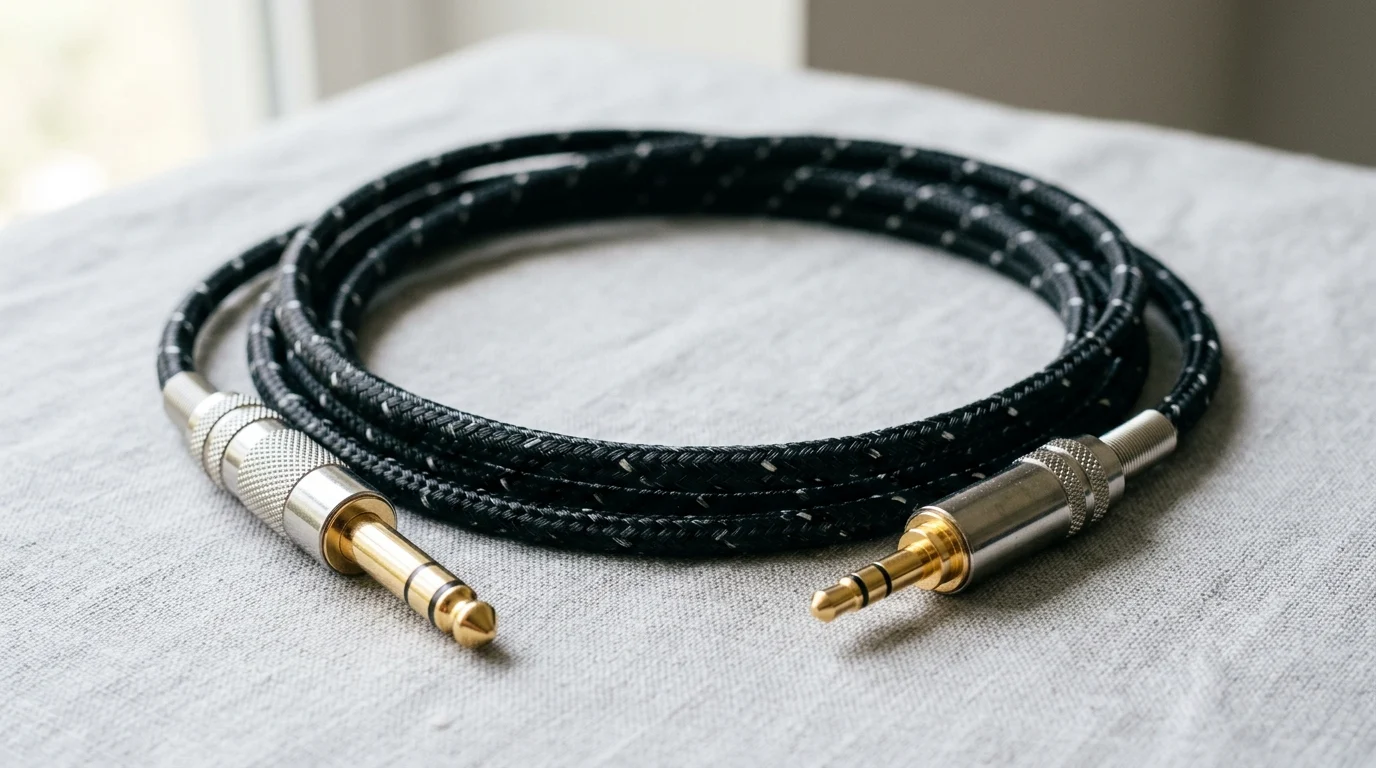
A well-made audio cable does more than connect gear: it preserves signal accuracy, resists noise, and survives repeated use without becoming a hidden point of failure. The difference comes down to a few measurable factors, including conductor material, shielding effectiveness, connector quality, flexibility, and overall build consistency. Understanding these elements helps you judge cables by performance rather than marketing claims, whether you are wiring a studio, a live rig, or a home system. The sections that follow break down the key design features that separate dependable, high-quality audio cables from options that may compromise sound or reliability over time.
Why High-Quality Audio Cables Matter
Audio cables serve as the critical transmission medium within any audio signal chain. While active components often receive the majority of engineering scrutiny, passive interconnects dictate the baseline signal integrity and operational reliability of the entire system. Understanding the mechanics of a high-quality audio cable is essential for mitigating signal loss and preventing catastrophic failures in demanding environments.
Reliability, signal integrity, and lifecycle cost
Inferior cabling introduces microphonics, signal attenuation, and premature mechanical failure, drastically inflating the total cost of ownership (TCO) for production facilities. High-quality audio cables are engineered to withstand rigorous handling, with premium jackets and conductors often rated to exceed 50,000 flex cycles under load. By minimizing downtime, troubleshooting hours, and replacement frequency, premium interconnects yield a significantly lower lifecycle cost despite a higher initial capital expenditure.
Application requirements in professional audio
Professional audio applications demand stringent mechanical and electrical tolerances. Touring environments subject cables to extreme tension, requiring a minimum tensile strength of 200 to 250 Newtons to prevent internal conductor breakage during stage teardowns. In permanent studio installations, the priority shifts toward absolute signal transparency. This necessitates the use of oxygen-free copper (OFC) with purity levels of 99.99% (4N) or higher to mitigate oxidation and maintain optimal conductivity over decades of continuous operation.
What Defines a High-Quality Audio Cable
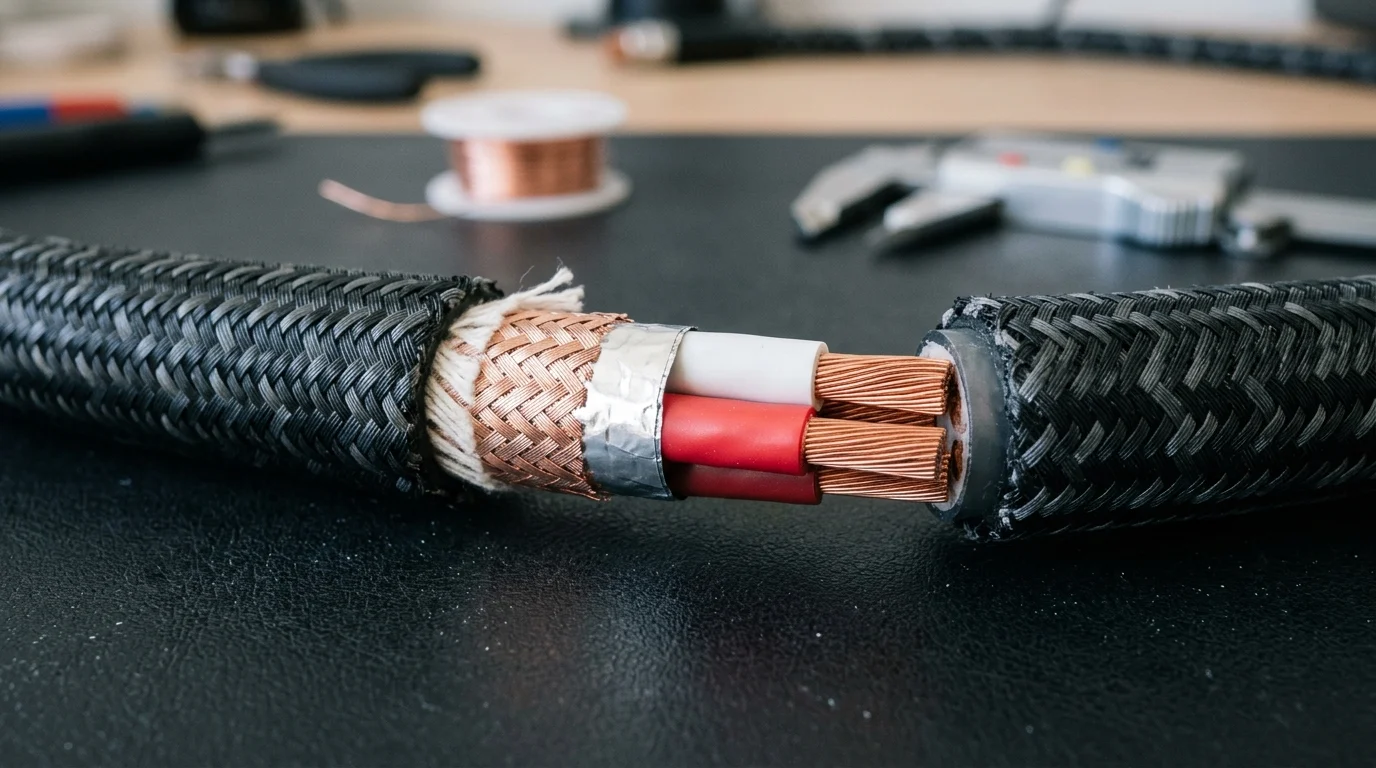
The objective performance of an audio cable is dictated by its metallurgical composition, internal geometry, and insulating materials. These elements interact to determine the cable’s electrical characteristics, mechanical durability, and resistance to external interference.
Conductor, shielding, dielectric, and jacket materials
At the core, high-quality audio cables utilize oxygen-free copper (OFC) to ensure optimal conductivity and prevent long-term corrosion. Shielding strategies vary based on application, but premium designs typically employ high-density braided tinned copper offering 95% to 98% optical coverage, often supplemented by a conductive PVC or aluminum foil layer. For dielectrics, cross-linked polyethylene (XLPE) or polytetrafluoroethylene (PTFE) are preferred over standard PVC, as they provide superior insulation resistance and lower dielectric constants, directly minimizing signal degradation.
| Shielding Type | Typical Coverage | Flexibility | EMI/RFI Rejection |
|---|---|---|---|
| Spiral (Serve) | 90% – 95% | Excellent | Moderate |
| Braided Copper | 95% – 98% | Good | Excellent |
| Foil (Aluminum) | 100% | Poor (Rigid) | Excellent (High Freq) |
Capacitance, resistance, impedance, and noise rejection
Electrical parameters objectively define a cable’s transmission capabilities. High-quality microphone lines typically exhibit a core-to-core capacitance of less than 60 picofarads per meter (pF/m), preventing high-frequency roll-off over long runs. Conductor DC resistance should remain below 85 ohms per kilometer (Ω/km) for a standard 24 AWG wire. For digital audio transmission, such as AES/EBU protocols, maintaining a strict characteristic impedance of 110 Ω (±20%) is mandatory to prevent signal reflections, standing waves, and digital jitter.
Balanced vs unbalanced cable design
The architectural choice between balanced and unbalanced topologies fundamentally impacts noise susceptibility. Unbalanced cables, utilizing a single conductor and a shield, are generally restricted to runs under 3 meters due to their vulnerability to electromagnetic interference (EMI). Balanced cables employ twisted pair conductors with a separate shield, leveraging differential signaling to achieve a Common Mode Rejection Ratio (CMRR) often exceeding 60 dB. This phase-cancellation mechanism is essential for preserving the noise floor in low-voltage microphone signals across extended stadium or studio runs.
How to Evaluate Cable Specifications and Compliance
Procuring professional-grade audio cables requires validating manufacturer claims through standardized testing and regulatory compliance frameworks. Objective verification ensures the product meets safety, environmental, and performance benchmarks required for commercial integration.
Laboratory and field testing methods
Laboratory evaluation of audio cables encompasses both electrical and mechanical stress tests. Time-Domain Reflectometry (TDR) is utilized to verify impedance uniformity along the length of the cable, ensuring deviations remain within a strict ±5% tolerance. Dielectric withstand testing, or Hi-Pot testing, applies high voltages—typically 500V to 1000V DC for one minute—to confirm the insulation’s integrity and detect potential short circuits. In the field, sweep testing confirms frequency response linearity, while automated flex-testing machines simulate years of physical abuse to validate the jacket’s tear and abrasion resistance.
Flame ratings, environmental standards, and regional compliance
Compliance with international safety and environmental directives is non-negotiable for commercial installations. Cables routed through building plenums must adhere to stringent flame retardancy standards, such as UL 910 (CMP) or UL 1666 (CMR) in North America. In the European Union, the Construction Products Regulation (CPR) mandates strict fire reaction classifications, with premium installation cables often targeting Euroclass Cca or B2ca ratings. Furthermore, raw materials must comply with RoHS 3 (Directive 2015/863) and REACH regulations, strictly limiting the presence of heavy metals like lead and cadmium to below 0.1% by weight.
How to Specify and Source the Right Cable
Efficient procurement of audio interconnects relies on aligning precise technical specifications with the logistical realities of global supply chains. Engineers and buyers must collaborate to ensure the sourced product meets both performance demands and project timelines.
Matching cable specifications to the use case
Selecting the appropriate cable geometry requires matching the American Wire Gauge (AWG) to the specific application. Line-level and microphone signals, operating at low currents, typically utilize 22 AWG to 24 AWG conductors. Conversely, passive loudspeaker lines require substantial current-carrying capacity to minimize damping factor degradation; a 12 AWG cable is generally recommended for runs up to 15 meters, while 10 AWG is necessary for distances exceeding 30 meters. Specifying the correct jacket material—such as ruggedized polyurethane (PUR) for outdoor broadcasting versus flexible PVC for indoor studio patching—further aligns the product with its operational environment.
| Application | Signal Type | Recommended AWG | Max Recommended Run |
|---|---|---|---|
| Microphone (Balanced) | Low Voltage (Mic Level) | 22 – 24 AWG | 100 meters |
| Instrument (Unbalanced) | High Impedance | 20 – 24 AWG | 5 – 8 meters |
| Passive Loudspeaker | High Current | 10 – 12 AWG | 15 – 30 meters |
| Digital (AES3) | 110Ω Digital | 24 – 26 AWG | 100 meters |
Sourcing, quality control, packaging, and logistics
Strategic sourcing involves vetting manufacturers for robust Quality Management Systems (QMS), ideally certified to ISO 9001:2015 standards. Buyers must negotiate Minimum Order Quantities (MOQs), which typically range from 1,000 to 3,000 meters for custom extrusions, though standard SKUs may be available in smaller 500-meter spools. Packaging logistics play a critical role in preserving cable integrity during transit. Bulk runs exceeding 1,000 meters should be shipped on reinforced wooden flanges rather than cardboard spools to prevent crushing, which can alter internal capacitance and degrade the cable’s electrical geometry.
How to Choose the Best Cable for Your Needs
The final selection process requires a pragmatic evaluation of the project’s performance goals against its budgetary constraints. An effective procurement strategy avoids both over-specification and the false economy of substandard interconnects.
Performance vs price trade-offs
The audio cable market is subject to a steep curve of diminishing returns. While upgrading from a standard 90% spiral-shielded copper cable to a 98% braided OFC variant may yield a measurable 15 dB reduction in the noise floor for a 20% cost premium, transitioning to exotic materials like silver-plated UP-OCC (Ultra-Pure Ohno Continuous Casting) copper can inflate costs by 300% to 500%. For the vast majority of professional applications, standard 4N OFC provides a mathematically flat frequency response across the 20 Hz to 20 kHz spectrum. Engineers must weigh whether the micro-optimizations of exotic metallurgy are justified by the application, or if the budget is better allocated to active components.
A decision framework for buyers and engineers
A rigorous decision framework streamlines the selection process. First, define the electrical parameters: determine the required impedance, maximum acceptable capacitance per meter, and necessary conductor gauge based on signal type and distance. Second, assess the mechanical environment: identify requirements for flex cycles, tensile strength, and chemical or UV resistance. Third, verify compliance: ensure the cable meets the necessary UL, CPR, or RoHS ratings for the installation region. Finally, evaluate the supply chain: confirm the manufacturer’s defect rate (ideally <0.5%), lead times (typically 4 to 6 weeks for custom runs), and MOQ thresholds. By adhering to this systematic approach, buyers guarantee the acquisition of a high-quality audio cable that delivers unwavering reliability and signal transparency.
Key Takeaways
- The most important conclusions and rationale for High-Quality Audio Cable
- Specs, compliance, and risk checks worth validating before you commit
- Practical next steps and caveats readers can apply immediately
Frequently Asked Questions
What conductor material is best for a high-quality audio cable?
99.99% OFC copper is a strong choice because it offers stable conductivity, better corrosion resistance, and long-term reliability in studio and live applications.
How can I tell if an audio cable has effective shielding?
Check for braided copper shielding with about 95% to 98% coverage, or a braid-plus-foil design. These options reduce EMI/RFI and help keep microphone and line signals quiet.
Should I choose balanced or unbalanced audio cables?
Use balanced cables for most professional runs, especially over 3 meters. They reject noise far better than unbalanced cables and are ideal for XLR and many 6.3mm TRS connections.
Why do cable specifications like capacitance and impedance matter?
Low capacitance helps preserve high frequencies on analog lines, while correct impedance is critical for digital formats like 110Ω AES/EBU to avoid reflections and signal errors.
Can JINGYI provide custom OEM/ODM high-quality audio cables?
Yes. JINGYI offers OEM/ODM and private-label cable production for pro-audio projects, including XLR, speaker, DMX, Ethernet, and snake cable solutions with compliance support.


