
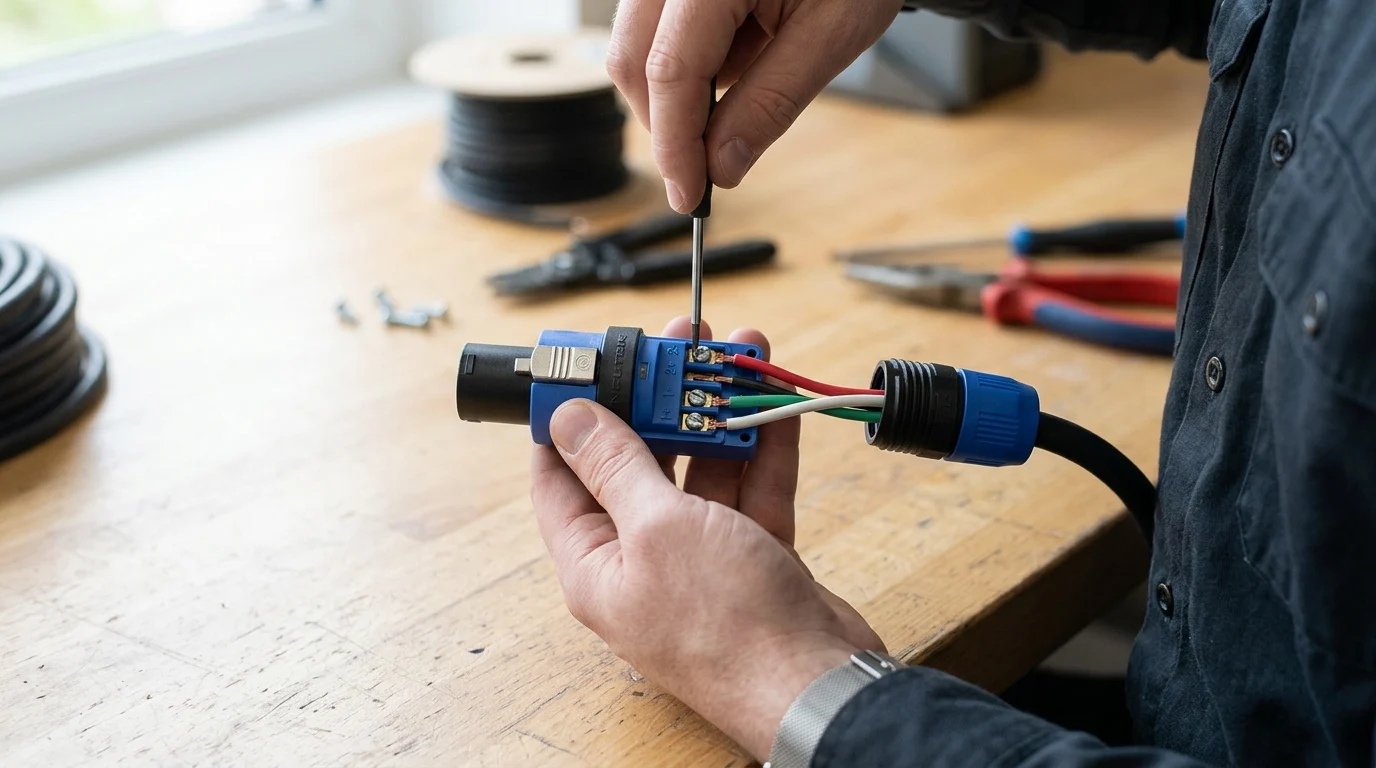
Why 4-Pole Speakon Wiring Matters
Professional audio infrastructure relies heavily on robust connectivity, particularly when managing high-wattage bi-amplified speaker systems. For B2B distributors and procurement teams, sourcing reliable 4-pole Speakon connectors is critical to ensuring seamless power delivery. Bi-amping separates high and low frequencies at the amplifier stage, requiring a single, durable cable to carry two distinct signals without cross-talk or short circuits.
Modern 4-pole connectors are engineered to handle these demanding loads, supporting continuous currents of up to 30A and audio peaks of 40A per contact. Understanding the technical and operational significance of these connectors allows wholesale buyers to better serve integrators and event production companies.
How correct bi-amp wiring reduces installation risk
Correct wiring of a 4-pole connector drastically mitigates installation risks in commercial audio environments. In a bi-amp configuration, standard practice dictates routing the low-frequency (LF) signal through the 1+ and 1- terminals, while the high-frequency (HF) signal utilizes the 2+ and 2- terminals.
If a supplier provides improperly wired cables, end-users risk sending high-wattage LF signals directly into sensitive HF compression drivers, resulting in catastrophic equipment failure. By standardizing 4-pole wiring protocols and utilizing secure locking mechanisms, integrators reduce on-site patching errors by an estimated 85% compared to deploying separate discrete cable runs.
Which applications commonly require 4-pole Speakon connectors
The demand for 4-pole Speakon infrastructure is driven by specific high-performance audio sectors. Major touring rigs, large-scale livehouses, cinema sound installations, and permanent stadium line arrays rely on bi-amped and tri-amped configurations to maximize acoustic efficiency.
Procurement teams serving these verticals must maintain a consistent inventory of 4-pole connectors and compatible multi-core cables. Because a single 4-pole cable effectively replaces two standard speaker cables, it reduces cable weight and clutter in large-scale deployments, making it a fundamental component for modern professional sound reinforcement systems.
Technical Standards to Verify
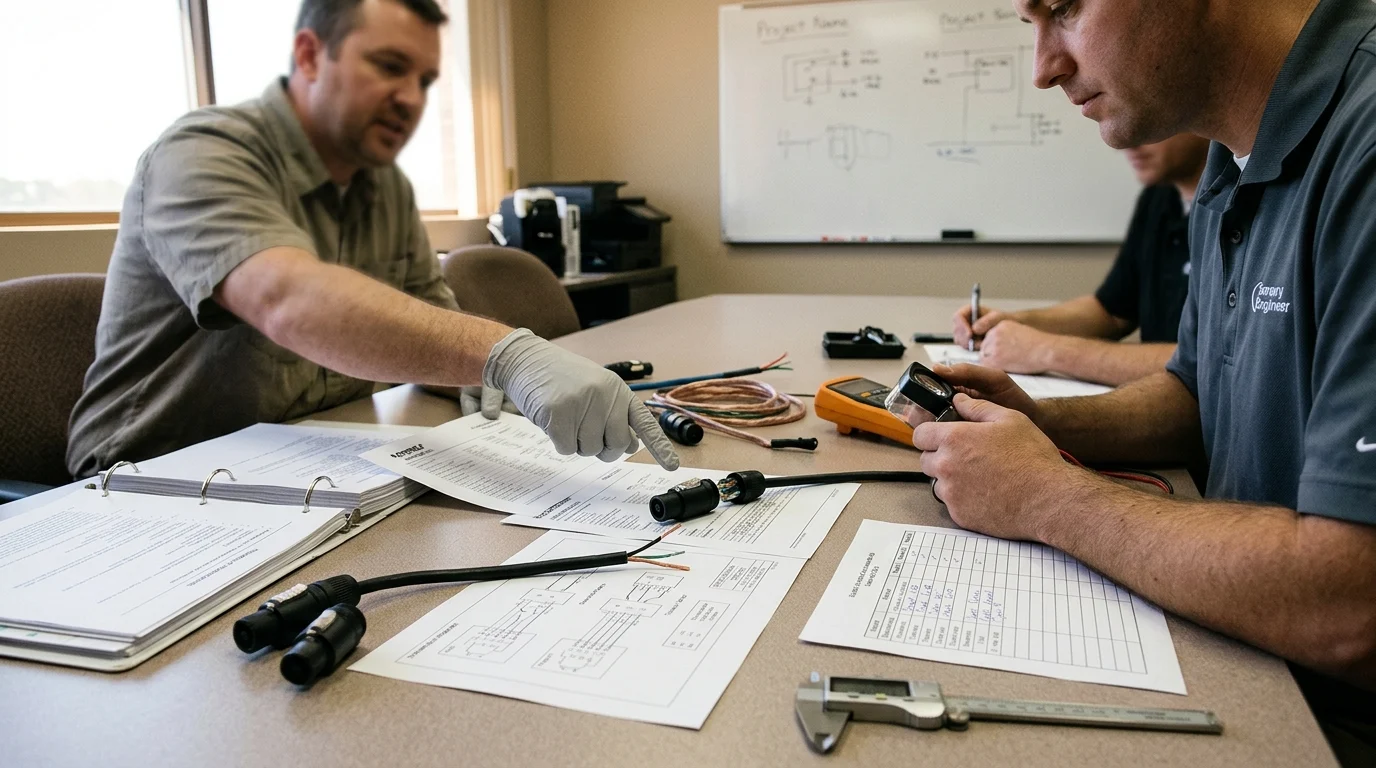
Evaluating the technical specifications of 4-pole connectors is essential for importers aiming to supply professional-grade audio markets. High-power applications demand strict adherence to industry standards to prevent thermal failure and ensure signal integrity across long cable runs.
Which pin assignments, conductor gauges, and current ratings matter
The core of bi-amp wiring lies in the pin assignments and the capacity of the conductors. Standard industry convention assigns 1+/1- to LF drivers and 2+/2- to HF drivers. To handle the varying power requirements, professional cable assemblies often pair 4-pole connectors with multi-core cables utilizing 10 AWG to 12 AWG conductors for LF signals, and 14 AWG to 16 AWG for HF signals.
Furthermore, the connectors must be rated for at least 30A continuous RMS current per contact to safely drive high-excursion subwoofers without overheating. Distributors should verify that the internal contact resistance remains below 2 milliohms to prevent signal degradation.
How 2-pole, 4-pole, and NL4-compatible options compare
Understanding the distinction between various Speakon-style connectors aids in accurate inventory planning. While structurally similar, the internal contact configurations dictate their application.
| Connector Type | Active Contacts | Typical Application | Max Continuous Current | Supported Cable OD |
|---|---|---|---|---|
| 2-Pole | 1+, 1- | Standard full-range passive speakers | 30A | 6mm – 10mm |
| 4-Pole (NL4 compatible) | 1+, 1-, 2+, 2- | Bi-amped speakers, dual-channel routing | 30A – 40A | 7mm – 14.5mm |
| 8-Pole (NL8 compatible) | 1 to 4 (+/-) | Multi-way line arrays, custom distribution | 30A | 8mm – 20mm |
Distributors must ensure their 4-pole inventory is fully cross-compatible with industry-standard NL4 chassis mounts to prevent mating issues in the field.
What connector specifications buyers should review
Beyond pin counts, buyers must review the mechanical and material specifications of the connectors. High-quality variants feature precision-machined brass contacts with heavy silver or gold plating to withstand harsh environments. The outer housing should be molded from high-impact, glass-reinforced materials like Polyamide (PA) to endure the physical abuse of touring.
Additionally, a robust chuck-type strain relief system is critical. It must accommodate cable outer diameters (OD) ranging from 7mm to 14.5mm, preventing conductor pull-out under heavy tension and ensuring a minimum lifespan of 5,000 mating cycles.
Recommended Wiring and QC Process
For OEM cable assemblers and distributors managing their own product lines, establishing a rigorous wiring and quality control workflow is paramount. Consistent manufacturing processes directly translate to field reliability, lower return rates, and stronger brand reputation.
What step-by-step workflow production teams should follow
Production teams must adhere to a strict procedural workflow when terminating 4-pole connectors. The process begins with stripping approximately 25mm of the outer cable jacket, followed by stripping 8mm to 10mm of insulation from the individual 99.99% Oxygen-Free Copper (OFC) conductors.
Tinning the bare wire is generally discouraged for screw-terminal connectors, as solder can cold-flow over time and loosen the connection. Instead, conductors are inserted directly into the terminal slots and secured with a precise torque setting, typically between 0.6 Nm and 0.8 Nm, before engaging the chuck strain relief and threading the locking boot.
Which factory and incoming QC checks prevent polarity errors
Implementing comprehensive factory and incoming quality control (QC) checks is the primary defense against polarity inversions. Automated cable testing machines are utilized to perform continuity and phase checks, ensuring 1+/1- and 2+/2- alignments are flawless.
High-potential (Hi-Pot) testing, which applies 1000V AC for 60 seconds, verifies that no short circuits exist between adjacent densely packed terminals. A stringent QC protocol should target an out-of-box defect rate of less than 0.15%, protecting the buyer from costly RMAs and preserving end-user equipment.
When premade bi-amp Speakon cable assemblies are the better choice
While purchasing bulk raw components is viable for localized custom installs, importing premade bi-amp Speakon cable assemblies is often the superior choice for high-volume distributors. Factories leveraging automated wire stripping and robotic assembly lines can achieve tighter tolerances and higher daily throughput.
When procurement volumes exceed 500 to 1,000 units per order, sourcing finished cables from a specialized audio manufacturer yields a lower landed cost, guaranteed consistency, and immediate readiness for retail or wholesale distribution channels.
Sourcing, OEM, and Compliance Factors
Navigating the global supply chain for professional audio connectivity requires a strategic approach to sourcing. Buyers must evaluate OEM capabilities, regulatory compliance, and the overall manufacturing footprint of their chosen partners to ensure long-term viability.
How MOQ, private label, and packaging options affect sourcing
Minimum Order Quantities (MOQ), private labeling, and packaging dictate the scalability of a sourcing program. Standard MOQs for custom-branded 4-pole connectors generally range from 1,000 to 3,000 pieces per SKU.
Suppliers offering comprehensive OEM/ODM services provide private label options, such as laser engraving the buyer’s logo directly onto the connector housing. Packaging configurations—ranging from bulk polybags of 50 units for installation contractors to retail-ready blister packs—allow distributors to tailor the product presentation to their specific B2B or B2C sales channels.
Which compliance requirements buyers should confirm
Regulatory compliance is a non-negotiable factor for B2B importers, particularly those operating in European and North American markets. Buyers must verify that all connectors and raw cable materials adhere strictly to RoHS (Restriction of Hazardous Substances) and REACH directives.
This ensures the absence of heavy metals and restricted chemicals in the plastics and solder. Additionally, while audio signals are generally low voltage, CE certification covering Low Voltage Directives (LVD) provides an added layer of liability protection for high-wattage amplifier applications.
How to assess supplier capability and manufacturing quality
Assessing a supplier’s manufacturing capability requires looking beyond the product spec sheet. A tier-one OEM partner typically operates a highly integrated facility; for instance, a 15,000 m² factory equipped with automated die-casting, precision CNC machining, and a dedicated workforce of 120+ staff.
Evaluating a supplier’s ISO9001 certification and their track record of exporting to 50+ global markets provides procurement teams with confidence in the manufacturer’s ability to maintain quality control during peak production seasons and supply chain disruptions.
Purchasing Framework for Reliable Supply

Establishing a robust purchasing framework is the final step in securing a reliable supply chain for bi-amp audio connectivity. Procurement teams must balance multiple variables to optimize their inventory investments and maintain healthy profit margins.
What supplier selection criteria matter most
The most critical supplier selection criteria revolve around vertical integration and material transparency. Suppliers who manage the production of both the precision-machined connectors and the 99.99% OFC raw cable internally offer better supply chain stability than those who merely assemble third-party parts.
Buyers should prioritize partners who offer detailed documentation on conductor resistance, insertion life, and locking mechanism durability, ensuring the product meets the rigorous demands of professional touring environments.
How to balance unit cost, defect rate, and lead time
Successful procurement requires balancing unit cost, acceptable defect rates, and lead times. Chasing the lowest possible unit price often results in compromised contact plating or brittle housings, driving up defect rates and long-term costs.
| Sourcing Priority | Typical Unit Cost Impact | Target Defect Rate | Standard Lead Time | Strategic Fit |
|---|---|---|---|---|
| Premium OEM (High QC) | +15% to +20% | < 0.1% | 30 – 45 Days | Touring, Broadcast, High-End Retail |
| Standard Commercial | Baseline | 0.2% – 0.5% | 20 – 30 Days | General Installation, Wholesale |
| Aggressive Low-Cost | -15% to -25% | > 1.0% | 15 – 25 Days | Budget PA Systems, Short-term Use |
By aligning these factors with their specific market positioning, B2B buyers can establish a resilient purchasing strategy. Opting for premium OEM partnerships with standard 25 to 35-day lead times generally provides the optimal balance of competitive pricing and uncompromising reliability for professional applications.
Key Takeaways
- Wholesale sourcing and supply-chain implications for Wire a 4-Pole Speakon Connector
- Specifications, compliance, and commercial terms buyers should validate
- Actionable recommendations for distributors and procurement teams
Frequently Asked Questions
What is the standard pinout for a 4-pole Speakon in bi-amping?
Use 1+ and 1- for low-frequency, and 2+ and 2- for high-frequency. Confirm the loudspeaker and amplifier manuals before assembly to avoid driver damage.
What cable size is recommended for a bi-amp 4-pole Speakon cable?
For pro-audio builds, LF lines commonly use 10-12 AWG and HF lines 14-16 AWG. Match the cable OD to the connector clamp range for secure strain relief.
Can a 4-pole Speakon replace two separate speaker cables?
Yes. One 4-core cable can carry LF and HF signals together, reducing stage clutter, setup time, and patching mistakes in livehouses, festivals, and installed systems.
What should buyers check when sourcing 4-pole Speakon connectors from JINGYI-type OEM suppliers?
Verify NL4 compatibility, 30A+ current rating, low contact resistance, PA housing, precision-machined contacts, proper cable OD support, and RoHS/REACH compliance for dependable field use.
How can you quickly test a newly wired 4-pole Speakon cable?
Use a continuity tester or multimeter to confirm 1+/1-, 2+/2- are correctly mapped with no shorts between poles. Label both ends clearly before installation.


