

Why Condensers Matter in Refrigeration Performance
The condenser is an essential heat rejection component in any vapor-compression refrigeration cycle. For B2B buyers, distributors, and original equipment manufacturers (OEMs), understanding condenser dynamics is foundational to building competitive, high-performance cooling equipment.
A refrigeration system’s efficiency is directly tied to the condenser’s ability to dissipate absorbed heat into the ambient environment. Selecting the correct specifications dictates the thermodynamic limits of the equipment and influences the total cost of ownership for the end-user.
Impact on cooling capacity and energy efficiency
The cooling capacity and overall energy efficiency of a refrigeration system depend heavily on the condenser’s heat rejection rate. A highly efficient condenser lowers the discharge pressure required from the compressor, easing the mechanical workload. By reducing the condensing temperature by just 1°C, systems can often achieve a 2% to 3% reduction in energy consumption.
This optimization directly improves the Coefficient of Performance (COP), allowing the system to deliver the target cooling capacity with significantly less electrical input. For commercial refrigeration units subject to strict global energy regulations, maximizing condenser efficiency is a critical design priority.
Role in system reliability and operating cost
Operating costs and system reliability are inextricably linked to condenser performance. Inadequate condensation forces the compressor to operate at higher head pressures, increasing mechanical wear and elevating discharge temperatures. This thermal stress degrades compressor oil and shortens the lifespan of core components.
By specifying condensers with adequate heat exchange surface area and optimal airflow, OEMs can extend the Mean Time Between Failures (MTBF) of their equipment. This proactive thermal management directly lowers maintenance-related operating costs and minimizes costly downtime for commercial end-users.
Why OEMs and distributors should evaluate condenser quality
For distributors and OEMs, evaluating condenser quality is a fundamental risk management strategy. Sourcing inferior heat exchangers can lead to elevated warranty claims, with industry benchmarks suggesting that component defect rates should be maintained strictly below 0.1% to preserve profit margins.
High-quality condensers ensure stable performance across diverse ambient conditions, protecting brand reputation in demanding applications. Whether deployed in medical ultra-low temperature freezers or high-traffic commercial display cabinets, reliable condensers guarantee that the core cooling function remains uninterrupted.
How a Condenser Works in a Refrigeration System
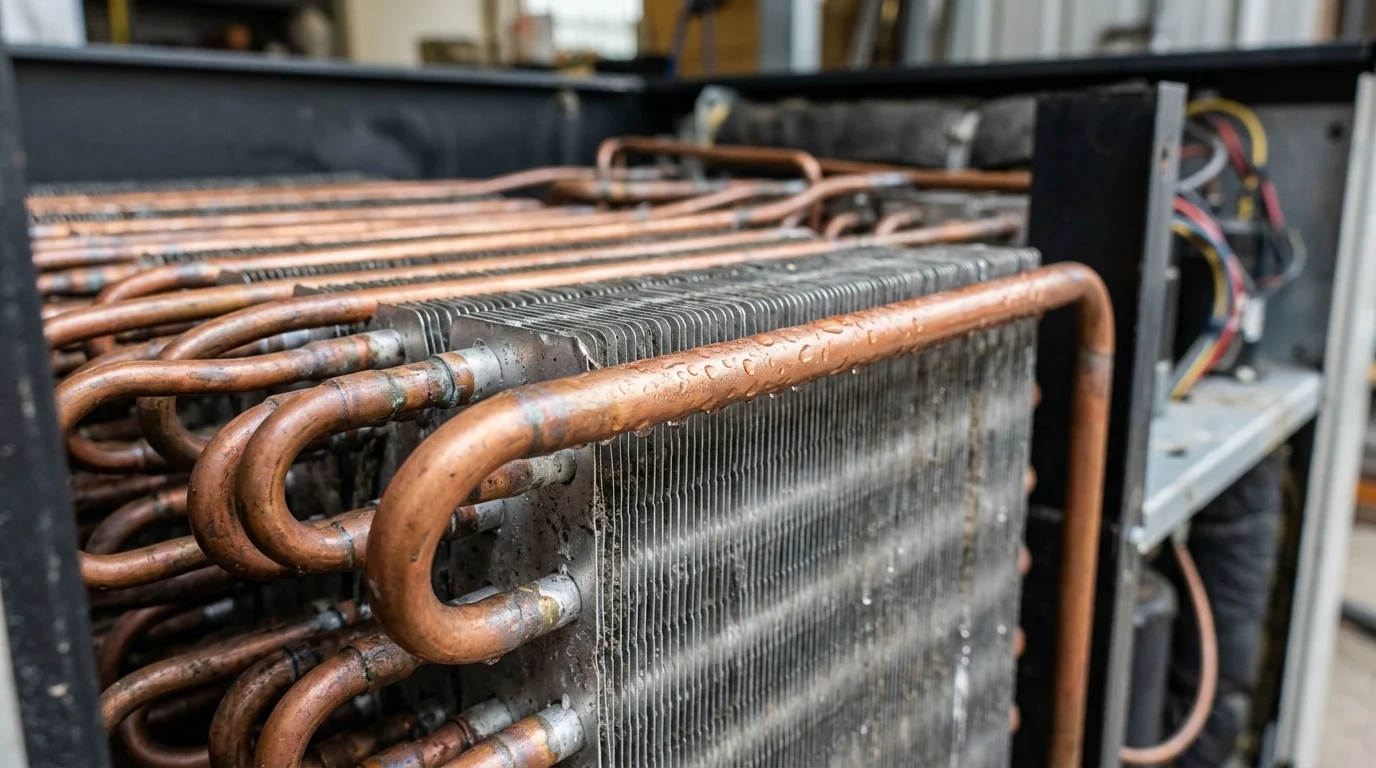
To evaluate a condenser for procurement, buyers must first understand its thermodynamic function within the broader vapor-compression cycle. The condenser bridges the gap between the high-pressure side of the system and the external environment. Acting as a specialized heat exchanger, it facilitates the transfer of thermal energy from the refrigerant to a secondary cooling medium, which in most commercial applications is ambient air.
Refrigerant flow through compression, condensation, and expansion
Refrigerant flow follows a strict sequence: compression, condensation, and expansion. Superheated, high-pressure refrigerant vapor leaves the compressor and enters the condenser inlet. Inside the condenser coils, the refrigerant undergoes three distinct thermodynamic processes.
First, the condenser desuperheats the vapor, lowering its temperature to the saturation point. Second, it condenses the vapor into a liquid through latent heat rejection—the phase change where the bulk of the heat transfer occurs. Finally, it subcools the liquid. For example, a refrigerant might enter the condenser as an 80°C vapor and exit as a 40°C subcooled liquid, ensuring a pure liquid state before it reaches the expansion valve.
Key operating variables that affect condenser performance
Condenser performance fluctuates based on several key operating variables. The primary driver is the approach temperature—the difference between the condensing temperature and the ambient cooling medium, typically designed for a 10K to 15K differential in air-cooled systems.
Airflow rates, measured in Cubic Feet per Minute (CFM), also dictate heat rejection capacity; insufficient airflow rapidly elevates system pressures. Furthermore, fouling factors significantly impact long-term efficiency. Dust and debris accumulation on the condenser fins or wire tubes can degrade thermal transfer efficiency by up to 20% over a 12-month period if adequate fin spacing and maintenance protocols are not implemented.
Condenser Types, Materials, and Key Specifications
Selecting the appropriate condenser geometry and material is critical for balancing thermal efficiency, manufacturing cost, and application suitability. The market offers several standard configurations tailored to specific cooling loads and spatial constraints. Procurement teams must align these physical characteristics with the intended operating environment to ensure optimal lifecycle performance.
Wire tube vs copper-aluminum fin vs other common designs
The two most prevalent designs in commercial refrigeration are wire tube and copper-aluminum fin condensers. Wire tube condensers utilize steel tubes with steel wires welded across them, offering exceptional cost-effectiveness and a self-cleaning, low-maintenance profile. This makes them ideal for domestic refrigerators, standard display cabinets, and wine coolers.
Conversely, copper-aluminum fin designs feature copper tubes mechanically expanded into aluminum fins. This configuration provides a significantly higher heat transfer coefficient, making it the standard for heavy-duty commercial HVAC, industrial chillers, and high-capacity dehumidifiers.
| Feature | Wire Tube Condenser | Copper-Aluminum Fin | Microchannel (Aluminum) |
|---|---|---|---|
| Primary Material | Steel | Copper tubes, Aluminum fins | Extruded Aluminum |
| Heat Transfer Rate | Moderate | High | Very High |
| Relative Cost | Low | Medium-High | High |
| Fouling Resistance | Excellent (self-cleaning design) | Moderate (requires cleaning) | Low (clogs easily) |
| Typical Application | Freezers, wine cabinets, ice makers | Commercial chillers, air conditioning | Auto AC, compact HVAC |
Core specifications for procurement review
Procurement teams must evaluate core specifications to ensure system compatibility. Critical metrics include the total heat rejection capacity (measured in kW or BTU/h) and tube diameter, which typically ranges from 4.76mm for compact fractional-horsepower units to 9.52mm for larger commercial systems.
Fin spacing is another vital specification; commercial refrigeration units often require 2.1mm to 3.0mm spacing to mitigate frost build-up and prevent dust clogging in dirty environments. Additionally, burst pressure ratings must exceed industry safety margins, often requiring specifications above 3.0 MPa depending on the operating pressures of the specific refrigerant used, such as R410A or R290.
How to compare options for different applications
Comparing options requires aligning condenser specifications directly with end-use applications. Medical ultra-low temperature freezers demand condensers with exceptional manufacturing precision, high burst pressures, and absolute leak-tightness to protect high-value payloads.
In contrast, standard commercial display cabinets prioritize compact sizing, low noise profiles, and cost-efficiency. Buyers must weigh the initial procurement cost against the thermal demands, spatial limitations, and environmental conditions of the specific application to determine the most viable technology.
How to Source a Reliable Condenser Supplier
Identifying a reliable condenser manufacturer is a strategic imperative for global supply chain managers. A supplier’s production capabilities directly impact product consistency, lead times, and landed costs. Evaluating a manufacturing partner requires a deep dive into their factory automation, quality assurance protocols, and ability to meet international trade requirements.
Manufacturing and quality control indicators
Rigorous manufacturing and quality control indicators separate top-tier suppliers from standard assembly workshops. Buyers should verify the use of automated CNC tube bending and automated welding processes, which ensure high dimensional accuracy and structural integrity.
Quality control must include stringent helium leak testing, with acceptable leakage rates falling strictly below 1×10^-6 mbar L/s to prevent long-term refrigerant loss. Furthermore, for units deployed in harsh or humid environments, suppliers should provide salt spray test reports demonstrating corrosion resistance exceeding 500 hours.
MOQ, customization, packaging, lead time, and compliance
Commercial terms dictate the viability of a supplier partnership. Minimum Order Quantities (MOQs) for custom wire tube or finned condensers typically range from 500 to 1,000 units, depending on the complexity of the tooling required. Standard production lead times hover between 25 and 35 days from order confirmation.
Packaging is equally critical; exporters must utilize heavy-duty corrugated cartons mounted on fumigated wooden pallets to prevent fin crushing and tube bending during ocean freight. Finally, environmental and safety compliance, including RoHS, REACH, and CE certifications, are non-negotiable prerequisites for importing components into European and North American markets.
Channel strategies for importers, wholesalers, and OEM buyers
Channel strategies vary based on the buyer’s position in the supply chain. OEM buyers typically seek direct partnerships with manufacturers who offer robust R&D support, rapid prototyping for custom tooling, and intelligent production scaling to match seasonal demand.
Importers and wholesalers, on the other hand, often prioritize suppliers with a broad portfolio of standardized SKUs. A supplier capable of providing condensers alongside complementary components—such as unit coolers, shaded pole motors, and capillary tubes—enables container consolidation. This strategy ensures faster inventory turnover and optimizes inbound logistics costs.
How to Choose the Right Condenser
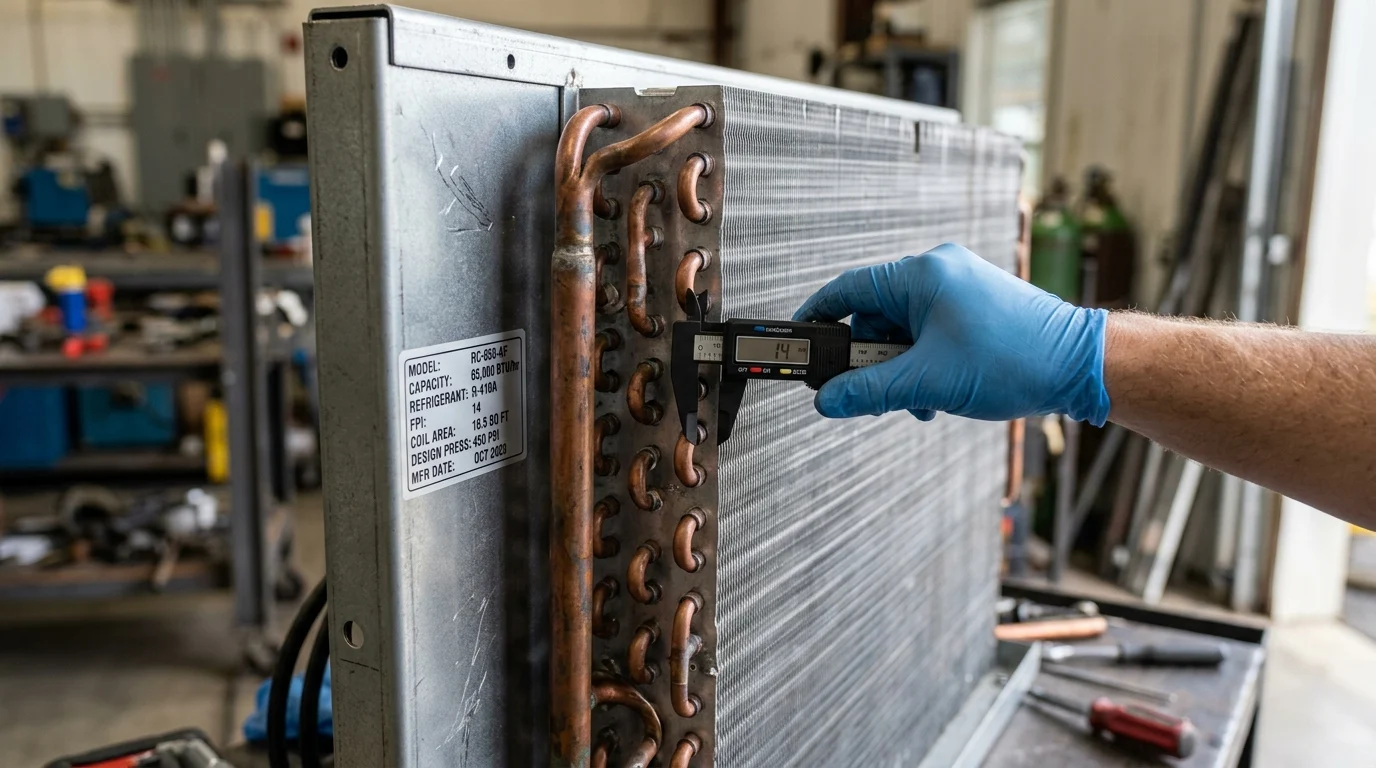
The final procurement decision synthesizes thermodynamic engineering requirements with strategic supply chain objectives. Choosing the right condenser ensures long-term operational success, regulatory compliance, and cost-competitiveness. By applying a structured evaluation process, buyers can eliminate guesswork and secure components that integrate seamlessly into their production lines or wholesale distribution networks.
Practical selection steps by application and system requirements
Practical selection begins by calculating the Total Heat of Rejection (THR), which equals the cooling capacity of the evaporator plus the heat of compression generated by the compressor. Once the THR is established, engineers match the condenser capacity to the system’s operating envelope, factoring in peak ambient temperatures.
Material selection follows the thermal calculations. For instance, buyers must specify e-coated, epoxy-coated, or hydrophilic aluminum fins for condensers installed in coastal, marine, or corrosive industrial environments to prevent premature degradation and maintain the design heat transfer coefficient over the unit’s lifespan.
Final decision criteria: performance, cost, and supply stability
The final decision hinges on a balanced evaluation of performance, unit cost, and supply chain stability. Partnering with a manufacturer focused on R&D, cost-effective solutions, and continuous quality management ensures access to high-performance heat exchange technology.
| Decision Criteria | Evaluation Metric | Target Benchmark |
|---|---|---|
| Thermodynamic Performance | Capacity vs. Footprint | Meets THR requirements within spatial constraints |
| Quality Assurance | Defect Rate / Leak Rate | < 0.1% defect rate; 100% Helium leak tested |
| Landed Cost | Unit Price + Freight + Tariffs | Competitive within target gross margin band |
| Supply Stability | Lead Time & Capacity | 25-35 days; scalable intelligent production lines |
By systematically applying these criteria, procurement professionals can secure condensers that elevate overall system reliability, satisfy stringent energy efficiency regulations, and deliver sustainable value to both OEMs and end-users.
Key Takeaways
- Wholesale sourcing and supply-chain implications for Condenser
- Specifications, compliance, and commercial terms buyers should validate
- Actionable recommendations for distributors and procurement teams
Frequently Asked Questions
What does a condenser do in a refrigeration system?
A condenser removes heat from high-pressure refrigerant vapor and turns it into liquid. This lets the system reject heat efficiently and prepare the refrigerant for the expansion valve.
How does condenser performance affect energy use?
Better heat rejection lowers condensing temperature and compressor load. In many systems, reducing condensing temperature by 1°C can cut energy consumption by about 2% to 3%.
What happens if a condenser is undersized or dirty?
Head pressure rises, compressor temperature increases, and cooling capacity can drop. Regular cleaning and correct condenser sizing help prevent efficiency loss and premature compressor wear.
Which condenser types does Senjun Cooler supply for OEM projects?
Senjun Cooler supplies wire tube condensers and copper aluminum fin heat exchangers, with matching refrigeration parts for refrigerators, freezers, display cabinets, ice makers, and chillers.
How do I choose the right condenser for my equipment?
Check refrigerant type, required capacity, ambient temperature, airflow, installation space, and application. For B2B projects, Senjun can support model selection based on your system and cost targets.


